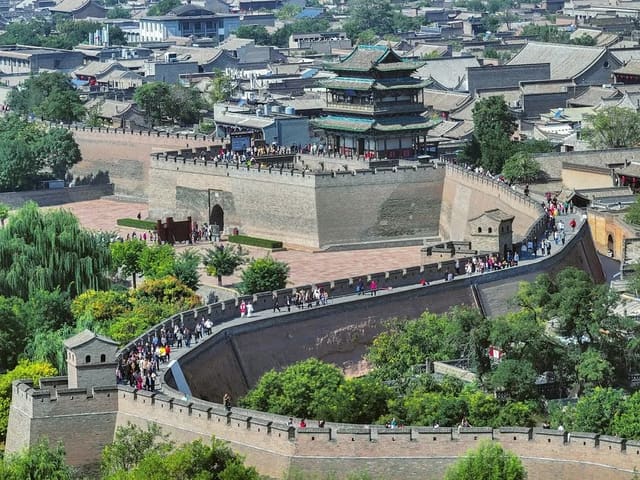
Niche Heritage Site · Shanxi
Pingyao Ancient City
A walled Ming-Qing city where banking history, temple sculpture and a living lacquer craft sit inside the same 5A-listed old town. Here is what is actually there, and how to decide if it fits your trip.
Affiliate link · we may earn a commission
Before You Go
Is Pingyao right for this trip?
Pingyao rewards a specific kind of curiosity: walled cities, financial history and craft. Check the fit before you commit a day or an overnight.
Good fit
- A preserved Ming-Qing walled town you can walk end to end
- 19th-century financial history — the rise of the Shanxi banks
- Painted sculpture in two nearby temples, Shuanglin and Zhenguo
- Seeing polished lacquer, a national ICH craft still made in the county
- An overnight stay inside the old town, if you want the evening quiet
Consider elsewhere
- A single landmark you can see in two hours
- Mountain or coastal scenery
- A nightlife-led itinerary
- Customers comparing ticket prices — we do not hold live prices here
Pingyao is a county town in Jinzhong, Shanxi, and one of the better-preserved Ming-Qing walled cities in China. Its old town was inscribed on the UNESCO World Heritage List in 1997, together with the nearby Shuanglin and Zhenguo temples. The national 5A scenic register lists the Pingyao Ancient City scenic area under Shanxi, admitted in 2015.
What sets it apart is not one monument but a layering of functions. The wall and six gates frame a grid of courtyard houses and shops. Inside, the Rishengchang compound records the rise of 19th-century Shanxi banks — the draft-banking networks that moved money across Qing China. A short ride out of town, the sculpted figures at Shuanglin Temple and Zhenguo Temple extend the story from finance and domestic life into Buddhist art.
Pingyao is also a living craft place. Pingyao polished lacquer is on the national intangible cultural heritage list, and a local lacquer workshop appears in the national productive-protection demonstration base register. That is why this page treats Pingyao as a learning journey — see the wall, then see the work that continues inside it — rather than a ticket-and-hotel checklist.
What You See
A site you can read in layers
The wall, the bank, the temple sculpture and the lacquer workshop — each adds a period of the story. This is what a day here is made of.
More reading routes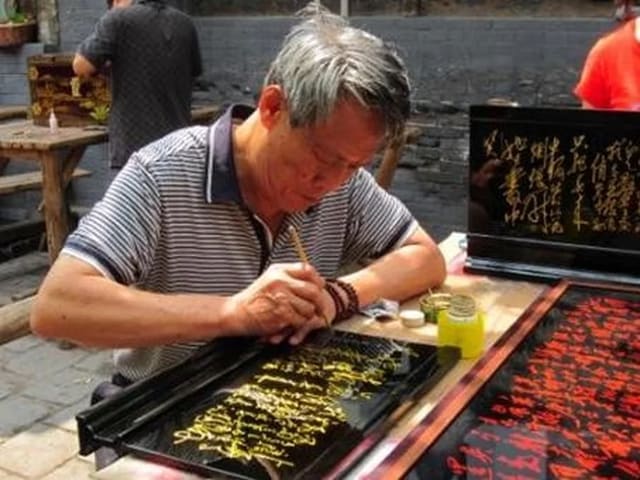
-
01 · The wall
Pingyao city wall
The brick-and-masonry Ming wall with six gates and watchtowers sets the shape of the old town. Walking a section gives you the scale that street-level views cannot. The 5A listing covers the ancient-city scenic area as a whole.
Registry-backed fact
-
02 · The money
Rishengchang draft-bank compound
The compound of the Qing-era Shanxi banks, often described as the origin of China’s draft-banking houses. It is the clearest place to read Pingyao’s financial history in the buildings themselves.
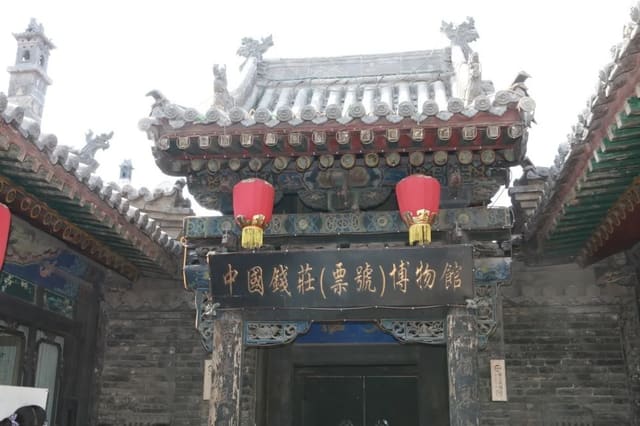
The Rishengchang compound — now the China Draft Bank Museum, opened here in 1995. -
03 · The sculpture
Shuanglin Temple
A temple outside the wall known for its large collection of painted clay sculpture, part of the UNESCO-inscribed property alongside the old town. Guided visits here are the most common ticketed option in English.
-
04 · The craft
Pingyao polished lacquer
A national ICH item, with a local company listed among the national productive-protection demonstration bases. Look for workshops where the hand-polishing process can be seen rather than only the finished object.
Registry-backed fact
-
05 · The food
Pingyao beef and local noodles
Pingyao beef is the local name attached to the town; Shanxi noodle and vinegary wheat dishes are the everyday food around it. Treat this as a meal stop, not a separate attraction.
If the wall and the craft interest you
See the guided ways to visit
Walks and temple visits are the two options people most often compare here. Check current availability and cancellation terms on the provider page before you book.
See Pingyao tour optionsAffiliate link · we may earn a commission
The Source
What the registers actually say
Every number below is a national register fact, not an editorial estimate. Pingyao has no five-star hotel register entry, so this page does not invent a "where to stay" district list — the old town has courtyard inns, but no national five-star register record backs a graded hotel list.
- 5A
- Pingyao Ancient City listed in the national 5A scenic-area register (2015)
- 1997
- Year the old town, Shuanglin and Zhenguo temples were inscribed on the UNESCO World Heritage List
- 2
- National ICH items recorded for Pingyao county in the official project register (polished lacquer, gauze figures)
- 1
- Local lacquer workshop in the national productive-protection demonstration base register
Source: Ministry of Culture and Tourism / China Intangible Cultural Heritage. Official registry snapshot, 2026-11-24 / 2026-11-25..
Pingyao or another Shanxi walled town?
Two registers describe what is on each site: the national 5A scenic-area list and the national ICH project list. The difference is the history you want to see, not which one is "better".
| Site | What you actually see | Registry / heritage facts |
|---|---|---|
| Pingyao Ancient City | Ming wall, six gates, courtyard grid, draft-bank compounds; Shuanglin and Zhenguo temples nearby | 5A-listed scenic area (2015); UNESCO-inscribed 1997; 2 national ICH items in the county |
| Datong / Yungang Grottoes | Buddhist cave sculpture from the Northern Wei, a different scale and period from Pingyao’s walled town | Yungang is a separate UNESCO-inscribed grotto complex in Shanxi; not part of the Pingyao property |
| Wutai Mountain | A Buddhist mountain temple complex rather than a walled commercial town | Separate UNESCO-inscribed cultural landscape in Shanxi; no 5A register entry is assumed here |
Common Questions
Is Pingyao worth visiting?
If you want a walkable Ming-Qing walled town with financial history and craft, yes. The old town, Shuanglin Temple and Zhenguo Temple are the three pieces that make the trip more than a single street. If you want a mountain or coastal landscape, use a different destination.
How many days do you need in Pingyao?
A full day covers the wall, the old town and Rishengchang. Add a second day if you want unhurried time at Shuanglin and Zhenguo temples or a workshop visit for the polished lacquer craft.
What is Pingyao known for?
Its preserved Ming-Qing city wall and courtyard layout, the rise of the Shanxi draft banks, the painted sculpture at nearby temples, and Pingyao polished lacquer — a national intangible cultural heritage craft.
Can you see Pingyao polished lacquer being made?
Pingyao polished lacquer (平遥推光漆器髹饰技艺) is a national ICH item, and a local lacquer company appears in the national productive-protection demonstration base register. Workshop access varies; check with the workshop before you go rather than assuming a fixed demo schedule.
Are ticket prices listed here?
No. Prices and availability change and are set by providers. This page lists registry-backed facts only; compare current options on the provider pages linked below.
Plan Your Visit
Tours and experiences
Compare guided options in one place. Prices and availability are set by each provider and are not maintained on this page.
As an affiliate, we may earn a commission from qualifying purchases. Prices and availability are set by the provider and are not maintained on this page.
Sources and data note
Facts: Ministry of Culture and Tourism national 5A scenic-area register (Pingyao Ancient City, Shanxi, admitted 2015); national rural-tourism key village register (Hengpo village, Pingyao county, first batch); China Intangible Cultural Heritage national project register (Pingyao polished lacquer polishing; Pingyao gauze figures); national productive-protection demonstration base register (Pingyao Tangdu polished lacquer company). UNESCO inscription 1997 for the Ancient City of Ping Yao property. Affiliate links are destination/category deep links, not live prices; replace with your own tracking URLs before launch.
Another wall, another tradition
More niche heritage sites
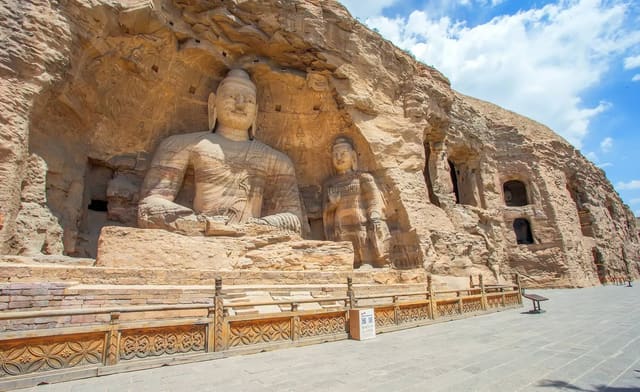 Yungang Grottoes Niche Heritage Site · Shanxi
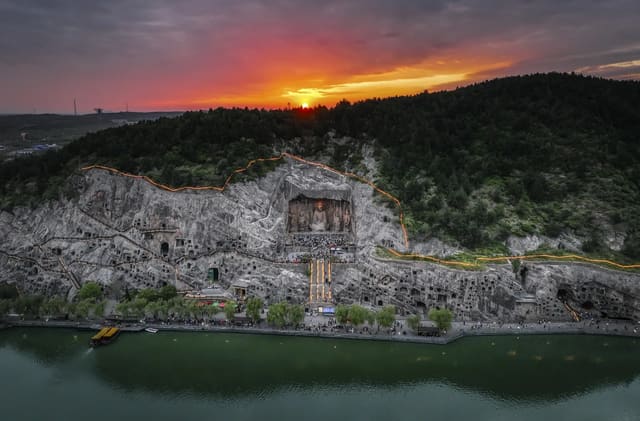 Longmen Grottoes Niche Heritage Site · Henan
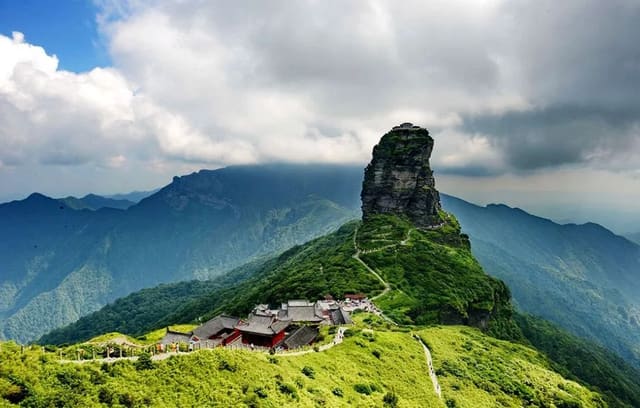 Fanjingshan Temples Niche Heritage Site · Guizhou
 Maijishan Grottoes Niche Heritage Site · Gansu
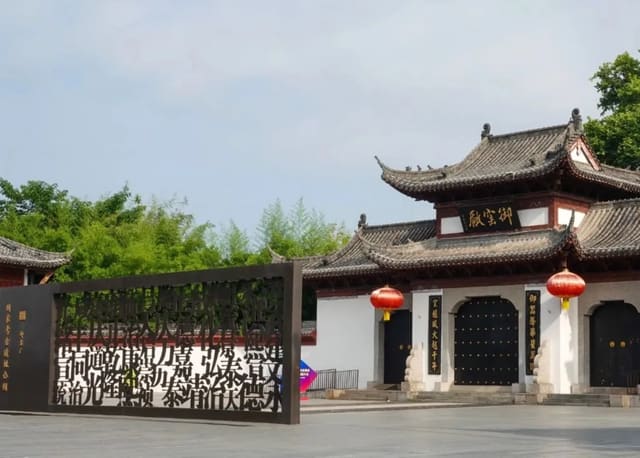 Jingdezhen Porcelain Capital Niche Heritage Site · Jiangxi
 Wudang Mountains Niche Heritage Site · Hubei
 Shaxi Ancient Town Niche Heritage Town · Yunnan
 Zhaoxing Dong Village Niche Dong Village · Guizhou
 Harbin Winter City · Heilongjiang