Niche Heritage Site · Gansu
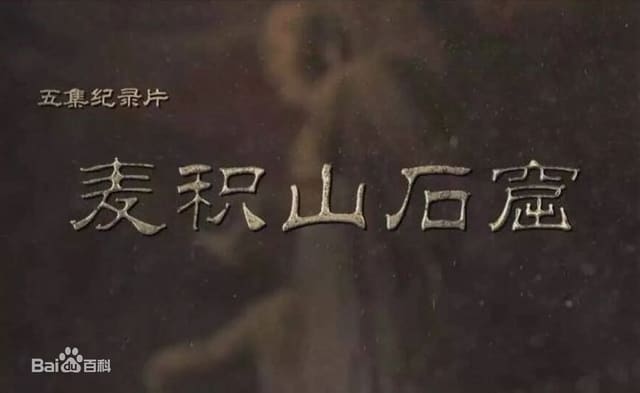
Maijishan Grottoes
Maijishan is the clay-sculpture grotto among China's four great Buddhist cave sites — figures modelled rather than carved, set on walkways clinging to a sheer cliff. Here is what makes it different from Yungang and Longmen, how to reach it from Tianshui, and what the registers actually record.
Affiliate link · we may earn a commission
Before You Go
Is Maijishan right for this trip?
Maijishan rewards an interest in Buddhist sculpture and unusual cliff architecture. It is a sloping climb on exposed walkways rather than a flat museum visit — check the fit before you commit.
Good fit
- Lifelike clay figures, including the famous "Oriental Smile"
- Walkways and pavilions fixed to a near-vertical cliff face
- One of China's four great grotto complexes, with a distinct artistic style
- A Silk Road heritage site inscribed by UNESCO in 2014
- A manageable day out from Tianshui
Consider elsewhere
- Visitors who want carved stone rather than modelled clay — Yungang and Longmen fit better
- A step-free visit — the caves are reached by sloping, elevated walkways
- Visitors wanting live ticket or shuttle prices — we do not hold them here
- Murals as the main draw — Mogao at Dunhuang is the stronger match
Maijishan sits in the hills near Tianshui in eastern Gansu. Its caves were first cut in the Later Qin period (384–417) and worked on across more than ten dynasties. The national heritage authority and the site's own research institute record 221 surviving cave niches, 3,938 pieces comprising 10,632 figures, and roughly 980 square metres of murals. The grottoes are a first-batch national key cultural relic, and in June 2014 they were inscribed on the UNESCO World Heritage List as one component of the Silk Roads: Chang'an–Tianshan Corridor.
What separates Maijishan from Yungang and Longmen is the material. Most of its figures are modelled in clay rather than carved from stone, which allows a softer, more lifelike expression — the quality behind the popular label "Oriental Smile". The caves also cling to a steep cliff, linked by suspended wooden walkways; reaching them is part of the visit.
Because the caves are spread along a cliff face and the approach involves elevated walkways, the practical questions are how to get there from Tianshui and how much climbing you want. This page takes the sculpture first, then the walkways, then the heritage status and the route.
What You See
A site you can read in layers
The wall, the bank, the temple sculpture and the lacquer workshop — each adds a period of the story. This is what a day here is made of.
More reading routes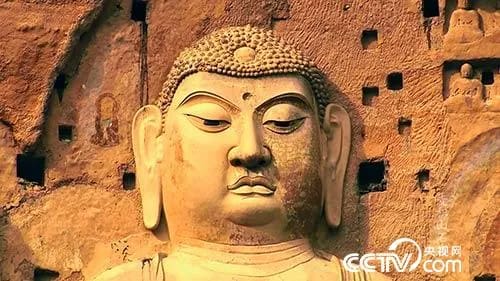
-
01 · The sculpture
Clay figures and the "Oriental Smile"
Most figures at Maijishan are modelled in clay with painted detail, not cut from rock. The gentle, lifelike faces of some bodhisattvas are popularly grouped under the label "Oriental Smile". The official description does not tie that phrase to a single cave number, so treat it as a style rather than one photo spot.
A modelled clay figure — the soft expression behind the "Oriental Smile" label. Registry-backed fact
-
02 · The approach
Suspended walkways and cliff pavilions
The caves are linked by walkways fixed along the cliff, with wooden pavilions built at the cave mouths. The route climbs from one level to the next along these galleries — a distinctive part of the visit that carved-stone grotto sites do not share.
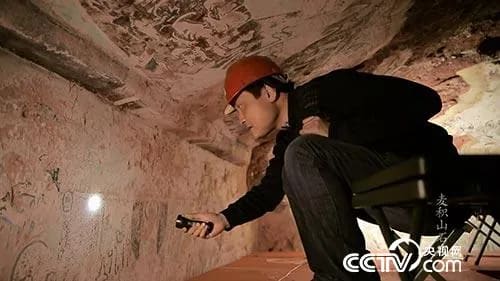
Galleries fixed to the rock face — the route between caves is itself the experience. -
03 · The status
One of China's four great grottoes
Maijishan is grouped with the Mogao Caves at Dunhuang, the Yungang Grottoes near Datong and the Longmen Grottoes near Luoyang as China's four great Buddhist grotto complexes. The four differ in material and period; the table below sets out the facts without ranking them.
Registry-backed fact
-
04 · The heritage layer
A Silk Road World Heritage component
In 2014 Maijishan was inscribed as one of the component sites of "Silk Roads: the Routes Network of Chang'an–Tianshan Corridor", a serial property. It is also a first-batch national key cultural relic under state protection.
Registry-backed fact
-
05 · Getting there
From Tianshui
The grottoes lie in Maiji District, a short distance from Tianshui city. Tianshui is served by rail from Xi'an, Lanzhou and other regional hubs; local buses or taxis cover the final stretch to the scenic area. Check current services before you go.
If the wall and the craft interest you
See the guided ways to visit
Walks and temple visits are the two options people most often compare here. Check current availability and cancellation terms on the provider page before you book.
See Tianshui & Gansu toursAffiliate link · we may earn a commission
The Source
What the registers actually say
Every number below comes from the site's research institute, a national register or UNESCO, not an editorial estimate. This page does not invent a graded hotel list from thin data — check current options for yourself.
- 221
- Cave niches recorded as surviving at Maijishan
- 10,632
- Figures in 3,938 pieces of clay and stone sculpture
- ~980 m²
- Surviving mural area at the site
- 2014
- Year inscribed as part of the Silk Roads UNESCO World Heritage property
Source: Maijishan Grottoes Art Research Institute / Ministry of Culture and Tourism / UNESCO. Official registry snapshot, 2026-11-24 / 2026-11-25..
One of China's four great grottoes
All four are major Buddhist grotto complexes, but they differ in material and setting. The table uses registry facts, not a "best" ranking — it answers the common question of which four sites are meant.
| Site | Material / setting | What you actually see | Heritage facts |
|---|---|---|---|
| Maijishan | Mostly modelled clay figures on a steep cliff with suspended walkways | Lifelike "Oriental Smile" figures, cliff pavilions, 221 niches | |
| Yungang | Stone carving in excavated caves near Datong | Monumental early Northern Wei Buddhas, including the open-air Cave 20 figure | |
| Longmen | Stone carving along a river corridor near Luoyang | Northern Wei inscriptions, Tang imperial sculpture at Fengxian Temple | |
| Mogao Caves | Painted murals and clay sculpture at Dunhuang | Wall paintings and modelled figures inside sand-protected caves |
Common Questions
Where are the Maijishan Grottoes?
They are in Maiji District near Tianshui in eastern Gansu province, north-west China. Most visits start from Tianshui city and continue to the scenic area by local bus or taxi.
How do I get to Maijishan from Tianshui?
Tianshui has rail links to Xi'an, Lanzhou and other regional hubs. From the city, local buses or taxis reach the grottoes in Maiji District. Check current train and bus schedules before you travel.
What are the four most famous Buddhist grottoes in China?
The four usually named are Mogao at Dunhuang, Yungang near Datong, Longmen near Luoyang and Maijishan near Tianshui. They differ in material and period — Maijishan is known chiefly for modelled clay figures.
Is Maijishan worth visiting?
If you are interested in Buddhist sculpture and unusual cliff architecture, yes. The clay figures and the suspended walkways are the specific rewards. If you want carved stone or painted murals as the main event, Yungang or Mogao may suit you better.
How long does a visit take?
Allow a half day to see the main caves along the cliff walkways at a steady pace. The route involves sloping, elevated galleries, so give yourself time rather than rushing between cave mouths.
Are ticket, shuttle or guide prices listed here?
No. Prices, opening hours and shuttle arrangements change and are set by the site and providers. This page lists registry-backed facts only; check the official announcement or the provider pages linked below for current details.
Plan Your Visit
Tours and experiences
Compare guided options in one place. Prices and availability are set by each provider and are not maintained on this page.
As an affiliate, we may earn a commission from qualifying purchases. Prices and availability are set by the provider and are not maintained on this page.
Sources and data note
Facts: Maijishan Grottoes Art Research Institute (mjssk.cn) — 221 caves, 3,938 pieces / 10,632 figures, about 979.54 m² of murals, first-batch national key cultural relic, UNESCO inscription 22 June 2014, walkway and reinforcement history; Gansu provincial culture and tourism authority — Later Qin origin, four great grottoes, "Oriental Smile" in the 2025 New Year address; Ministry of Culture and Tourism national 5A register (Tianshui Maijishan scenic area, 2011); UNESCO Silk Roads: Chang'an–Tianshan Corridor (inscribed 2014). The 142 m cliff height widely quoted in search results is not used here as an unsourced assertion. Affiliate links are destination/category deep links, not live prices; replace with your own tracking URLs before launch.
Another wall, another tradition
More niche heritage sites
 Pingyao Ancient City Niche Heritage Site · Shanxi
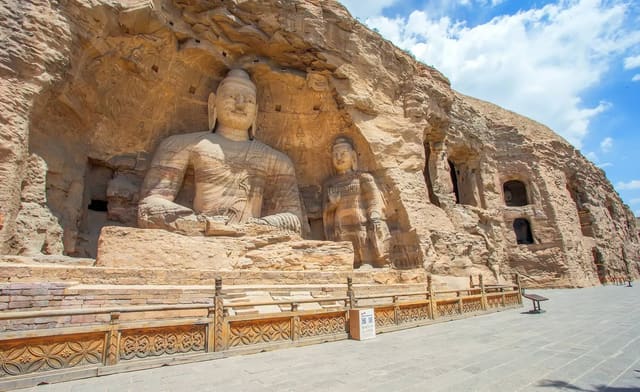 Yungang Grottoes Niche Heritage Site · Shanxi
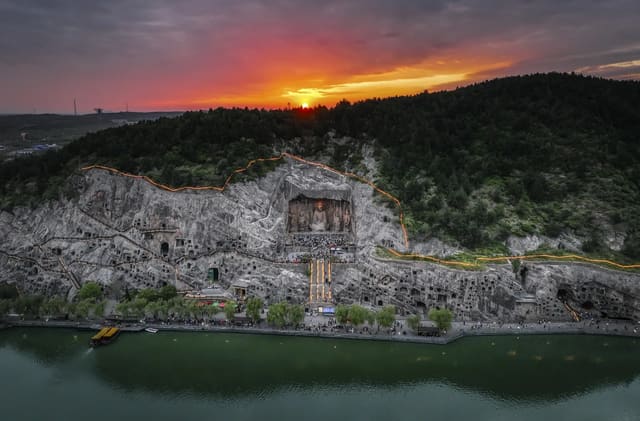 Longmen Grottoes Niche Heritage Site · Henan
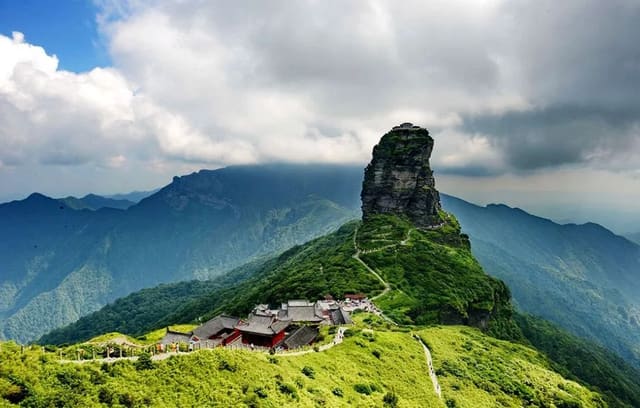 Fanjingshan Temples Niche Heritage Site · Guizhou
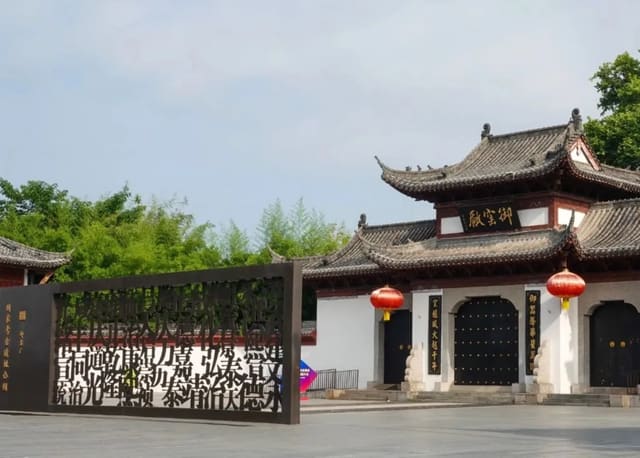 Jingdezhen Porcelain Capital Niche Heritage Site · Jiangxi
 Wudang Mountains Niche Heritage Site · Hubei
 Shaxi Ancient Town Niche Heritage Town · Yunnan
 Zhaoxing Dong Village Niche Dong Village · Guizhou
 Harbin Winter City · Heilongjiang