Learning Journey · Ancient Capitals
Xi’an Day Tour
See where China’s first imperial capital left its evidence — an buried army, a Ming city wall and food traditions still made by hand. This route follows the official 5A scenic register and the living heritage of Xi’an.
Affiliate link · we may earn a commission
Before You Go
Is Xi’an right for this trip?
Xi’an rewards people who want to read a capital in the ground and on the street. Check the fit before you plan the day.
Good fit
- Archaeology and the physical evidence of the Qin and Tang capitals
- A Ming city wall you can walk or cycle in a single morning
- Food traditions such as paomo still made to a registered method
- A first visit that pairs one major site with the old city
Consider elsewhere
- A beach or mountain landscape
- A city you can cover entirely on foot in a few hours
- Nightlife as the main draw
Xi’an or Luoyang?
Two ancient-capital destinations readers often compare. Both sit on the old imperial axis; the difference is which dynasty’s evidence you want in front of you.
| Xi’an | Luoyang | |
|---|---|---|
| Setting | A living city built over the Qin and Tang capitals | A city centred on the Longmen grottoes and the eastern capital |
| Heritage focus | Terracotta army, Ming city wall, Tang Chang’an | Longmen Buddhist grottoes and the Sui-Tang eastern capital |
| National 5A register | Five listed scenic areas, including the Qinshihuang Mausoleum site | Longmen Grottoes and other listed scenic areas |
| Pace for a first visit | One major site out of town plus the walled old city | Grottoes and the old city usually anchor the first day |
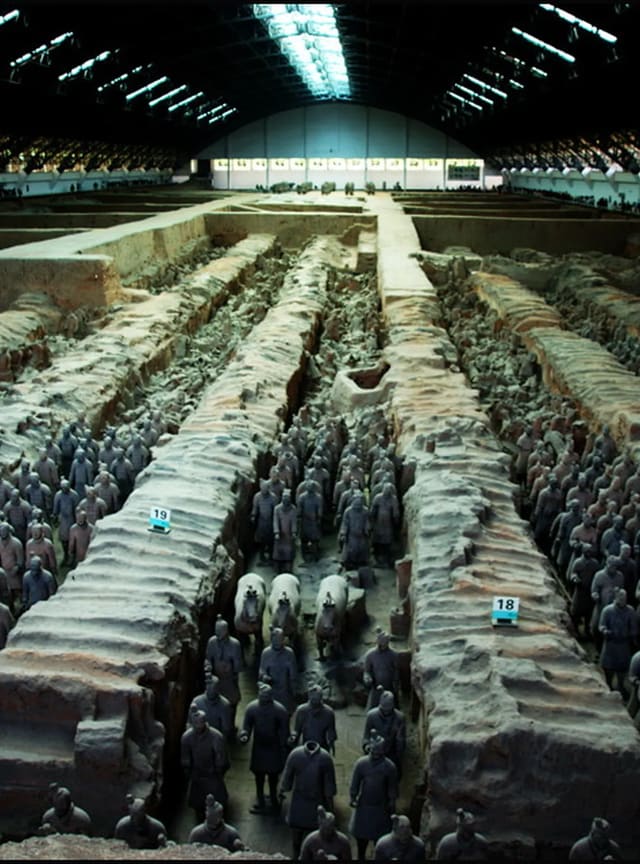
Xi’an is a city where history is not only displayed but excavated. The terracotta army outside the city guards the tomb of China’s first emperor; inside the Ming wall, the street layout still follows older lines. This route connects the physical evidence — a buried army, a fortification, a pagoda — with the food and craft traditions that are still practised here.
It is built on the national registry: five 5A-listed scenic areas in Xi’an, including the Qinshihuang Mausoleum site, the city wall and the Big Wild Goose Pagoda area. The overnight options below come from the official five-star hotel register. The aim is context, not a checklist.
The Route
A day built around living heritage
The terracotta army sits about an hour outside the centre, so a first day works best with one major out-of-town site in the morning and the walled city in the afternoon.
More reading routes-
Morning
Qinshihuang Mausoleum Site Museum and the terracotta army
Start with the excavation pits of the terracotta army, part of a UNESCO World Heritage site and a national 5A scenic area. Seeing the figures in their pits makes the scale of the first imperial capital concrete in a way no photograph does.
Listed in the national 5A scenic registry
-
Midday
Paomo — a registered food tradition
Break for paomo, a mutton-and-bread soup whose preparation is recorded in the national intangible cultural heritage register. It is a working food tradition, not a staged demonstration.
Listed in the national 5A scenic registry
-
Afternoon
Ming city wall and the Stele Forest
Walk or cycle the Ming fortification, then step into the Stele Forest beside it. The two form one 5A-listed scenic area — a physical boundary and the inscriptions preserved just inside it.
Listed in the national 5A scenic registry
-
Late afternoon
Big Wild Goose Pagoda and Tang Chang’an
End at the Big Wild Goose Pagoda, another 5A-listed area, which connects the city to Tang-dynasty Chang’an and the translation of Buddhist texts travelled along the Silk Road.
Listed in the national 5A scenic registry
The Source
Built on official registers
The places on this page are not invented for the route. They come from national registers published by the Ministry of Culture and Tourism.
- 5
- 5A-listed scenic areas in Xi’an
- 14
- Five-star hotels in the national register
- 3
- National rural tourism key villages
Source: Ministry of Culture and Tourism · National tourism registers. Registry snapshot captured 24 November 2026.
Beyond the day plan
See the guided ways to visit
Walks, workshops and ticket-inclusive visits are the options people most often compare here. Check current availability and cancellation terms on the provider page before you book.
Find Xi’an experiences on GetYourGuideAffiliate link · we may earn a commission · different provider from the hero action
Where to Stay
From a day visit to an overnight craft trip
Staying overnight gives you time for the terracotta army, the wall and a slower look at the Tang city. These five-star hotels appear in the national tourism hotel register for the Xi’an area.
City centre and old city
Register names that identify the central city without a district or landmark.
- 西安索菲特酒店
- 西安建国饭店
- 西安悦豪酒店
Hi-tech and business districts
Register names tied to the high-tech zone and the economic development area.
- 西安高新希尔顿酒店
- 西安经开洲际酒店
- 西安赛瑞喜来登大酒店
International-brand city hotels
Named hotels in the national register, grouped by their registered brand.
- 西安喜来登大酒店
- 西安皇冠假日酒店
- 西安威斯汀大酒店
- 西安凯悦酒店
Names as recorded in the national five-star tourism hotel register (official snapshot, 2026-11-24). Grouping follows the place names in the official entries; no prices or availability are held on this page.
Beyond the Gardens
Working villages
For a slower visit, the national rural tourism key-village register lists settlements in the Xi’an area. They are a different kind of heritage site — working villages rather than excavated monuments.
-
西安市长安区王曲街道南堡寨村
National rural tourism key village
-
陕西省西安市鄠邑区石井街道蔡家坡村
National rural tourism key village
-
陕西省西安市蓝田县汤峪镇塘子村
National rural tourism key village
Common Questions
How much time do you need to see the Terracotta Warriors?
Allow a half day for the museum and the excavation pits, including the transfer out from central Xi’an. Rushing it into a single morning is possible but leaves little time for the smaller pits and the museum context. Check current opening details with the provider before you go.
How far is the Terracotta Army from Xi’an?
The Qinshihuang Mausoleum Site Museum is in Lintong, roughly an hour east of central Xi’an by road. That is why this route places the army in the morning and the walled old city in the afternoon.
What is the best way to see the Terracotta Warriors?
Go with the context: read what the pits represent before you arrive, then allow time for the museum as well as the excavation halls. This route links the site to the Qin dynasty page so the army is seen as evidence of a capital, not as an isolated attraction.
Can you see Xi’an in one day?
One day covers the terracotta army and the walled old city if you keep the rest light. A second day lets you add the Big Wild Goose Pagoda area and the food and craft traditions at a slower pace. The hotel list above comes from the national five-star register.
What is Xi’an famous for?
Xi’an is known as the site of China’s first imperial capital and as the eastern terminus of the Silk Road. The terracotta army, the Ming city wall and Tang-dynasty Chang’an all sit here. Several food traditions, including paomo, are on the national intangible cultural heritage register.
Plan Your Visit
Tours and experiences
Compare guided options and ticket-inclusive experiences in one place. Check current availability and cancellation terms on each provider’s page before you book.
As an affiliate, we may earn a commission from qualifying purchases. Prices and availability are set by the provider and are not maintained on this page.
Sources and data note
Scenic-area, hotel and village names are from the Ministry of Culture and Tourism official registry snapshot captured 2026-11-24. Heritage and food traditions are from the national intangible cultural heritage register. Opening hours, tickets and prices change and are intentionally not listed here — check current details with the provider before you go.
Another city, another tradition