Learning Journey · Ancient Capitals
Beijing Day Tour
China’s capital holds more national heritage than any other city on this atlas. One day cannot cover it — but it can show you how an imperial palace, a living craft and an old-city lane fit together.
Affiliate link · we may earn a commission
Before You Go
Is this the right way to see Beijing?
Beijing rewards people who want to understand a capital, not just photograph it. This is one focused day inside that idea — be honest about what it can and cannot cover.
Good fit
- A first look at the Forbidden City and the imperial axis
- Living crafts you can see being made — cloisonne, carving and opera
- Old-city hutongs where daily traditions are still carried on
- A day that connects a palace to the people who worked around it
Consider elsewhere
- Covering the Great Wall and the Forbidden City in one day — they are separate trips
- A city break built around nightlife
- A single landmark with no context around it
Beijing or Xi’an?
Two imperial capitals readers often put on the same itinerary. Both appear in the national 5A register; the difference is which layer of history you want to stand in.
| Beijing | Xi’an | |
|---|---|---|
| Capital era | Ming and Qing imperial capital, with older layers beneath | Qin, Han and Tang capital — the first unification and the Silk Road |
| Heritage focus | Forbidden City, Temple of Heaven, hutongs and court crafts | Terracotta army, Ming city wall and Tang Chang’an |
| National 5A register | Nine listed scenic areas in the city | Five listed scenic areas in the city |
| Pace for a first visit | A palace morning and a craft-and-hutong afternoon | One major site out of town plus the walled old city |
Beijing is the densest heritage city in this atlas: nine 5A-listed scenic areas and more national intangible cultural heritage items than anywhere else we cover. That abundance is exactly why a first visit needs a shape. A list of sights will leave you with a checklist; a route built around a palace, a craft and a street will leave you with an understanding of how the city worked.
This one-day route uses the national registers as its spine. The Forbidden City is both a 5A scenic area and a World Heritage site; the craft traditions below — cloisonne, Peking opera and others — are on the national intangible cultural heritage register. Hotels come from the official five-star register. No prices or opening hours are held here.
The Route
A day built around living heritage
Keep the day inside the old city. A palace in the morning, a living craft at midday, a hutong walk in the afternoon and opera in the evening make a coherent arc — without trying to reach the Great Wall.
More reading routes-
Morning
The Forbidden City and the imperial axis
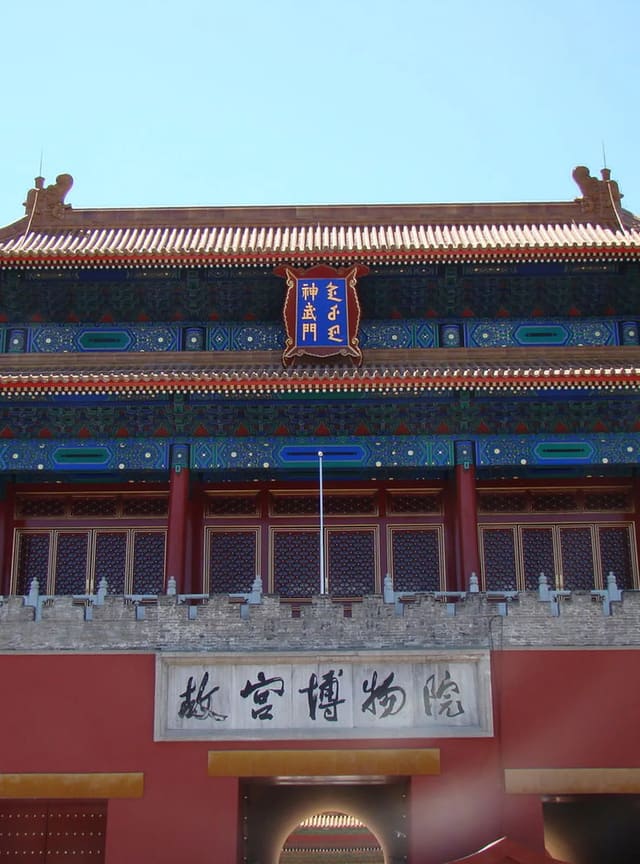
Start at the palace at the centre of the Ming and Qing capital. The Forbidden City is a national 5A scenic area and a UNESCO World Heritage site; its plan explains the gravity of the whole city around it.
Listed in the national 5A scenic registry
-
Midday
Cloisonne and the court crafts
Cloisonne enamelling is a national intangible cultural heritage craft developed around the imperial workshops. Seeing the enamelling and firing process puts the objects in the palace into the hands that made them.
Listed in the national 5A scenic registry
-
Afternoon
Hutongs of the old city
Walk the hutong lanes north of the palace. These are not a museum piece — they are neighbourhoods where daily food, craft and street traditions are still part of ordinary life.
-
Evening
Peking opera
End with Peking opera, a national intangible cultural heritage tradition whose costumes, music and repertoire belong to this city. A performance closes the loop between the palace, the craft and the street.
Listed in the national 5A scenic registry
The Source
Built on official registers
The places and traditions on this page are not invented for the route. They come from national registers published by the Ministry of Culture and Tourism and the national intangible cultural heritage register.
- 9
- 5A-listed scenic areas in Beijing
- 42
- Five-star hotels in the national register
- 134
- National ICH items recorded for Beijing
Source: Ministry of Culture and Tourism · National tourism and ICH registers. Registry snapshot captured 24 November 2026.
Beyond the day plan
See the guided ways to visit
Walks, workshops and ticket-inclusive visits are the options people most often compare here. Check current availability and cancellation terms on the provider page before you book.
Find Beijing experiences on GetYourGuideAffiliate link · we may earn a commission · different provider from the hero action
Where to Stay
From a day visit to an overnight craft trip
An overnight stay lets you add the Temple of Heaven, the Summer Palace or a second look at the court crafts. These five-star hotels appear in the national tourism hotel register for the Beijing area.
Old city and imperial axis
Register names tied to the central city and the historic palace area.
- 北京饭店
- 北京贵宾楼饭店
- 北京东方君悦大酒店
Business and hotel districts
Register names identifying the CBD, financial street and established hotel addresses.
- 北京嘉里大酒店
- 北京希尔顿酒店
- 北京金融街丽思卡尔顿酒店
Established city hotels
Long-registered names in the national five-star hotel register.
- 北京香格里拉饭店
- 北京瑞吉酒店
- 北京长富宫饭店
- 北京国际饭店
Names as recorded in the national five-star tourism hotel register (official snapshot, 2026-11-24). Grouping follows the place names in the official entries; no prices or availability are held on this page.
Beyond the Gardens
Working villages
For a slower visit, the national rural tourism key-village register lists settlements across the Beijing area. They are a different kind of heritage — working villages in the mountains rather than imperial monuments.
-
北京市密云区古北口镇司马台村
National rural tourism key village
-
北京市延庆区旧县镇盆窑村
National rural tourism key village
-
北京市门头沟区清水镇洪水口村
National rural tourism key village
-
北京市房山区大石窝镇王家磨村
National rural tourism key village
Common Questions
What should I not miss in Beijing?
For a first visit, the Forbidden City and a hutong walk give you the imperial and the everyday city in one day. The Great Wall is worth a separate trip rather than squeezing into the same day. This route stays inside the old city and follows official registers.
How many days do you need to see Beijing?
Two to three days covers the central landmarks at a workable pace — palace, Temple of Heaven, Summer Palace and hutongs — with the Great Wall as a separate day. One day, as on this page, gives you a focused introduction rather than a full tour.
Is Beijing worth visiting?
If your interest is imperial history and living craft, yes. Beijing holds nine 5A-listed scenic areas and more national intangible cultural heritage items than any other city in this atlas. If that is not your interest, a smaller city may suit you better.
What is the best tour to take in Beijing?
Choose by what you want to understand. A palace-and-craft day connects the Forbidden City to the traditions that supplied it; a Great Wall day is a different trip. Compare current options on the provider pages linked below — check availability and cancellation terms there.
What can I see made by hand in Beijing?
Cloisonne enamelling, carved lacquer, jade carving and Peking opera costumes are all national intangible cultural heritage traditions recorded for Beijing. Several are linked from the route above, so you can read the craft before you see it.
Plan Your Visit
Tours and experiences
Compare guided options and ticket-inclusive experiences in one place. Check current availability and cancellation terms on each provider’s page before you book.
As an affiliate, we may earn a commission from qualifying purchases. Prices and availability are set by the provider and are not maintained on this page.
Sources and data note
Scenic-area, hotel and village names are from the Ministry of Culture and Tourism official registry snapshot captured 2026-11-24; craft and opera traditions are from the national intangible cultural heritage register. Opening hours, tickets and prices change and are intentionally not listed here — check current details with the provider before you go.