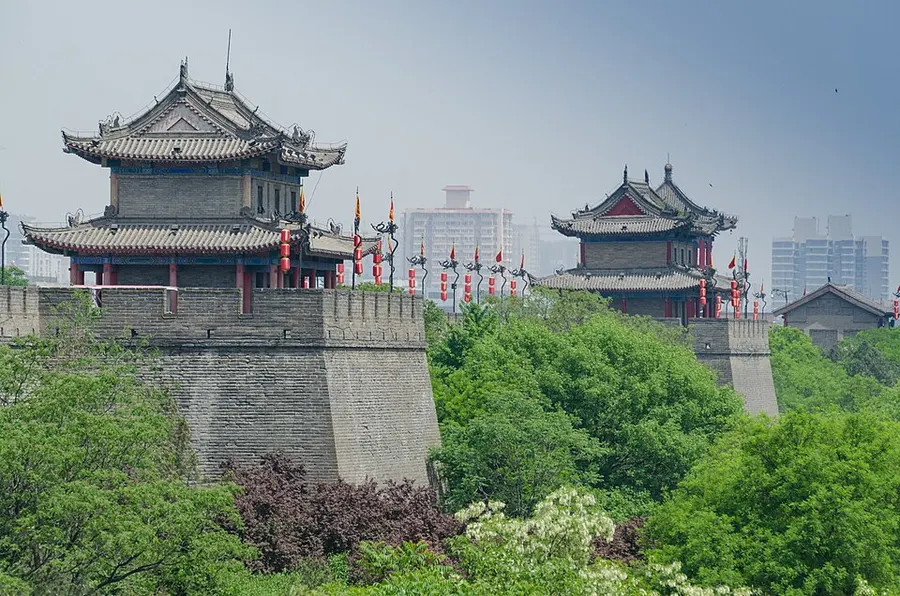
An ancient capital of thirteen dynasties, Xi'an is famous for the Terracotta Warriors and as the birthplace of Xi'an drum music, preserving Tang Dynasty court music.
As a vital node in China's cultural geography, this location has nurtured artistic traditions
that have endured through dynastic changes, social transformations, and the challenges of modernity.
The continuity of these practices speaks to the deep relationship between place and cultural identity.
Today, Xi'an continues to be a living center of heritage — where master artisans
train the next generation, festivals mark the seasons, and ancient crafts adapt to contemporary life.
auto_awesome
travel_explore
Civilization Snapshot
travel_explore
Coordinates34.342°N, 108.940°E
map
Cultural Zoneguanzhong
density_small
Heritage Density
4 traditions registered
Through the Eras
Pre-ImperialBefore 221 BCE
Imperial Era221 BCE – 1912 CE
Modern Era1912–Present
mapLandscape of Practice
Where heritage lives — the geography of cultural practice
Interact with the nodes of cultural heritage across the region's ancient grid.
The heritage of Xi'an does not exist in isolation. It is the core of a sophisticated network
of exchange, where techniques, motifs, and melodies traveled to shape the identity of an entire civilization.
Xi'an — Chang'an in its glory days — served thirteen dynasties for roughly 1,100 years, longer than any other Chinese capital. Under the Tang it covered eighty-four square kilometres with 108 walled wards, the largest planned city on medieval Earth and the eastern terminus of the Silk Road, where Persian merchants and Japanese monks mingled on the Western Market.
The 1974 discovery of farmers digging a well rewrote archaeology: three pits near the First Emperor's tomb yielded some eight thousand terracotta soldiers, each with individual features, inscribed among UNESCO's first World Heritage sites in 1987. The city also guards a living sound — Xi'an guyue drum music, a Tang-descended wind-and-percussion suite genre UNESCO listed in 2009.
handyman
Cultural Traditions
01
Terracotta Army
Eight thousand life-size figures guard the First Emperor's necropolis.
02
City Wall Cycling
A complete Ming wall ring allows a fourteen-kilometre bicycle circuit.
03
Drum Music
Guyue ensembles preserve Tang palace suites on sitting drums and pipes.
04
Muslim Quarter
The Great Mosque compound anchors centuries of Hui trade cuisine.
contact_support
Common Questions
Why is Xi'an called the cradle of Chinese civilization?add
Thirteen dynasties ruled from here across eleven centuries, including the western capital of the Tang dynasty at its height.
What started the Silk Road here?add
Han envoy Zhang Qian departed from this region around 138 BCE, opening Silk Road trade geography westward.
When were the Terracotta Warriors found?add
March 1974, by farmers sinking a well east of the tomb mound.
smart_display
Watch & Learn
Oral Tradition
Stories & Legends
Narratives from the atlas graph that share origins, practitioners, or settings with this topic.