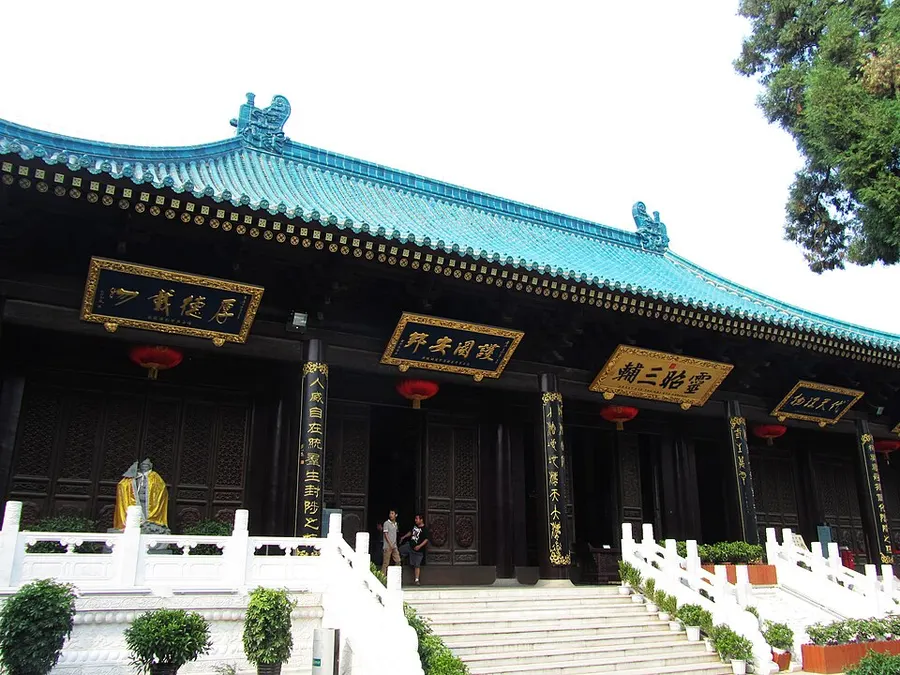
Traditional Music
Xi'an, Northwest China
Tang Dynasty (618–907 CE)
Representative List
Master-Apprentice (Oral/Aural)
Oral Tradition
Xi'an Wind and Percussion Ensemble
"A majestic wind and percussion tradition from ancient Xi'an, preserving Tang Dynasty court music with powerful drums and soaring suona."
CIVILIZATION CONTEXT
This artifact is part of the Intangible Heritage Cluster. It connects to 5 entities across the atlas, spanning 1 region, 0 masters, 0 festivals, and 0 skills.
Xi'an Wind and Percussion Ensemble: A Living Heritage
Xi'an drum music is a grand ensemble tradition from the ancient capital of Xi'an, combining wind and percussion instruments. Dating back to the Tang Dynasty, it was performed at court ceremonies and Buddhist temples. The music is characterized by powerful drumming, soaring suona (Chinese oboe), and melodic sheng (mouth organ). Its notated scores preserve one of China's oldest surviving musical notation systems.
1119+
Years of Unbroken Lineage
0
Related Cultural Vectors
History & Development
Xi'an drum music descends from the wind-and-percussion bands of Tang and Song courts and temples, kept alive by lay societies clustered around the city's shrines. Societies still perform from hand-copied manuscripts, the oldest surviving volumes dated 1689, preserving suite structures that vanished from court practice centuries ago.
Each society fields seated players for long chamber suites and marching formations for processions, blowing sheng mouth organs, dizi flutes, and suona over drums, gongs, and cymbals. UNESCO inscribed Xi'an wind and percussion ensemble music on the Representative List in 2009, and temple fairs at the City God Temple still gather rival societies each lunar season.
How It Is Made
- 01
Copying the manuscripts
Apprentices hand-copy society scores in traditional cipher notation, a discipline that doubles as memorisation and keeps the old volumes from wearing out.
- 02
Learning seated suites
Long multi-movement suites unfold slowly indoors, with the sheng sustaining harmonies while drums cue each section change.
- 03
Marching the processions
Festival routes demand walking tempos, so percussion leads and the wind players weave the same melodies into shorter, punchier figures.
- 04
Serving an apprenticeship
Players join a society young, learning by sitting beside elders at rehearsals, because the manuscripts record pitches but not the breathing and ornament that shape each phrase.
Common Questions
Who performs this music today?
Amateur societies around Xi'an, many tied to temples or villages, rehearse weekly and perform at fairs; some now accept conservatory students alongside hereditary members.
When can visitors hear it?
The City God Temple and nearby fairs host society performances on major lunar festival days, described in the Xi'an city guide, with indoor seated concerts in winter months.
How old is the repertoire really?
Melodies trace to Tang and Song court and Buddhist temple bands, and the 1689 manuscripts preserve suite orders that scholars match against Song-dynasty treatises.
Watch & Learn
Stories & Legends
The Sound of Silk: Guzheng Across Millennia
historicalWhen the guzheng player's fingers sweep across 21 strings, Chinese memory speaks.
Related Places
Relationship Constellation
Tracing the invisible threads that connect Xi'an Wind and Percussion Ensemble to the broader civilization ecosystem.
Continue the Journey
Xi'an Wind and Percussion Ensemble
Traditional Music
Hua'er Folk Songs
Traditional Music
arrow_forwardDragon Dance
Traditional Dance
arrow_forwardNanyin Music
Traditional Music
arrow_forward