Traditional Drama
Xi'an, Northwest China
Han Dynasty (202 BCE–220 CE)
Representative List
Master-Apprentice (Oral/Aural)
Oral Tradition
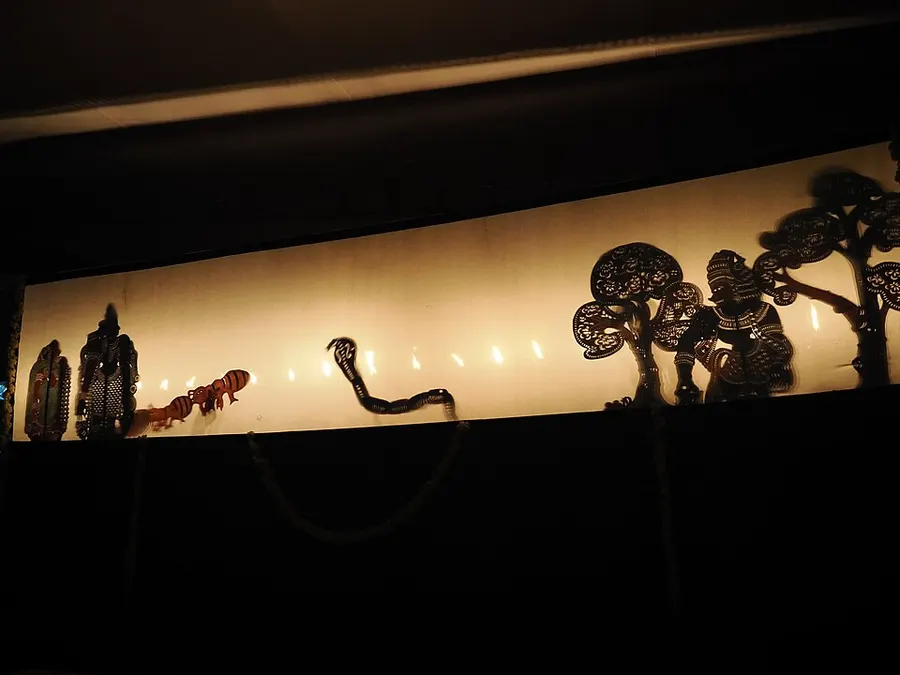
Chinese Shadow Puppetry
"Ancient storytelling art using carved leather puppets and light, combining craftsmanship, music, and oral tradition for over 2,000 years."
CIVILIZATION CONTEXT
This artifact is part of the Intangible Heritage Cluster. It connects to 11 entities across the atlas, spanning 2 regions, 0 masters, 0 festivals, and 0 skills.
Chinese Shadow Puppetry: A Living Heritage
Chinese shadow puppetry is a form of storytelling using intricately carved leather puppets projected onto a translucent screen. Performers manipulate the puppets behind the screen while singing and playing instruments. Dating back over 2,000 years to the Han Dynasty, it combines craftsmanship (puppet carving), performing art, and oral literature. Each region has developed distinct styles of carving and performance.
2228+
Years of Unbroken Lineage
0
Related Cultural Vectors
History & Development
Shadow theatre reached documented form under the Northern Song, when Bianliang audiences watched painted leather figures move behind lit screens in night markets. Troupes spread with trade routes, developing regional schools such as Shaanxi string-led plays and Hebei donkey-hide figures. Twentieth-century film and television emptied rural bookings until UNESCO inscribed Chinese shadow puppetry on the Representative List in 2011.
Repertoires preserved court epics and folk legends alike, with complete cycles such as Fengshen Bang performed across several nights. Regional styles differ mainly in figure size, hide thickness, and singing dialect, yet all rely on a single translucent screen and oil lamp lighting inherited from the Song stage.
How It Is Made
- 01
Curing the hides
Craftsmen scrape donkey or cow hide clean, stretch it frame-tight, and dry it until it turns translucent enough to pass lamplight.
- 02
Carving the figure
Dozens of chisels cut interlocking patterns into joints and costumes; a fine head may need more than three thousand knife strokes.
- 03
Painting and joining
Mineral dyes colour each part, rods are stitched to hands and shoulders, and eleven hinged pieces let one puppet gesture, bow, and fight.
- 04
Screen performance
Five performers share the work behind the screen, manipulating figures, singing all roles, and striking percussion in coordinated shifts.
Common Questions
What are the puppets made of?
Traditionally processed donkey or cow hide, scraped thin and oiled until light passes through. Rods are wooden, and joints tie together with knotted cord so limbs articulate cleanly.
How large is a typical troupe?
Rural troupes travel with about five people. The lead manipulates figures and sings narration while partners handle percussion, strings, and secondary puppets.
Where can visitors still see performances?
Regular shows continue in Huaxian and Xi'an in Shaanxi, Tangshan in Hebei, and museum stages in Beijing, with heritage bureaus funding school residencies since the 2011 UNESCO inscription.
Watch & Learn
Stories & Legends
Shadow Puppetry: Light, Leather, and Legend
historicalThe world's first animated cinema, centuries before film.
Related Places
Relationship Constellation
Tracing the invisible threads that connect Chinese Shadow Puppetry to the broader civilization ecosystem.
Continue the Journey
Chinese Shadow Puppetry
Traditional Drama
Tibetan Opera (Ache Lhamo)
Traditional Drama
arrow_forwardSichuan Opera
Traditional Drama
arrow_forwardPeking Opera
Traditional Drama
arrow_forward