Traditional Drama
Lhasa, Southwest China
14th century CE, Tibet
Representative List
Master-Apprentice (Oral/Aural)
Oral Tradition
Tibetan Opera (Ache Lhamo)
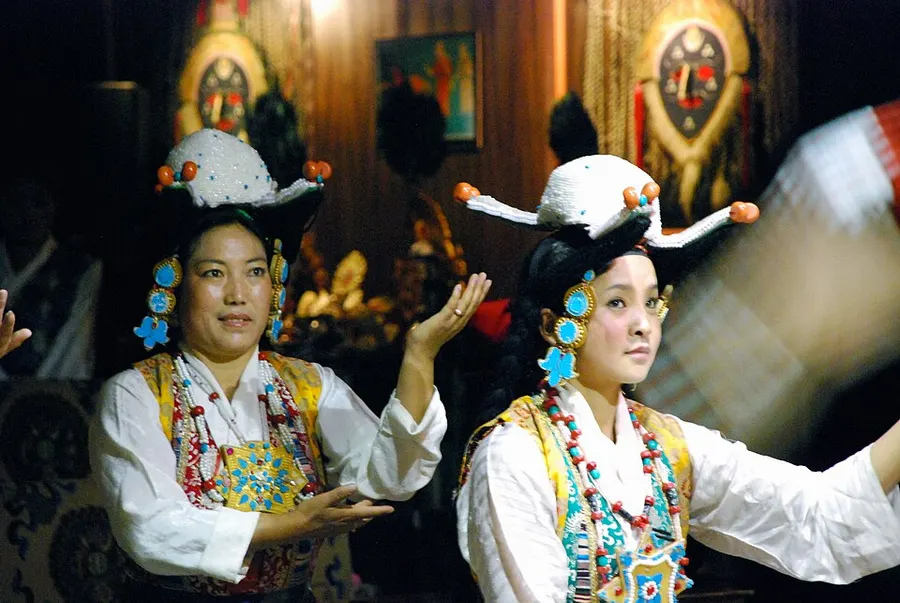
"A sacred Tibetan performing art blending masked dance, Buddhist chanting, and colorful costumes — performed for centuries on the high plateau."
CIVILIZATION CONTEXT
This artifact is part of the Intangible Heritage Cluster. It connects to 12 entities across the atlas, spanning 1 region, 0 masters, 0 festivals, and 0 skills.
Tibetan Opera (Ache Lhamo): A Living Heritage
Tibetan opera, known as Ache Lhamo (sister goddess), is a traditional Tibetan performing art combining dance, chanting, and masked performance. It originated in the 14th century and draws from Buddhist stories, Tibetan history, and folk tales. Performances feature colorful masks, elaborate costumes, and a distinctive musical style. It is traditionally performed during summer festivals and religious occasions.
Centuries
Years of Unbroken Lineage
0
Related Cultural Vectors
History & Development
Tibetan opera, lhamo, fills monastery courtyards and Shoton festival lawns with masked dance-drama that can run a full day for one story. Tradition credits the fifteenth-century bridge-builder Thangtong Gyalpo, whose all-sister troupe sang for funding, with founding the form, and the name ache lhamo still honours those performer-sisters.
Unamplified singers project across valley air while dancers circle to drum and cymbal, a narrator bridging scenes in sung verse. UNESCO inscribed Tibetan opera on the Representative List in 2009, and Lhasa's Norbulingka stage now hosts troupe contests that draw village companies from across the plateau.
How Lhamo Is Performed
- 01
Painting the masks
Each colour codes a character class, from blue hunter masks to the yellow saint masks of kings, painted fresh before every festival season.
- 02
Singing in open air
Performers train glottal projection that carries hundreds of metres without microphones, pacing phrases to drum cues.
- 03
Dancing the circle steps
Processional walking patterns frame each scene, with turns and stamp sequences signalling scene changes to distant audiences.
- 04
Narrating the story
A lead storyteller chants plot summaries between acts, letting one troupe compress week-long temple texts into festival-length performances.
Common Questions
When can visitors watch?
The Shoton festival in late summer fills Lhasa with troupe competitions, and monastery anniversaries stage local performances through the year, both described in the Lhasa city guide.
What stories dominate?
Eight classic plays circulate widely, mixing saints' biographies, moral trials, and romance, with the mask iconography explained in the Tibetan opera mask story.
Is it related to Chinese opera?
It developed independently with its own music and staging, closer in spirit to open-air ritual theatre than to the percussion-driven genres of eastern China.
Watch & Learn
Stories & Legends
Tibetan Opera: Masks of the Himalayas
historicalAt 4,000 meters, a masked opera has been performed for over 600 years.
Related Places
Relationship Constellation
Tracing the invisible threads that connect Tibetan Opera (Ache Lhamo) to the broader civilization ecosystem.
Continue the Journey
Tibetan Opera (Ache Lhamo)
Traditional Drama
Sichuan Opera
Traditional Drama
arrow_forwardNanyin Music
Traditional Music
arrow_forwardChinese Shadow Puppetry
Traditional Drama
arrow_forward