拉萨
Lhasa
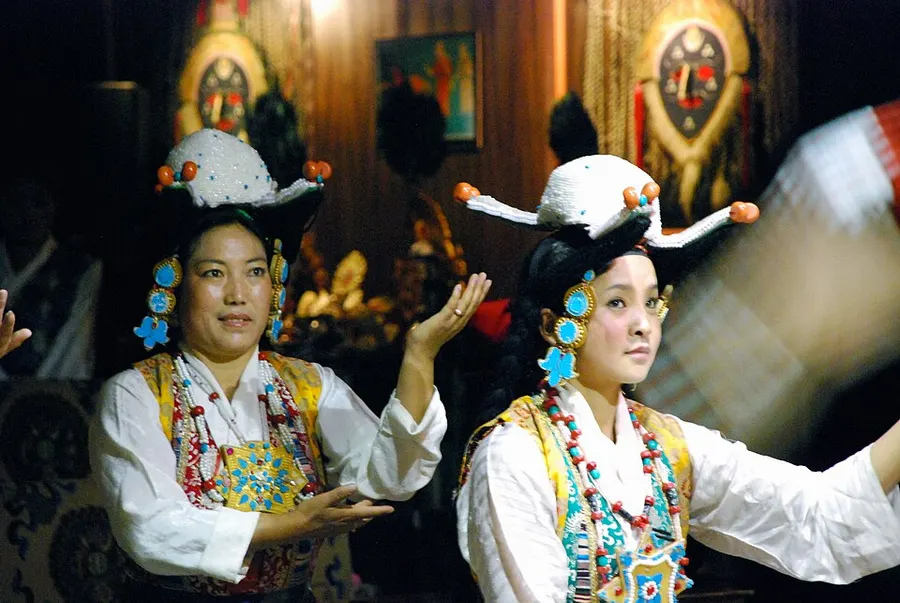
The capital of Tibet, Lhasa is home to the Potala Palace and the spiritual center of Tibetan Opera (Ache Lhamo), a masked dance-drama tradition.
As a vital node in China's cultural geography, this location has nurtured artistic traditions that have endured through dynastic changes, social transformations, and the challenges of modernity. The continuity of these practices speaks to the deep relationship between place and cultural identity.
Today, Lhasa continues to be a living center of heritage — where master artisans train the next generation, festivals mark the seasons, and ancient crafts adapt to contemporary life.
Civilization Snapshot
Where heritage lives — the geography of cultural practice
Interact with the nodes of cultural heritage across the region's ancient grid.
Heritage District
The cultural heart of Lhasa
Craft Village
Traditional workshops and living heritage
The heritage collection of Lhasa
A Lineage of Eras
Keepers of the Flame
Tashi Drolma
“The craft is not just technique — it is the memory of our ancestors speaking through our hands.”
READ THEIR STORYThe Cultural Constellation of Lhasa
The heritage of Lhasa does not exist in isolation. It is the core of a sophisticated network of exchange, where techniques, motifs, and melodies traveled to shape the identity of an entire civilization.
- Beijing Connected Heritage
- Nanjing Connected Heritage
- Suzhou Connected Heritage
The Rhythms of Time
Spring Festival
2 seasonal observances
Summer Festival
2 seasonal observances
Autumn Festival
2 seasonal observances
Winter Festival
2 seasonal observances
Nearby heritage destinations
Beijing
北京 · The capital of China, Beijing has been the political and cul...
Nanjing
南京 · An ancient capital of six dynasties, Nanjing is the birthpla...
Suzhou
苏州 · Famous for its classical gardens and silk industry, Suzhou i...
Chenjiagou
陈家沟 · A small village in Henan Province, Chenjiagou is the birthpl...
History & Development
At 3,650 metres, Lhasa ranks among the world's high capitals, and its skyline has been defined since 1645, when the Fifth Dalai Lama began the Potala Palace on Marpo Ri ridge. Thirteen storeys of stone and timber holding more than a thousand rooms, the Potala joined UNESCO's list in 1994 alongside the Jokhang temple raised in the seventh century by Songtsen Gampo.
Devotion organizes the streets. Barkhor pilgrims circle the Jokhang clockwise day and night, prostrating the length of their journey, and summer brings the Shoton festival when troupes perform Tibetan opera on Norbulingka lawns after the giant thangka unveiling at Drepung.
Cultural Traditions
- 01
Kora Circuits
Clockwise prayer circuits lace temples, lakes, and the whole city.
- 02
Butter Lamps
Yak-butter flames fill chapels as votive light.
- 03
Shoton Opera
Lhamo troupes stage masked epics during the yogurt festival.
- 04
Guozhuang Dances
Evening circles step to guozhuang dance rhythms in courtyards.
Common Questions
When was the Potala built?
Founded 1645 and expanded to its present 13 storeys; UNESCO listed it in 1994.
What happens at Shoton?
After the dawn thangka reveal, Tibetan opera companies perform for days on the park lawns.
How do pilgrims worship here?
By walking kora circuits and prostrating toward the Jokhang, the faith's holiest temple.
Watch & Learn
From the Archive
Photographs documenting the materials, makers, and settings behind these traditions.