Traditional Crafts
Tibet Autonomous Region, Southwest China
7th–8th century CE, Tibet
National Heritage
Master-Apprentice (Hands-on)
Thangka Painting
Thangka Painting
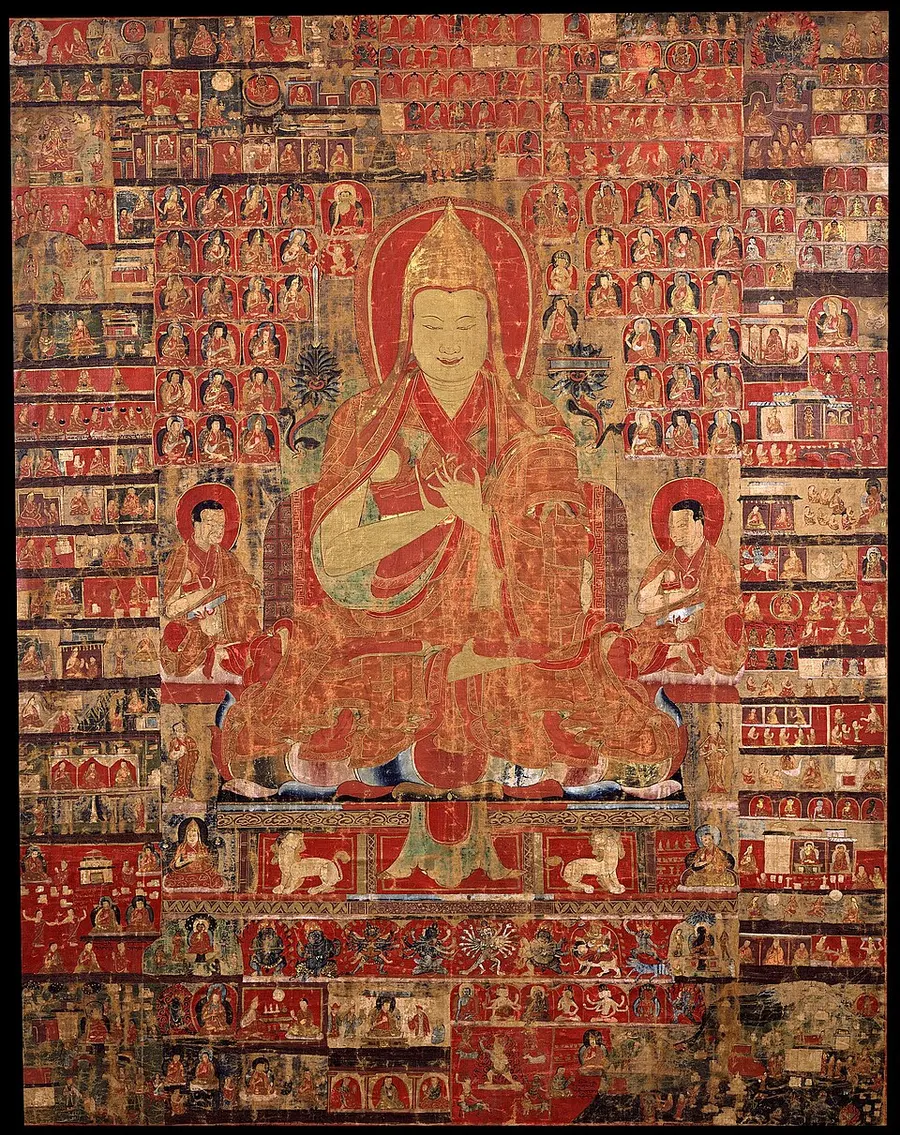
"Sacred Tibetan Buddhist paintings on cotton and silk, created with mineral pigments and gold to strict iconographic rules."
CIVILIZATION CONTEXT
This artifact is part of the Intangible Heritage Cluster. It connects to 8 entities across the atlas, spanning 2 regions, 0 masters, 0 festivals, and 1 skill.
Thangka Painting: A Living Heritage
Thangka is a Tibetan Buddhist painting on cotton or silk, depicting deities, mandalas, and the Wheel of Life. Created with meticulous iconographic precision, each thangka follows strict proportions and symbolic color schemes established in Buddhist scripture. Paints are made from ground minerals (lapis lazuli, malachite, cinnabar) and 24k gold. A master thangka painter may spend months or years on a single piece, following purification rituals before beginning.
Centuries
Years of Unbroken Lineage
1
Related Cultural Vectors
History & Development
Thangka are portable sacred paintings rolled like scrolls, built on cotton grounds sized with chalk and ruled by iconometric grids that fix every deity's proportion. Painters grind malachite, azurite, lapis, cinnabar, and orpiment into mineral colour, outline gold leaf last, and finish with an eye-opening rite that consecrates the image; a museum-grade scroll takes months. Regional schools matured distinct palettes and landscape treatments, from Menri's serene greens to Karma Gadri's spacious skies, and monastic workshops standardised training through repeated deity cycles.
Several lineages entered China's national inventory beginning in 2006, and Rebgong valley ateliers gained world standing through the 2009 UNESCO inscription of Regong arts. Contemporary studios serve monasteries, museums, and private altars alike, while academies teach boys grid geometry before freehand flourish, keeping named lineages alive; collections from Lhasa to Paris hold centuries-old pigments unfaded, testimony to the medium's chemistry.
How It Is Made
- 01
Preparing the ground
Cotton is stretched, glued, chalked, and burnished with a conch until polished like bone.
- 02
Ruling the iconometry
Canonical grids fix head units and stance angles; deviation voids a devotional image.
- 03
Painting in strata
Landscape washes precede figures, shading builds in layers, and outlines sharpen progressively toward gold.
- 04
Mounting and consecrating
Silk brocade borders frame the scroll, dust covers and dowel complete it, and a rite opens the eyes for worship.
Common Questions
Why do thangka colours last centuries?
Mineral pigments are chemically inert and lightfast, unlike organic lakes, which is why museum scrolls retain jewel saturation.
What governs the imagery?
Scriptural grids and colour symbolism, taught identically across schools including the Regong tradition covered in our Regong arts entry.
Who trains today's painters?
Monastic workshops and valley academies across Tibetan areas, with profiles like Tibetan cultural bearers showing living lineages.
Watch & Learn
Stories & Legends
Tibetan Opera: Masks of the Himalayas
historicalAt 4,000 meters, a masked opera has been performed for over 600 years.
Skills & Techniques
Thangka Painting expand_more
The sacred Tibetan Buddhist art of painting deities and mandalas on cotton or silk using mineral pigments and following strict iconographic proportions.
Steps
- Prepare the canvas by stretching cotton fabric on a frame
- Apply a gesso of animal glue and chalk, then polish smooth
- Draw the iconographic grid following precise scriptural proportions
- Paint the background with ground mineral pigments mixed with glue
- Apply gold and silver details for highlights
- Outline figures and features with fine brush strokes
- Mount the finished thangka on silk brocade
Tools
stretching frame, fine brushes (various sizes), palette, gold stylus, measuring cords
Materials
cotton fabric, silk brocade, mineral pigments (lapis lazuli, malachite, cinnabar), 24k gold, animal glue
Relationship Constellation
Tracing the invisible threads that connect Thangka Painting to the broader civilization ecosystem.
Continue the Journey
Thangka Painting
Traditional Crafts
Jingdezhen Porcelain
Traditional Crafts
arrow_forwardChinese Knotting
Traditional Crafts
arrow_forwardChinese Dietary Therapy
Traditional Medicine
arrow_forward