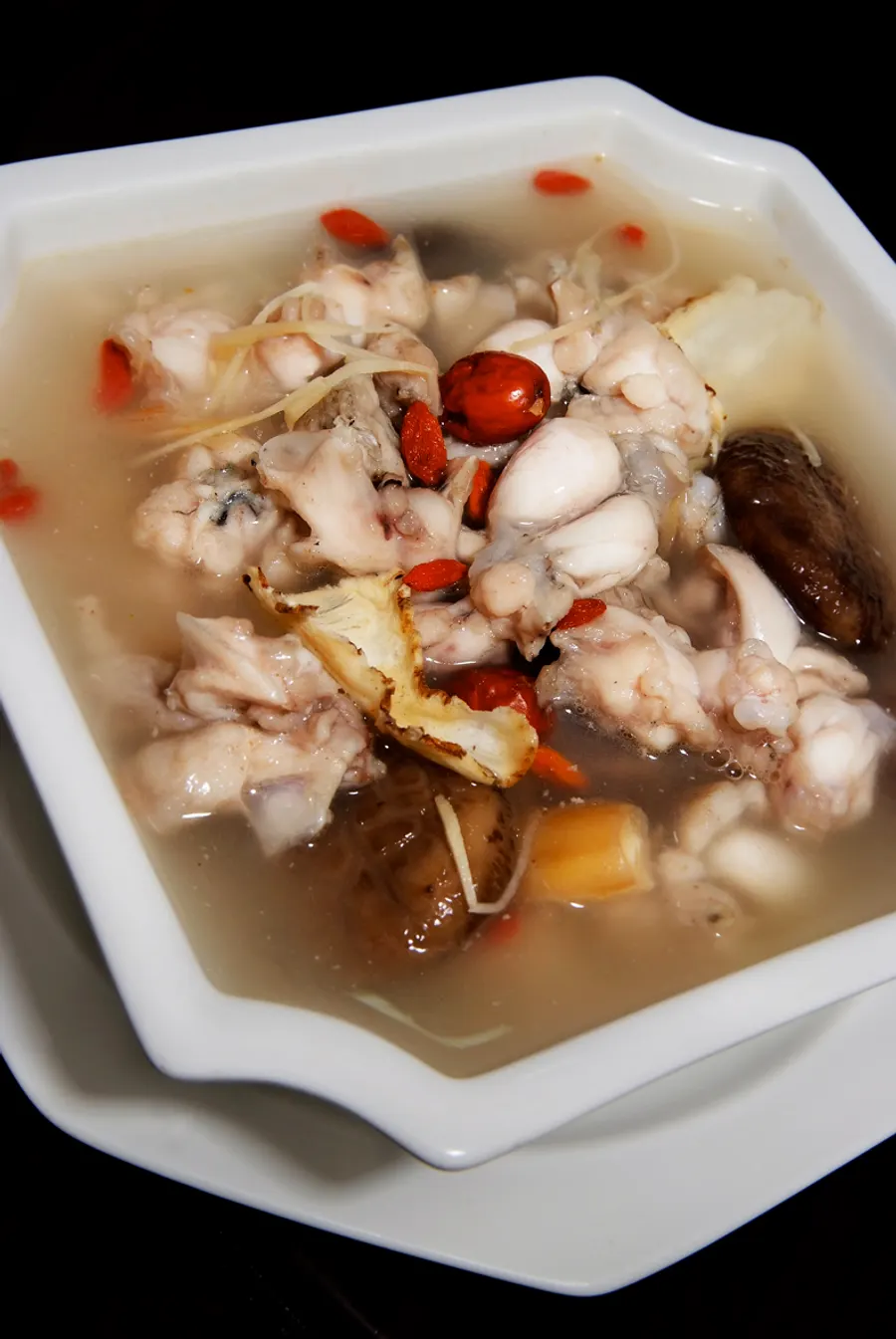
Traditional Medicine
Beijing, North China
Tang Dynasty (618–907 CE), Sun Simiao's medical classics
National Heritage
Lineage Transmission
Oral Tradition
Chinese Dietary Therapy
"The Chinese art of healing through food — therapeutic soups, congees, and seasonal eating regimens based on millennia of clinical observation."
CIVILIZATION CONTEXT
CROSS-SITE REFERENCES
TheWayOfNatureAtlas
Seasonal Eating: The Way of Nature
How dietary therapy embodies the principle of eating in harmony with nature's cycles
MissingUmami
Thermal Natures of Common Ingredients
Explore which ingredients are hot, warm, cool, or cold according to TCM food theory
taleswithlee
The Philosophy of Food as Medicine
Cultural and philosophical roots of Chinese dietary therapy in Daoist thought
This artifact is part of the Intangible Heritage Cluster. It connects to 5 entities across the atlas, spanning 1 region, 0 masters, 0 festivals, and 0 skills.
Chinese Dietary Therapy: A Living Heritage
Chinese dietary therapy (shiliao) is the practice of using food as medicine, based on the principle that foods possess thermal natures (hot, warm, cool, cold) and flavors that affect the body's organ systems. Developed over millennia, it is codified in texts like Sun Simiao's "Prescriptions Worth a Thousand Gold." Treatments include therapeutic soups, congees, herbal teas, and seasonal eating regimens tailored to individual constitutions.
1119+
Years of Unbroken Lineage
0
Related Cultural Vectors
History & Development
Chinese dietary therapy treats food as first-line medicine, classifying ingredients by thermal nature and flavour to correct the same patterns herbs address. The Rites of Zhou describe court diet physicians ranking above internists, and kitchens prepared congees, soups, and steamed dishes matched to season and constitution for every rank of household.
The Yuan court nutrition manual Yinshan Zhengyao, completed in 1330 by Hu Sihui, systematised hundreds of recipes with medicinal indications, the earliest printed book of its kind. Modern hospitals run clinical dietetics departments that blend these classifications with laboratory nutrition, keeping medicated kitchens beside pharmacy windows.
How It Is Made
- 01
Classifying the ingredient
Every food carries a nature from cold to hot and one of five flavours, so ginger warms while mung bean cools regardless of vitamin content.
- 02
Matching pattern to plate
Practitioners identify excess heat, cold damp, or deficiency through the four examinations, then build menus steering the opposite direction.
- 03
Cooking low and long
Herbs join bones and grains in hours-long simmering, extracting properties gently enough for daily eating rather than dosing.
- 04
Timing with seasons
Menus rotate with the solar terms, adding warming lamb at winter solstice and cooling lotus seed at high summer, aligning body load with climate.
Common Questions
Is food really used as medicine?
Yes, as prevention and mild-case treatment; serious illness moves to herbal formulas described under Chinese herbal medicine, with diet continuing alongside.
What does a therapeutic menu look like?
Congee bases, dual-boiled soups, and steamed dishes built around one or two active ingredients, eaten consistently for weeks rather than single meals.
Who wrote the classic text?
The imperial dietician Hu Sihui compiled Yinshan Zhengyao in 1330 for the Yuan court, a milestone recorded in Yuan-dynasty court culture.
Watch & Learn
Stories & Legends
Medicine Without Borders: TCM's Ancient Wisdom
historicalA system of medicine that views the human body as a microcosm of the universe.
Related Places
Relationship Constellation
Tracing the invisible threads that connect Chinese Dietary Therapy to the broader civilization ecosystem.
Continue the Journey
Chinese Dietary Therapy
Traditional Medicine
Thangka Painting
Traditional Crafts
arrow_forwardJingdezhen Porcelain
Traditional Crafts
arrow_forwardTraditional Qigong
Traditional Medicine
arrow_forward