Tibetan Opera: Masks of the Himalayas
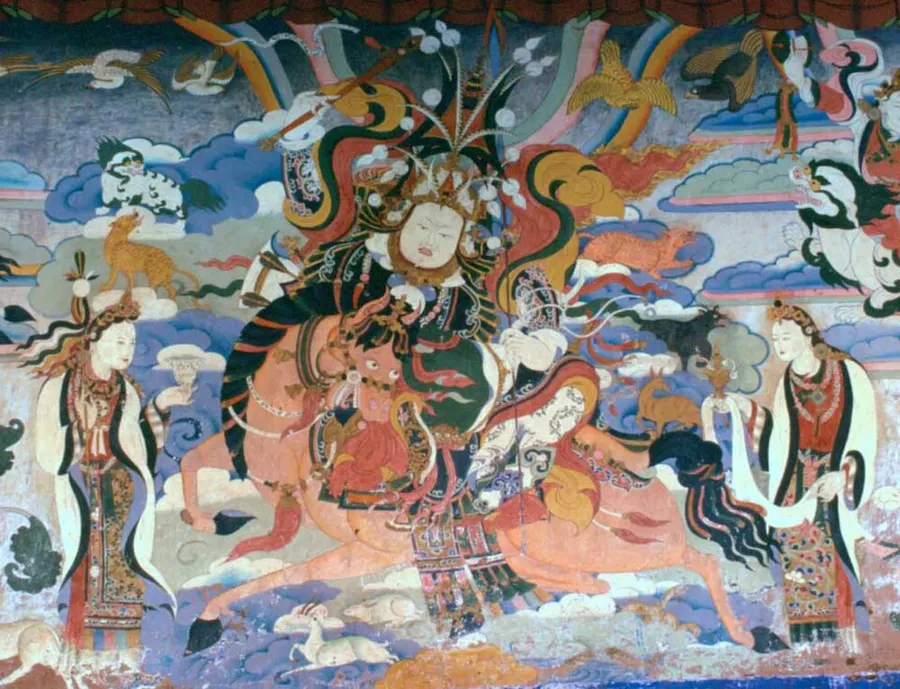
historicalAt 4,000 meters, a masked opera has been performed for over 600 years.
Tibet Autonomous Region
The high-altitude region known for Tibetan Opera, thangka painting, Lum medicinal bathing tradition, and the epic of King Gesar.
As a vital node in China's cultural geography, this location has nurtured artistic traditions that have endured through dynastic changes, social transformations, and the challenges of modernity. The continuity of these practices speaks to the deep relationship between place and cultural identity.
Today, Tibet Autonomous Region continues to be a living center of heritage — where master artisans train the next generation, festivals mark the seasons, and ancient crafts adapt to contemporary life.
Interact with the nodes of cultural heritage across the region's ancient grid.
The cultural heart of Tibet Autonomous Region
Traditional workshops and living heritage
The heritage collection of Tibet Autonomous Region
A Lineage of Eras
“The craft is not just technique — it is the memory of our ancestors speaking through our hands.”
READ THEIR STORY“The craft is not just technique — it is the memory of our ancestors speaking through our hands.”
READ THEIR STORYThe heritage of Tibet Autonomous Region does not exist in isolation. It is the core of a sophisticated network of exchange, where techniques, motifs, and melodies traveled to shape the identity of an entire civilization.
2 seasonal observances
2 seasonal observances
2 seasonal observances
2 seasonal observances
Nearby heritage destinations
北京 · The capital of China, Beijing has been the political and cul...
南京 · An ancient capital of six dynasties, Nanjing is the birthpla...
苏州 · Famous for its classical gardens and silk industry, Suzhou i...
陈家沟 · A small village in Henan Province, Chenjiagou is the birthpl...
Tibet, the "roof of the world," averages over four thousand metres across 1.2 million square kilometres. The Potala Palace rose in 1645 as the Fifth Dalai Lama's seat, its thirteen storeys of rammed earth and gilt roofs joining the first batch of World Heritage in 1994, later extended with Jokhang Temple and Norbulingka.
Faith saturates daily rhythm: pilgrims prostrate along the Barkhor circuit around Jokhang, founded in the seventh century to house a Buddha statue brought by a Nepalese bride. Performance arts hold equal depth; UNESCO inscribed Tibetan opera in 2009 just as the Qinghai-Tibet railway, cresting at 5072 metres the world's highest line, delivered new audiences to Lhasa's theatres.
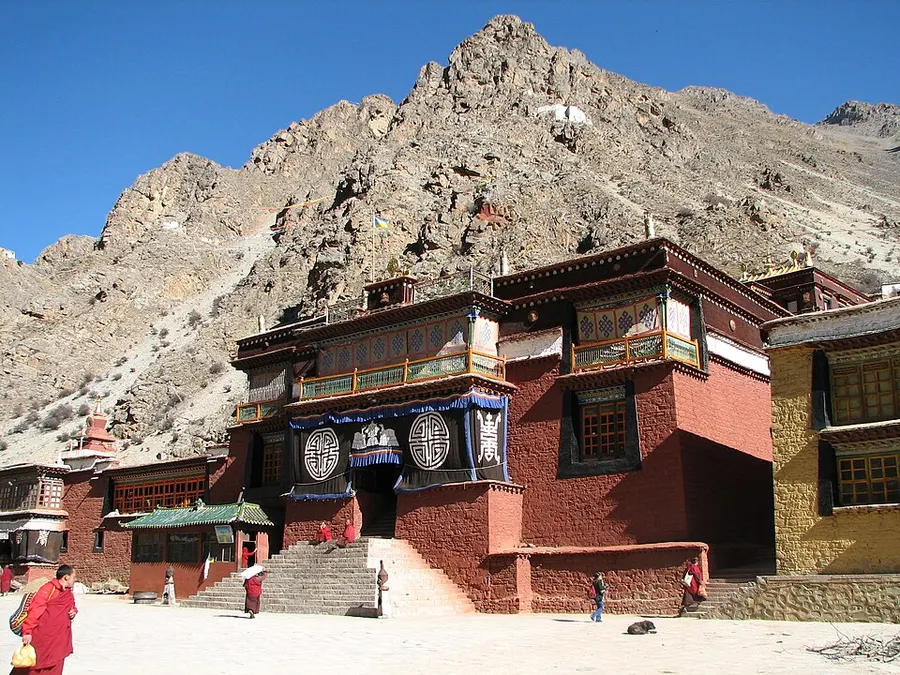
Shoton opens with giant thangka unveiling, then masked lhamo troupes play monastery courtyards for days.
Devotees measure the Barkhor with full-body prostrations, prayer wheels spinning clockwise.
Village feasts end with guozhuang ring dances led by elder singers.
Average altitude exceeds four thousand metres; Lhasa itself sits at 3650 metres.
Thirteen storeys of stone, wood, and gold rising 117 metres over Lhasa, begun in 1645 and World Heritage since 1994.
Tibetan opera (2009) plus Regong and thangka painting traditions of the plateau's eastern regions.
Narratives from the atlas graph that share origins, practitioners, or settings with this topic.
At 4,000 meters, a masked opera has been performed for over 600 years.
Photographs documenting the materials, makers, and settings behind these traditions.