Traditional Medicine
Tibet Autonomous Region, Southwest China
Ancient, codified in the 8th century Four Tantras (rGyud bZhi)
Representative List
Lineage Transmission
Lum Medicinal Bathing (Sowa Rigpa)
Lum Medicinal Bathing (Sowa Rigpa)
"A Tibetan medicinal bathing therapy using herbal decoctions and hot springs, rooted in 2,000-year-old Sowa Rigpa medical wisdom."
CIVILIZATION CONTEXT
This artifact is part of the Intangible Heritage Cluster. It connects to 9 entities across the atlas, spanning 2 regions, 1 master, 0 festivals, and 1 skill.
Lum Medicinal Bathing (Sowa Rigpa): A Living Heritage
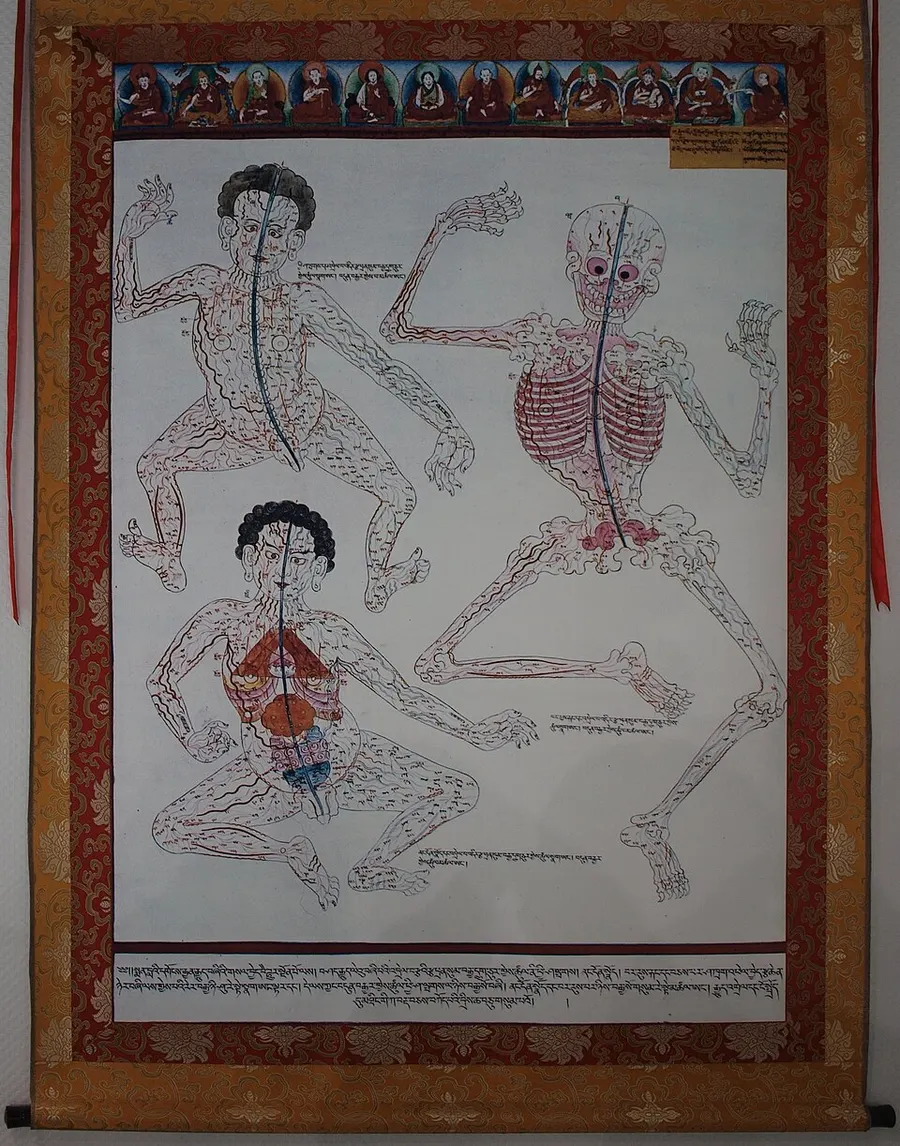
Lum medicinal bathing is a Tibetan medical practice rooted in the Sowa Rigpa (Tibetan medicine) tradition. Patients bathe in hot spring water or herbal decoctions prepared with ingredients like azalea, wormwood, and juniper. The treatment is based on the theory that many diseases arise from imbalances of the three bodily humors (rLung, mKhris-pa, Bad-kan). Used for arthritis, skin diseases, and neurological disorders, it combines hydrotherapy with Tibetan pharmacology.
Centuries
Years of Unbroken Lineage
1
Related Cultural Vectors
History & Development
Lum medicinal bathing steeps patients in waters infused with dozens of Himalayan herbs or mineral springs, treating joint pain, skin disorders, and fatigue within Tibetan Sowa Rigpa medicine. The Four Medical Tantras, Tibet's founding medical compilation, dedicate chapters to bath therapy, prescribing season, duration, and herb combinations by condition.
Hospitals across Tibet and Qinghai operate lum wards where patients soak through multi-day courses, and in November 2018 UNESCO inscribed the Lum medicinal bathing of Sowa Rigpa on the Representative List, recognising knowledge transmitted through monastery colleges and family lineages alike.
How It Is Made
- 01
Gathering high-altitude herbs
Collectors harvest alpine species at flowering peaks, drying bundles whose potency depends on altitude and picking week.
- 02
Compounding the decoction
Physicians blend five-base formulas plus condition-specific additions, boiling them hours before the water turns amber and aromatic.
- 03
Bathing by protocol
Patients immerse at prescribed temperatures for days running, with attendants monitoring pulse and comfort between soaks.
- 04
Sealing the cure
Courses end with warming foods and rest rules so opened pores close gently, locking in the treatment's effect.
Common Questions
What does lum treat?
Practitioners reach for it with arthritis, rheumatism, chronic skin conditions, and post-illness weakness, matching bath formulas to the patient's humour balance.
How long is a course?
Classic protocols run seven to twenty-one consecutive days, adjusted by age and strength, far longer than a spa soak.
Where is it practised?
Sowa Rigpa hospitals across Tibet and neighbouring plateau regions maintain lum facilities staffed by physicians trained in monastery-lineage colleges.
Watch & Learn
Stories & Legends
Tibetan Opera: Masks of the Himalayas
historicalAt 4,000 meters, a masked opera has been performed for over 600 years.
Skills & Techniques
Lum Medicinal Bathing (Sowa Rigpa) expand_more
The Tibetan medicinal bathing practice of immersing the body in herbal decoctions prepared according to Sowa Rigpa texts, used for treating rheumatism, skin disorders, and joint pain.
Steps
- Diagnose the patient's condition through pulse and urine analysis
- Select herbs based on season and ailment — typically Artemisia, rhododendron, juniper
- Boil herbs in large cauldrons for 3–6 hours to extract active compounds
- Strain the decoction into wooden bathing tubs and adjust temperature
- Immerse the patient for 20–60 minutes while monitoring response
- Prescribe post-bath rest and dietary adjustments (diet therapy)
- Repeat daily for 7–21 days depending on the condition
Tools
cauldron, wooden bathing tub, strainer, thermometer, herbal grinder
Materials
Artemisia species, rhododendron leaf, juniper branches, myrobalan fruit, sulfur, hot springs water
Generations Preserved
Tashi Drolma
Tashi Drolma is a master of Sowa Rigpa (Tibetan medicine) and Lum medicinal bathing from Lhasa. She trained at the Men-Tsee-Khang (Tibetan Medical and Astrological Institute) under the guidance of sen...
Relationship Constellation
Tracing the invisible threads that connect Lum Medicinal Bathing (Sowa Rigpa) to the broader civilization ecosystem.
Continue the Journey
Lum Medicinal Bathing (Sowa Rigpa)
Traditional Medicine
Ong Chun / Wangchuan Ceremony
Folk Customs
arrow_forwardTraditional Tea Processing Techniques
Traditional Crafts
arrow_forwardChinese Zhusuan (Abacus)
Folk Customs
arrow_forward