Traditional Crafts
Xi'an, Northwest China
Han Dynasty (202 BCE–220 CE)
National Heritage
Master-Apprentice (Hands-on)
Oral Tradition
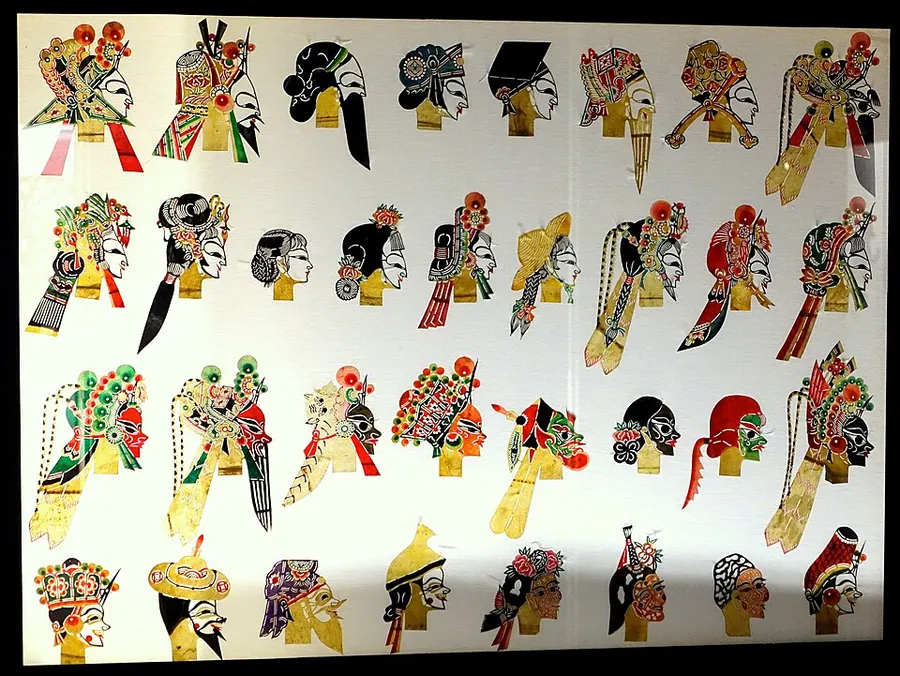
Shadow Puppet Carving Craft
"The meticulous craft of carving leather into articulated shadow puppets — each character is a miniature sculpture requiring days of knife work."
CIVILIZATION CONTEXT
This artifact is part of the Intangible Heritage Cluster. It connects to 5 entities across the atlas, spanning 1 region, 0 masters, 0 festivals, and 0 skills.
Shadow Puppet Carving Craft: A Living Heritage
Shadow puppet carving is the craft of creating the intricate leather puppets used in shadow puppetry performances. Using donkey, cow, or sheep leather, artisans trace designs, cut out detailed patterns with knives, and apply translucent dyes. Each puppet is carved in separate jointed pieces — head, torso, arms, legs — that are assembled with wire for articulation. Regional carving styles differ: Shaanxi favors bold, rugged cuts while Tangshan pursues delicate, refined details.
2228+
Years of Unbroken Lineage
0
Related Cultural Vectors
History & Development
Shadow puppets are lantern-lit engravings, donkey or cow hide carved translucent so lamplight streams through coloured lacquer. Carvers soak, scrape, and stretch hide paper-thin, then cut jointed figures in profile with saw-pierce patterns finer than lace, heads kept interchangeable across bodies for repertoire economy. Troupes carried trunks of hundreds of pieces, and regional schools tuned line weights and colour schemes, from Shaanxi's ornate courtly style to Hebei's bolder folk silhouettes.
Carving excellence underwrites the performance art inscribed by UNESCO in 2011, and our shadow puppetry story follows troupe life behind the screen. Masters still sign carved heads like prints, and conservation studios rebuild antique figures with archival hide; the craft's survival depends on paired skills, since beautifully carved puppets mean nothing without singers and manipulators trained in the same villages, a dependency explored in our performance entry.
How It Is Made
- 01
Processing the hide
Donkey or cow hide soaks, scrapes, and stretches to parchment translucency, then dries flat under weights.
- 02
Transferring the pattern
Classic knife-path designs are pricked or smoked onto the hide, preserving canonical joins and ornament.
- 03
Carving and piercing
Dozens of blades cut interior lattice in single passes, each figure taking hundreds of deliberate strokes.
- 04
Colouring and joining
Transparent lacquers stain the hide, and pieces are riveted with thread knots so limbs articulate on iron control rods.
Common Questions
Why carve in profile with detachable heads?
Profile maximises readable silhouette in light, and interchangeable heads let one body serve many roles, a repertoire trick explained in our puppetry story.
What hide works best?
Young donkey hide for northern schools, cow hide in the south; both must scrape to even translucency before stage use.
Is the craft endangered?
Fewer than a handful of master carvers lead active studios, which is why the 2011 UNESCO listing funds paired transmission of carving and performance.
Watch & Learn
Stories & Legends
Shadow Puppetry: Light, Leather, and Legend
historicalThe world's first animated cinema, centuries before film.
Related Places
Relationship Constellation
Tracing the invisible threads that connect Shadow Puppet Carving Craft to the broader civilization ecosystem.
Continue the Journey
Shadow Puppet Carving Craft
Traditional Crafts
Mongolian Felt Art
Traditional Crafts
arrow_forwardDai Peacock Dance
Traditional Dance
arrow_forwardSugar Painting
Traditional Crafts
arrow_forward