Traditional Crafts
Chengdu, Southwest China
Ming Dynasty (1368–1644 CE)
National Heritage
Master-Apprentice (Hands-on)
Oral Tradition
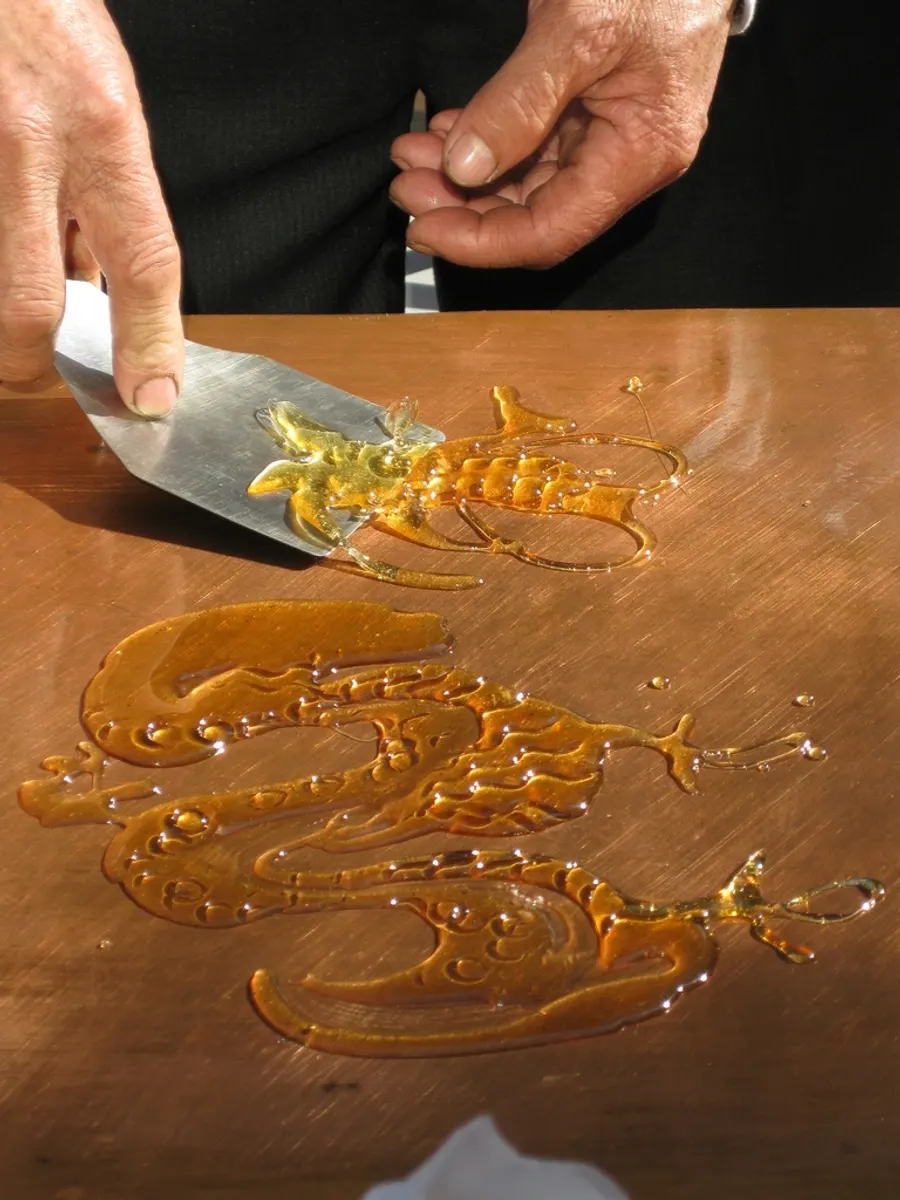
Sugar Painting
"A folk art of pouring hot liquid sugar into edible animal shapes — a sweet treat that doubles as performance art."
CIVILIZATION CONTEXT
This artifact is part of the Intangible Heritage Cluster. It connects to 5 entities across the atlas, spanning 1 region, 0 masters, 1 festival, and 0 skills.
Sugar Painting: A Living Heritage
Sugar painting (tanghua) is a Chinese folk art where melted sugar is poured onto a flat surface to create edible two-dimensional artworks. The artist heats white or brown sugar in a small copper pot, then uses a ladle to drizzle the liquid sugar in continuous lines onto a marble slab, forming animals, birds, and mythical creatures. A bamboo stick is pressed onto the sugar before it hardens, creating a lollipop-like treat. The art requires speed, precision, and creativity.
382+
Years of Unbroken Lineage
0
Related Cultural Vectors
History & Development
Sugar sculpture reached Chinese courts by the Tang dynasty, when confectioners modelled animals from boiled syrup for banquets, and street sugar painting matured in Ming-Qing Sichuan where temple-fair vendors first cast figures in carved wooden moulds. Freehand line-pouring later replaced the moulds and became the signature Chengdu style still worked on sidewalks today.
The working method is unforgiving. Maltose syrup cooks near 160 degrees Celsius, pours from a small copper spoon onto a cool marble slab as one continuous amber ribbon, and hardens within seconds, so vendors plan every curve before the first drop falls. The State Council entered sugar painting in the second batch of the national intangible heritage list in June 2008.
How It Is Made
- 01
Cooking the syrup
Maltose and rock sugar boil until the liquid threads amber off the spoon; a degree too low leaves it sticky and a degree too high turns it bitter.
- 02
Pouring the outline
The vendor drizzles one unbroken line, thickening loops for bodies and thinning streams for whiskers, because poured sugar cannot be erased or patched.
- 03
Pressing the details
A flat spatula scores scales, feather rows, and eyes while the figure stays warm enough to take an impression.
- 04
Sticking and lifting
A bamboo stick presses onto the back, the cooled silhouette pops off the slab with one tap, and the finished dragon or goldfish stands translucent against the light.
Common Questions
How fast can a vendor finish one figure?
A practiced hand completes a butterfly in under two minutes and a coiled dragon in three, including pouring, detailing, and stick attachment before the slab heat sets the sugar.
Why pour from a copper spoon?
Copper spreads heat evenly so the syrup stays workable through a whole figure, and cooled sugar releases from metal cleanly without tearing the lines.
Where can visitors watch the craft?
Chengdu's People's Park hosts resident vendors daily beside the tea house described in the Chengdu city guide, and temple fairs nationwide add spinning wheels that assign each child an animal design.
Watch & Learn
Stories & Legends
The Porcelain Road: Jingdezhen and the World
historicalA remote town in Jiangxi produced the finest ceramics the world had ever seen for over a thousand years.
Related Places
Related Festivals
Relationship Constellation
Tracing the invisible threads that connect Sugar Painting to the broader civilization ecosystem.
Continue the Journey
Sugar Painting
Traditional Crafts
Shadow Puppet Carving Craft
Traditional Crafts
arrow_forwardMongolian Felt Art
Traditional Crafts
arrow_forwardDough Figurine Art
Traditional Crafts
arrow_forward