秦朝
Qin Dynasty
Dynastic Timeline
The first imperial dynasty of China, unifying the warring states under Qin Shi Huang and standardizing writing, currency, and weights and measures.
The cultural innovations and artistic achievements of this era continue to influence Chinese heritage traditions practiced today — from music and opera to crafts and martial arts. Understanding the Qin Dynasty is essential to understanding the deep roots of China's intangible cultural heritage.
Civilization Profile
An Era of Creation
Arts & Aesthetics
Distinctive artistic styles that defined the era
Literature & Philosophy
Foundational texts and schools of thought
Science & Innovation
Technological and scientific advances
Anchors of Empire
Chang'an
The world's first true metropolis and the pulse of the dynasty.
Dunhuang
The spiritual gateway where East met West in stone and light.
The Knowledge Network
“The arts flourished under imperial patronage, with master craftsmen refining their techniques to unprecedented levels of sophistication.”
Court Historian Imperial Records“The innovations of this era laid the foundation for cultural practices that continue to define Chinese identity today.”
Contemporary Scholar Cultural HeritageFoundation
Consolidation of cultural institutions and imperial patronage
Golden Age
Peak of artistic, intellectual, and commercial achievement
Enduring Legacy
Enduring influence on Chinese heritage traditions today
秦朝 Pulse in the Modern Day
The Qin Dynasty left an indelible mark on Chinese civilization. Its contributions to art, philosophy, technology, and governance continue to resonate in the heritage practices preserved by communities across China today — a testament to the enduring power of cultural memory.
Explore the AtlasHistory & Development
In 221 BCE the Qin king declared himself First Emperor and standardised script, currency, axle widths, weights, and measures across a territory his rivals had never ruled together. The administrative counties he drew still echo in China's map today.
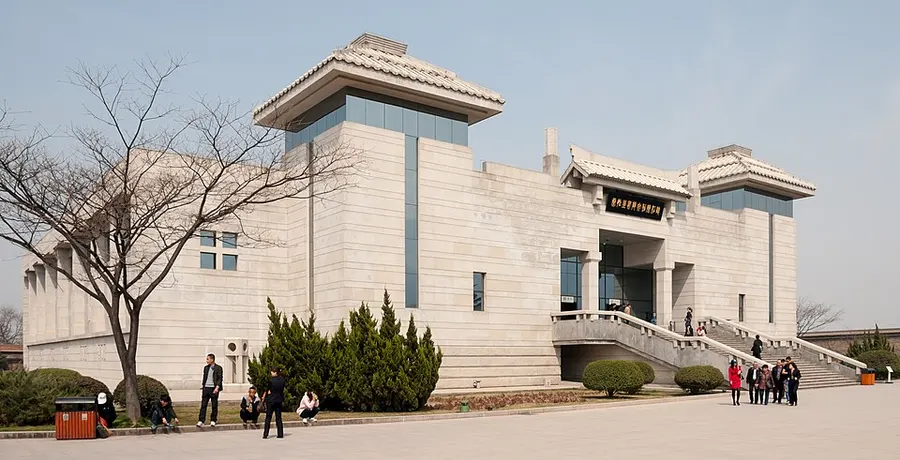
His tomb complex near Xi'an guards the Terracotta Army, roughly 8,000 lifesize figures discovered in 1974 by farmers digging a well and inscribed by UNESCO in 1987 as part of the mausoleum site. The dynasty itself lasted barely fifteen years, undone by conscription and succession crisis.
Cultural Traditions
-
Empire-Wide Standardization
One script, one coin, one gauge: small-clerk seal script and banliang coins erased six-state variety overnight.
-
Legalist Statecraft
Codified statutes, collective responsibility, and performance audits ran a empire of tens of millions.
-
Roads, Walls, and Canals
Paved highways radiated from the capital while older rampart walls were linked into a northern line.
Common Questions
Who found the Terracotta Army?
Well-digging farmers struck a clay head in March 1974 east of Xi'an; museum plaques still honour their names.
Why did Qin fall so fast?
Corvée burdens, harsh statutes, and a contested deathbed succession ignited revolt within four years of the founder's death.