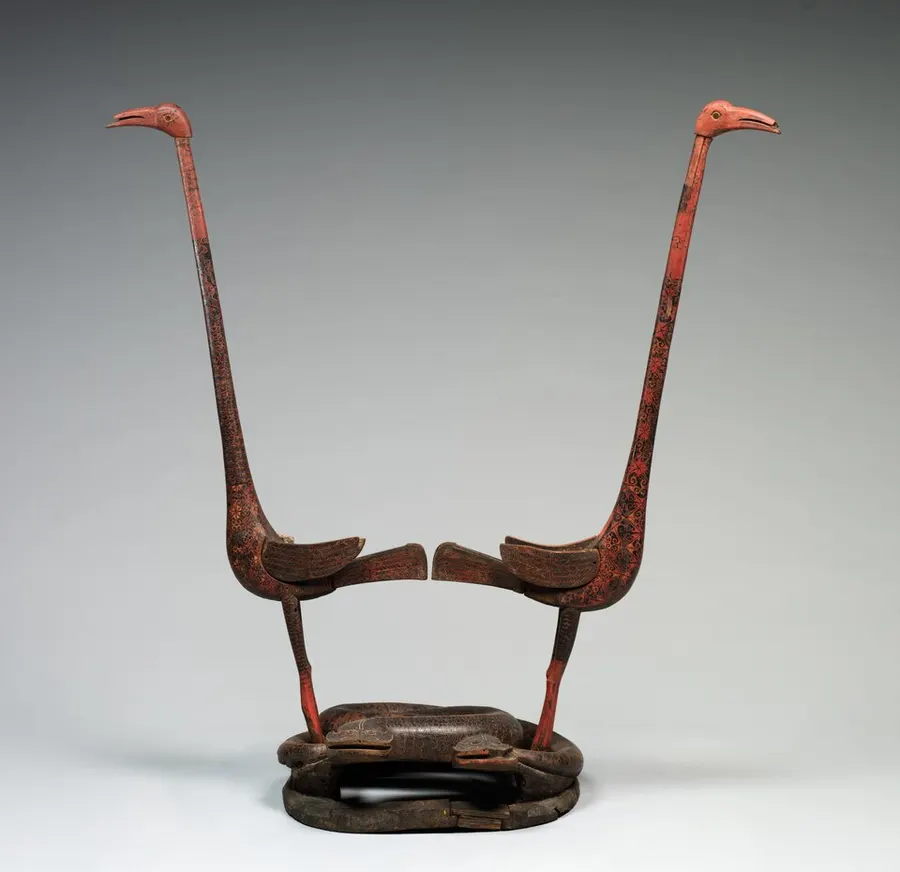
战国时期
Warring States Period
Dynastic Timeline
The final phase of the Zhou Dynasty, characterized by intense warfare among seven major states, leading to the unification of China under the Qin.
The cultural innovations and artistic achievements of this era continue to influence Chinese heritage traditions practiced today — from music and opera to crafts and martial arts. Understanding the Warring States Period is essential to understanding the deep roots of China's intangible cultural heritage.
Civilization Profile
An Era of Creation
Arts & Aesthetics
Distinctive artistic styles that defined the era
Literature & Philosophy
Foundational texts and schools of thought
Science & Innovation
Technological and scientific advances
Anchors of Empire
Chang'an
The world's first true metropolis and the pulse of the dynasty.
Dunhuang
The spiritual gateway where East met West in stone and light.
The Knowledge Network
“The arts flourished under imperial patronage, with master craftsmen refining their techniques to unprecedented levels of sophistication.”
Court Historian Imperial Records“The innovations of this era laid the foundation for cultural practices that continue to define Chinese identity today.”
Contemporary Scholar Cultural HeritageFoundation
Consolidation of cultural institutions and imperial patronage
Golden Age
Peak of artistic, intellectual, and commercial achievement
Enduring Legacy
Enduring influence on Chinese heritage traditions today
战国时期 Pulse in the Modern Day
The Warring States Period left an indelible mark on Chinese civilization. Its contributions to art, philosophy, technology, and governance continue to resonate in the heritage practices preserved by communities across China today — a testament to the enduring power of cultural memory.
Explore the AtlasHistory & Development
Seven major states fought for 250 years while administration, logistics, and philosophy professionalised at speed. Census-style household registers, cavalry adopted from steppe practice, and mass conscript armies made this the laboratory of Chinese imperial institutions.
Engineering matched the politics. Li Bing's Dujiangyan weir system, cut around 256 BCE in Sichuan, still irrigates hundreds of thousands of hectares and earned UNESCO status in 2000, and the chime-bell set buried with Marquis Yi of Zeng in 433 BCE carries 65 bells, each producing two distinct pitches.
Cultural Traditions
-
Professional Bureaucracy
Salaried ministers replaced hereditary office, testing ideas later empires standardised.
-
Hydraulic Engineering
Dams, canals, and division weirs turned flood control into statecraft, epitomised by Dujiangyan.
-
Chime-Bell Music
Zhou court ensembles tuned bronze bells in paired tones, a sound world reconstructed from Zeng Hou Yi's tomb.
Common Questions
Does Dujiangyan still work?
Yes. Its levee-and-channel design diverts the Min River without any dam and remains core infrastructure for Chengdu's plain.
How did the period end?
Qin absorbed all six rivals between 230 and 221 BCE, converting conquest into unified empire.