周朝
Zhou Dynasty
Dynastic Timeline
The longest-lasting Chinese dynasty, which established the Mandate of Heaven concept and saw the flourishing of Confucianism, Daoism, and classical Chinese philosophy.
The cultural innovations and artistic achievements of this era continue to influence Chinese heritage traditions practiced today — from music and opera to crafts and martial arts. Understanding the Zhou Dynasty is essential to understanding the deep roots of China's intangible cultural heritage.
Civilization Profile
An Era of Creation
Arts & Aesthetics
Distinctive artistic styles that defined the era
Literature & Philosophy
Foundational texts and schools of thought
Science & Innovation
Technological and scientific advances
Anchors of Empire
Chang'an
The world's first true metropolis and the pulse of the dynasty.
Dunhuang
The spiritual gateway where East met West in stone and light.
The Knowledge Network
“The arts flourished under imperial patronage, with master craftsmen refining their techniques to unprecedented levels of sophistication.”
Court Historian Imperial Records“The innovations of this era laid the foundation for cultural practices that continue to define Chinese identity today.”
Contemporary Scholar Cultural HeritageFoundation
Consolidation of cultural institutions and imperial patronage
Golden Age
Peak of artistic, intellectual, and commercial achievement
Enduring Legacy
Enduring influence on Chinese heritage traditions today
周朝 Pulse in the Modern Day
The Zhou Dynasty left an indelible mark on Chinese civilization. Its contributions to art, philosophy, technology, and governance continue to resonate in the heritage practices preserved by communities across China today — a testament to the enduring power of cultural memory.
Explore the AtlasHistory & Development
The Zhou was China's longest dynasty, lasting roughly 790 years from 1046 BCE. Its conquest of the Shang required moral justification, and the doctrine of the Mandate of Heaven — rulers hold power only while they govern justly — became permanent political grammar in East Asia.
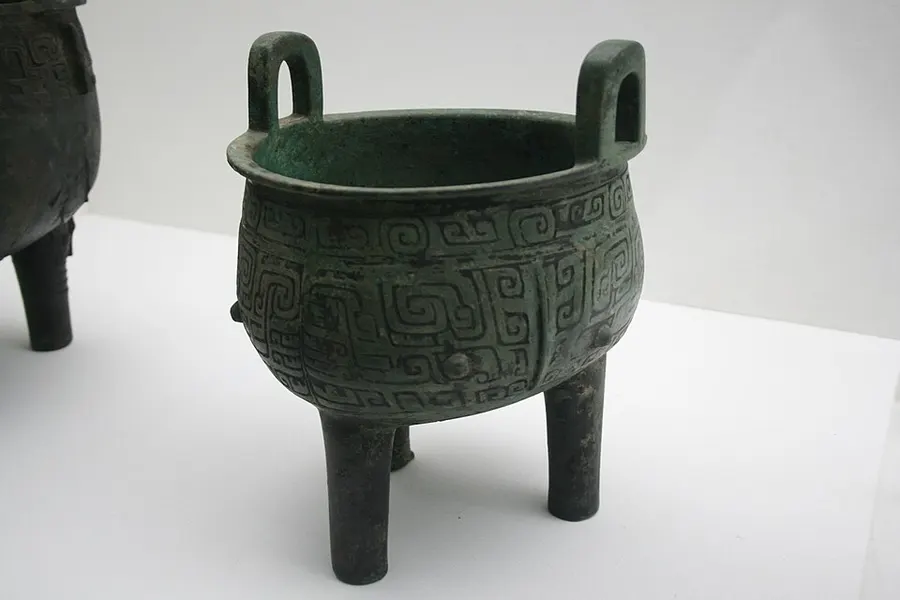
Ritual codification defined the era. Bronze inscriptions grew into prose documents, and the Maogong ding alone carries nearly 500 characters, the longest known text cast in bronze, recording a royal grant to its maker.
Cultural Traditions
-
Mandate of Heaven
Heaven withdraws its sanction from unjust rulers, licensing rebellion — an idea invoked by every succeeding dynasty.
-
Fengjian Enfeoffment
Kin were granted regional lordships, a decentralised order whose slow breakdown opened the Spring and Autumn era.
-
Codified Ritual Bronzes
Sets of bells, tripods, and gui vessels fixed ceremony, rank, and dining etiquette for elites.
Common Questions
Where did Zhou ritual culture take shape?
In the Central Plains along the Wei and Yellow rivers, where bronze-casting lineages served the royal court.
Why did such a long dynasty weaken?
Enfeoffed lords inherited real armies and land; by 771 BCE the royal house had fled east as a figurehead.