Traditional Crafts
Fujian Province, Southeast China
Neolithic period (c. 5000 BCE)
National Heritage
Master-Apprentice (Hands-on)
Chinese Lacquer Art Techniques
Chinese Lacquer Art
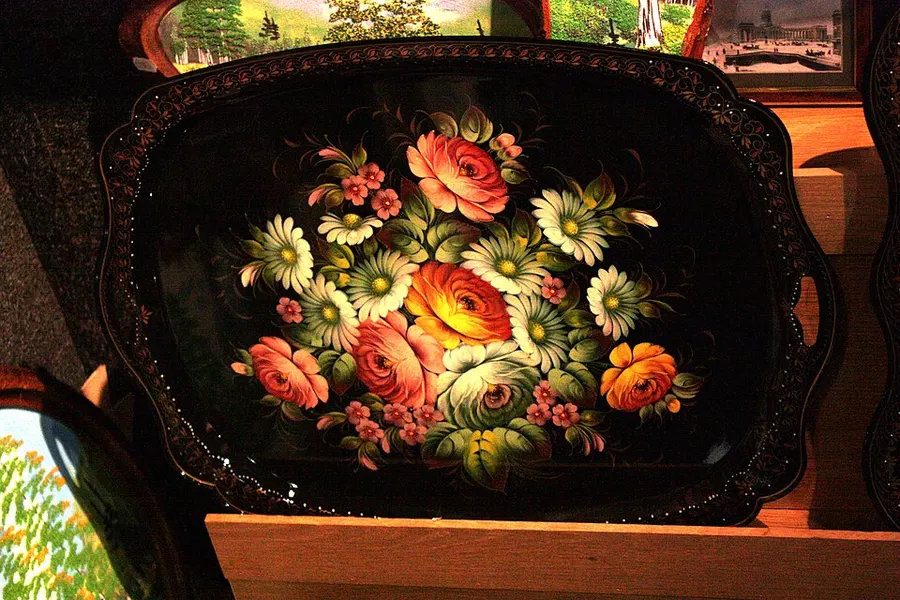
"Ancient art of tree-sap coating creating glass-hard, lustrous surfaces — used for ritual vessels, screens, and furniture for millennia."
CIVILIZATION CONTEXT
This artifact is part of the Intangible Heritage Cluster. It connects to 7 entities across the atlas, spanning 1 region, 0 masters, 0 festivals, and 1 skill.
Chinese Lacquer Art: A Living Heritage
Chinese lacquer art involves applying multiple layers of sap from the lacquer tree (Toxicodendron vernicifluum) to objects, creating a hard, glossy, and waterproof surface. The craft dates back over 7,000 years to the Neolithic period. Techniques include carved lacquer (diaooi), inlaid gold and silver (pingtuo), and mother-of-pearl inlay (luodian). Lacquerware ranges from ritual vessels to furniture and decorative screens.
7026+
Years of Unbroken Lineage
1
Related Cultural Vectors
History & Development
Chinese lacquer is the world's oldest continuously worked plastic, sap from the lacquer tree cured into a hard, chemical-proof film. Han tombs such as Mawangdui yielded cups and trays so light and lustrous that court records list lacquer workshops alongside bronze foundries, and the craft's vocabulary of carved red (tihong), filled, inlaid, and golden-painted wares was complete by the Ming dynasty, when the imperial workshop codified techniques in the Tiushu treatise of 1625.
Regional centres carried distinct traditions into the modern inventory. Fuzhou's bodiless lacquer, invented in the Qianlong era by Shen Shaoan, moulds vessels over clay cores then removes the core, leaving featherweight shells; Yangzhou perfected mother-of-pearl inlay, and Chengdu carved lacquer kept the tihong depth. All three entered the national inventory's first batch in 2006. Each coat of raw lacquer demands humidity to cure, so a deep carved piece accumulates dozens of coats over months, a calendar embedded in the object itself, and collectors prize the Qing dynasty imperial carvings accordingly.
How It Is Made
- 01
Tapping the sap
V-shaped cuts on lacquer trees yield grey-green sap summer nights only; a tree gives mere grams a season.
- 02
Building coats
Each micron-thin layer cures in humid chambers over a day; carved wares stack dozens to hundreds of coats before any cutting.
- 03
Carving the red
Tihong masters cut through stacked cinnabar layers with edge tools, revealing strata exactly like tree rings in section.
- 04
Polishing to depth
Deerskin and charcoal rubs bring the surface to a warm gloss that deepens for years as the polymer slowly matures.
Common Questions
Is lacquer related to latex allergy?
Raw urushi sap strongly sensitises skin, which is why apprentices handle it masked and gloved until tolerance develops.
What makes bodiless lacquer special?
Fuzhou's method removes the mould entirely, leaving shells light enough to float yet durable enough for tea trays, a technique invented in the eighteenth century by master Shen Shaoan.
How do I care for lacquerware?
Keep it from prolonged sun and dry heat, wipe with a damp cloth only, and let the surface deepen; museum conservators report pieces surviving centuries this way.
Watch & Learn
Stories & Legends
The Tea Horse Road: Brewing Civilization
historicalFrom a single leaf drifting into Shennong's pot to a global obsession.
Skills & Techniques
Chinese Lacquer Art Techniques expand_more
The multi-step process of applying raw lacquer sap to create durable, glossy surfaces on wood, metal, or fabric.
Steps
- Prepare the base object (wood core, fabric, or metal)
- Apply a coarse cloth layer (zhi) over joints to prevent cracking
- Apply multiple thin coats of raw lacquer mixed with clay powder
- Sand each coat smooth after drying
- Apply decorative techniques: carving, gold inlay, or mother-of-pearl
- Apply final clear lacquer coat and polish
- Cure in a humidity-controlled chamber (70–80% humidity)
Tools
lacquer brush, sanding stone, carving knife, inlaying tools, humidity chamber
Materials
raw lacquer sap (qi), tung oil, pigments (cinnabar, orpiment), gold leaf, mother of pearl
Related Places
Relationship Constellation
Tracing the invisible threads that connect Chinese Lacquer Art to the broader civilization ecosystem.
Continue the Journey
Chinese Lacquer Art
Traditional Crafts
Chinese Seal Engraving
Traditional Crafts
arrow_forwardHuishan Clay Sculpture
Traditional Crafts
arrow_forwardSichuan Bamboo Weaving
Traditional Crafts
arrow_forward