Han Chinese (汉族)
The largest ethnic group in China and the world, with a continuous civilization spanning over 5,000 years.
The Soul of the Han Chinese
The largest ethnic group in China and the world, with a continuous civilization spanning over 5,000 years.
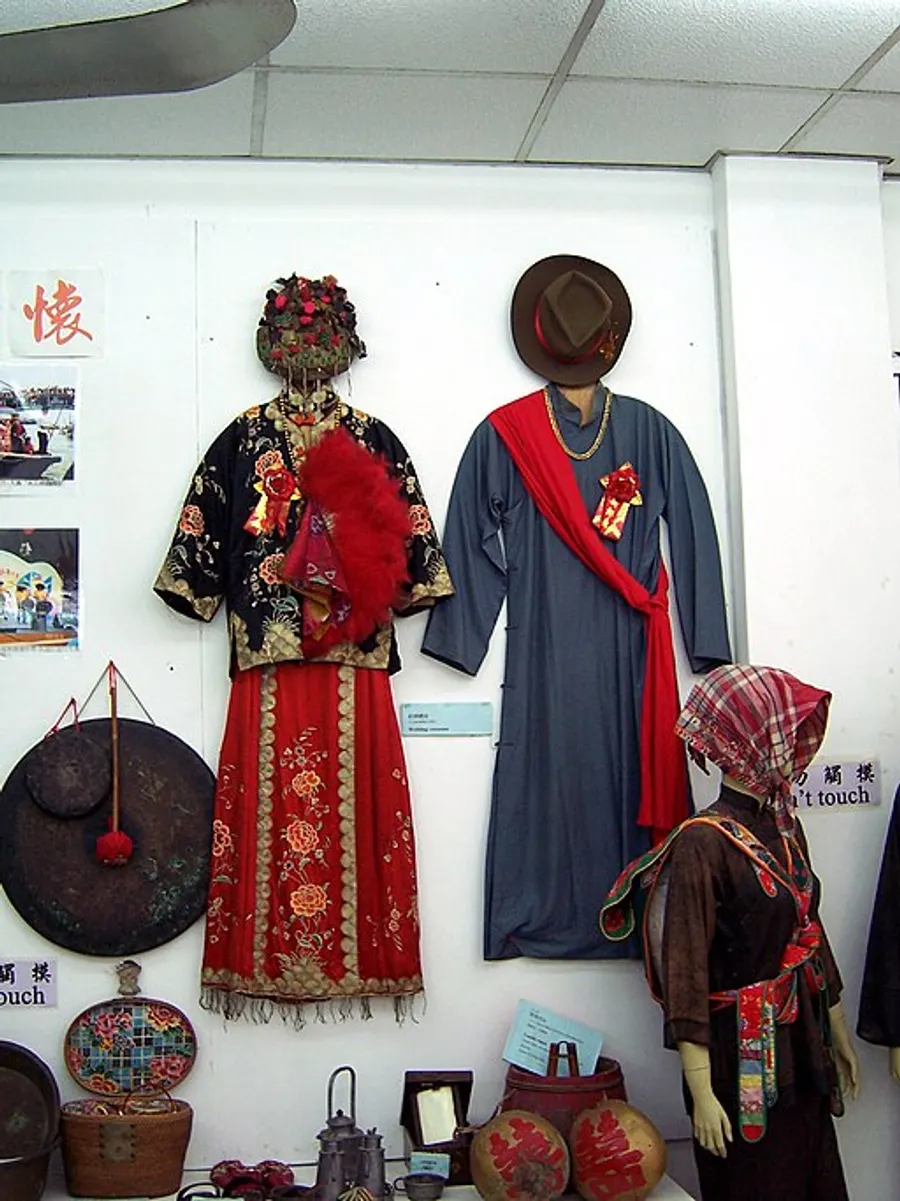
The Han Chinese have cultivated a distinct cultural identity expressed through language, music, dance, craft, and ritual — a living heritage that has been passed down through countless generations. Their traditions reflect a profound relationship with their environment and a resilient spirit of cultural continuity.
Central to their identity is the Preserved orally — a vessel for cultural memory and spiritual knowledge. The Han Chinese worldview is fundamentally interconnected, viewing their surroundings not merely as terrain, but as a living environment where spirit and nature are inseparable.
Cultural DNA
- Identity
- Han Chinese
- 汉族
- Population
- ~130000万
- 92.86% of China
- Language Family
- Preserved orally
- Primary Regions
- Ancestral lands across China
- Representative Heritage
- MusicDanceCraftsRitualsOral
- Status
- Active · Living Tradition
The Heritage Constellation
Cartography of the Homeland
An exploration of sacred geography, settlements, and historical migration pathways of the Han Chinese.
Living Traditions
Intangible knowledge passed through generations.
Nanyin Music
PRACTICED_BY_ETHNIC_GROUP
Hua'er Folk Songs
PRACTICED_BY_ETHNIC_GROUP
Yangge Dance
PRACTICED_BY_ETHNIC_GROUP
Suzhou Pingtan
PRACTICED_BY_ETHNIC_GROUP
Cross-Talk (Xiangsheng)
PRACTICED_BY_ETHNIC_GROUP
Sichuan Qingyin
PRACTICED_BY_ETHNIC_GROUP
Neighboring Peoples
The Han Chinese share cultural landscapes and historical exchange with neighboring ethnic communities across the region.
The Ritual Cycle
Festivals mark the rhythms of life for the Han Chinese — celebrating harvests, honoring ancestors, and strengthening community bonds through music, dance, and feasting.
No festival relations recorded. Explore festival calendar
A Journey Through Time
Cross-Cultural Threads
History & Development
The Han Chinese trace an unbroken cultural lineage through more than 4,000 years of written history, taking their ethnonym from the Han Dynasty (202 BCE–220 CE) that first welded the Central Plains into a single civilizational state. The 2020 national census counted roughly 1.28 billion Han, about 91 percent of mainland China's population, making them the largest ethnic group on Earth. Their cultural canon — the written language unified under the Qin, the examination classics codified under the Song, and the four great festivals fixed in the agricultural calendar — supplied the template from which most of the heritage documented in this atlas grew.
Migration repeatedly diversified Han culture without breaking it. Northern invasions between the Jin and Tang pushed core populations south into the Yangtze and Pearl deltas, where Jiangnan wet-rice agriculture, Cantonese opera, and Hakka rammed-earth dwellings evolved as regional answers to shared ancestral norms. Today eight to ten major dialect groups remain mutually unintelligible in speech yet fully unified in script, a rare case of writing sustaining one identity across dozens of tongues. Han festivals such as Spring Festival now anchor heritage calendars for communities worldwide.
Cultural Pillars
- 01
The Festival Calendar
Spring Festival, Qingming, Dragon Boat, and Mid-Autumn structure the Han year around family reunion, ancestor veneration, and seasonal renewal, each carrying UNESCO-listed practices within it.
- 02
Calligraphy and the Scholar Arts
Writing with brush and ink became the highest visual art, judged by line quality rather than content; its five script styles remain taught in a continuous master-to-student chain.
- 03
Tea Culture
From Lu Yu's 8th-century Classic of Tea onward, preparation and hospitality customs turned a beverage into social grammar, later diversifying into gongfu ceremony traditions.
- 04
Ancestor Veneration
Household tablets, tomb sweeping, and genealogical record-keeping bound living families to named forebears across centuries, shaping funerary rites still practiced today.
Common Questions
Why is the group called "Han"?
The name comes from the Han Dynasty (202 BCE–220 CE), whose four-century consolidation created a shared elite culture that outlived the state. Neighbors and later inhabitants adopted the dynastic label as an ethnic one.
Do Han people all speak the same language?
No. Major branches such as Mandarin, Yue (Cantonese), Wu, Min, and Hakka are not mutually intelligible when spoken. The shared logographic script, not pronunciation, has preserved unity for two millennia.
What is the difference between Han festivals and other Chinese festivals?
Many minority communities celebrate the same dates with distinct rituals; see how the Dai calendar or Qixi courtship customs diverge regionally. Han versions supplied the framework — lunar dates, reunion meals, ancestor offerings — while local cultures filled in music, dress, and food.