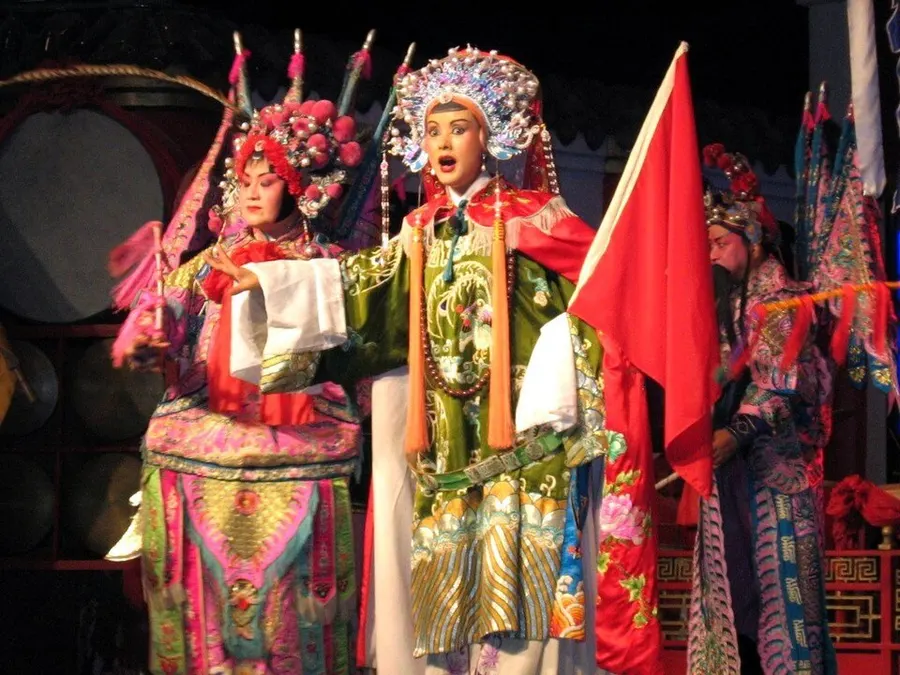
Quyi
Chengdu, Southwest China
Qing Dynasty (1644–1912 CE)
National Heritage
Master-Apprentice (Oral/Aural)
Oral Tradition
Sichuan Qingyin
"A delicate female vocal art from Sichuan, known for its clear, ornamented singing and bamboo percussion accompaniment."
CIVILIZATION CONTEXT
This artifact is part of the Intangible Heritage Cluster. It connects to 6 entities across the atlas, spanning 1 region, 0 masters, 0 festivals, and 0 skills.
Sichuan Qingyin: A Living Heritage
Sichuan Qingyin is a traditional female vocal art from Sichuan Province, characterized by its clear, delicate singing style. The name means "clear sound" in Chinese. Performers sing narrative verses accompanied by their own bamboo percussion and a small ensemble. The repertoire includes love stories, historical tales, and scenic descriptions, sung in the Sichuan dialect with elaborate ornamentation.
114+
Years of Unbroken Lineage
0
Related Cultural Vectors
History & Development
Sichuan qingyin is chamber ballad singing from Chengdu and Chongqing teahouses, one woman voicing an entire drama while accompanying herself or a partner on yueqin moon lute and pipa. Repertoire inherited from Ming-Qing courtesan-song cycles tells wronged heroines and scholar romances in Sichuan dialect softened to melody.
Singers prized the huhai breath-ornament, a rippling throat technique that makes long notes shimmer like water. The State Council listed the genre among national items in June 2008, and conservatory departments now teach it beside opera, keeping teahouse matinees stocked with young graduates.
How It Is Made
- 01
Shaping the huhai tone
Students learn to ripple single syllables through layered ornaments, the signature that distinguishes qingyin from folk song.
- 02
Playing and singing at once
Self-accompaniment frees small venues from bands but demands independence of hands and voice drilled separately for years.
- 03
Voicing multiple characters
A soloist flips between heroine, villain, and narrator within one verse cycle, marking switches with posture changes.
- 04
Fitting teahouse acoustics
Projection stays intimate rather than loud, letting bamboo-lid clinks punctuate pauses instead of percussion.
Common Questions
Where can I hear it today?
Chengdu cultural centres stage weekend matinees, listed among teahouse traditions in the Chengdu guide, with archives streaming classic recordings online.
What instruments accompany it?
Traditionally yueqin and pipa plus percussion bowls; modern stages add erhu, though the vocal ornament remains central as in pipa-led balladry elsewhere.
Is it the same as Sichuan opera?
No; qingyin sits and sings without staging or masks, closer to art song than theatre, though some arias crossed over into opera repertoire.
Watch & Learn
Stories & Legends
The Art of Silence: Peking Opera's Journey from Court to World
historicalIn a Peking Opera performance, every gesture tells a story.
Related Places
Relationship Constellation
Tracing the invisible threads that connect Sichuan Qingyin to the broader civilization ecosystem.