Traditional Sports
Shandong Province, East China
Northern Zhou Dynasty (557–581 CE)
National Heritage
Master-Apprentice
Oral Tradition
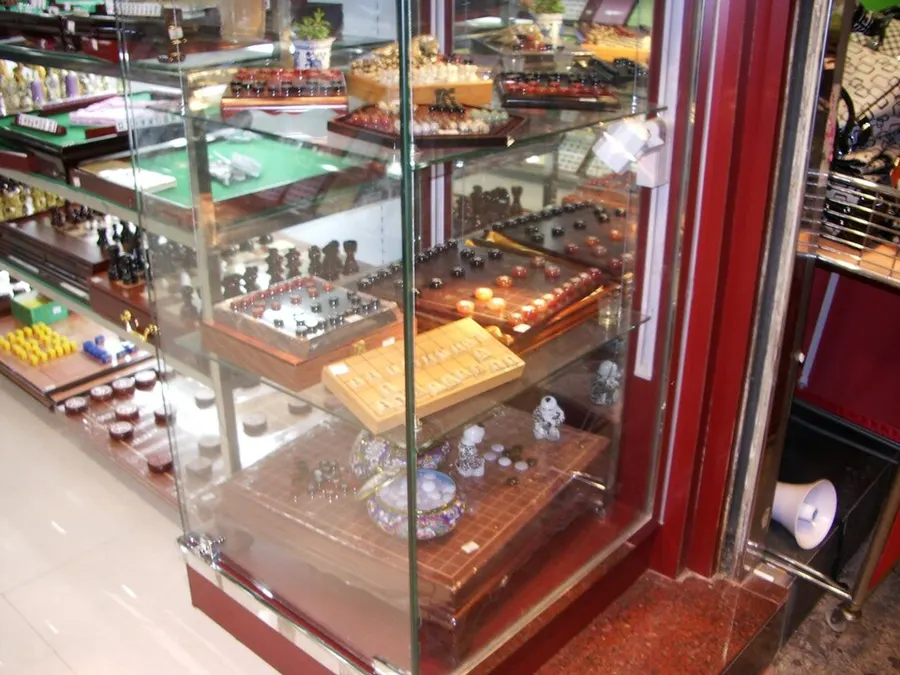
Chinese Chess (Xiangqi)
"China's ancient strategy board game, played by millions in parks and teahouses — a battle of wits across a river-divided board."
CIVILIZATION CONTEXT
This artifact is part of the Intangible Heritage Cluster. It connects to 5 entities across the atlas, spanning 2 regions, 0 masters, 0 festivals, and 0 skills.
Chinese Chess (Xiangqi): A Living Heritage
Chinese chess (xiangqi) is a two-player strategy board game that has been played in China for over 1,500 years. Similar to international chess but with distinct rules including a river dividing the board, palace restrictions on certain pieces, and the cannon piece that jumps to capture. Xiangqi is deeply embedded in Chinese culture, played in parks, teahouses, and homes across the country and throughout the Chinese diaspora.
1445+
Years of Unbroken Lineage
0
Related Cultural Vectors
History & Development
Xiangqi pits two armies of sixteen pieces across a central river on a nine-by-ten grid, with generals confined to palaces and cannons leaping screens to capture. The board's Chu River and Han Border names preserve the civil war allusion, and the piece set hardened into today's standard during the Song dynasty.
Ming and Qing manuals such as Secret in the Tangerine and Plum Blossom Endgame codified openings still memorised, and parks from Beijing to Guangzhou fill with street boards at dusk. The State Council listed xiangqi in the national intangible heritage batch of June 2008, and Asian championships now run beside online servers hosting millions of rated games.
How It Is Made
- 01
Learning piece movement
Each of the seven piece types follows its own track, from elephants blocked by the river to soldiers gaining sideways moves after crossing.
- 02
Studying classical endgames
Manual positions teach checkmating patterns and defence drills, functioning like scales for improving players.
- 03
Reading the opening canon
Central cannon, screen horses, and elephant defence lines carry named variations passed down in annotated game collections.
- 04
Playing blindfold speed rounds
Clubs train visualization with fast clocks and no-board games, sharpening calculation for tournament pressure.
Common Questions
How is it different from western chess?
The river splits the field, pieces sit on intersections rather than squares, and no queen exists, so coordination leans on chariots, cannons, and linked horse patterns instead.
Why is the general trapped in a palace?
The nine-point palace mirrors ancient command tents, forcing decisive attacks once advisors fall, a design fixed alongside the rest of the set in Song-dynasty gaming culture.
Where do newcomers learn?
School electives and park clubs welcome beginners, and federation apps match players by grade, feeding regional tournaments listed under the xiangqi tradition.
Watch & Learn
Stories & Legends
The Art of Silence: Peking Opera's Journey from Court to World
historicalIn a Peking Opera performance, every gesture tells a story.
Related Places
Relationship Constellation
Tracing the invisible threads that connect Chinese Chess (Xiangqi) to the broader civilization ecosystem.
Continue the Journey
Chinese Chess (Xiangqi)
Traditional Sports
Baduanjin Qigong
Traditional Sports
arrow_forwardMazu Belief and Customs
Folk Customs
arrow_forwardDragon Boat Racing
Traditional Sports
arrow_forward