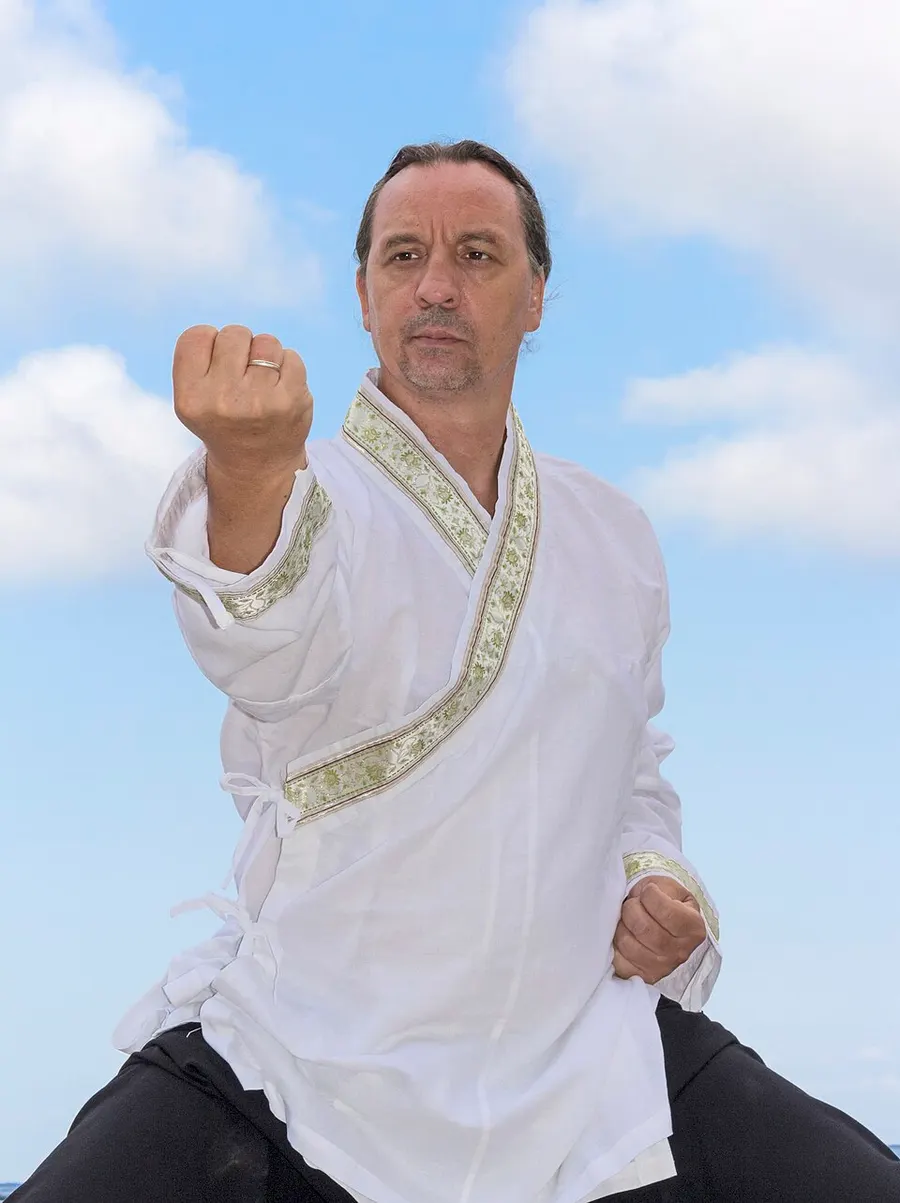
Traditional Sports
Hangzhou, East China
Song Dynasty (960–1279 CE)
National Heritage
Master-Apprentice
Oral Tradition
Baduanjin Qigong
"Eight gentle, flowing exercises combining movement and breath — China's most popular health practice for vitality and longevity."
CIVILIZATION CONTEXT
This artifact is part of the Intangible Heritage Cluster. It connects to 9 entities across the atlas, spanning 1 region, 0 masters, 0 festivals, and 0 skills.
Baduanjin Qigong: A Living Heritage
Baduanjin (Eight Brocade Exercises) is a form of qigong consisting of eight gentle movements designed to improve health and vitality. Created over 800 years ago, it combines slow, flowing movements with deep breathing and focused intention. Each of the eight exercises targets different organs and energy meridians. It is widely practiced throughout China, especially by older adults in parks and community centers.
747+
Years of Unbroken Lineage
0
Related Cultural Vectors
History & Development
Baduanjin strings eight flowing movements into a complete workout, stretching meridians while regulating breath, and its name, Eight Pieces of Brocade, praises the exercise's woven elegance. Song-dynasty sources record the sequence under Daoist longevity practice, and carved illustrations spread it through temples, villages, and garrison yards.
A seated esoteric line ran beside the popular standing version, and in 2003 China's sports authority published a standardised Health Qigong Baduanjin now taught in parks and hospitals worldwide. Clinical trials track benefits for balance, sleep, and chronic pain, keeping an eighth-century routine inside modern prescription exercise.
How It Is Made
- 01
Holding up the heavens
The first move interlocks fingers and presses skyward on tiptoe, lengthening the spine and setting slow abdominal breathing for everything after.
- 02
Drawing the bow
Wide-horse stance anchors a two-hand draw aimed at either side, opening chest and shoulder chains while eyes track imaginary arrows.
- 03
Separating heaven and earth
One palm lifts, the other presses, twisting forearms opposite ways to stretch dual meridians in alternating turns.
- 04
Shaking the spine seven times
Heels rise and drop with a soft bounce, jolting organs gently as the closing movement settles energy downward.
Common Questions
How long does one round take?
Eight movements run about twelve minutes at teaching pace, repeatable morning and evening, which is why workplaces adopt it as desk-side routine.
Is equipment needed?
None; a flat space of roughly two metres square suffices, making the set the most portable branch of qigong practice.
How does it differ from tai chi?
Baduanjin repeats discrete health moves without martial application, while taijiquan links postures into long fighting forms requiring years more study.
Watch & Learn
Stories & Legends
Tai Chi: From Martial Art to Global Meditation
historicalA fighting technique from a remote village became a global phenomenon.
Medicine Without Borders: TCM's Ancient Wisdom
historicalA system of medicine that views the human body as a microcosm of the universe.
Related Places
Relationship Constellation
Tracing the invisible threads that connect Baduanjin Qigong to the broader civilization ecosystem.
Continue the Journey
Baduanjin Qigong
Traditional Sports
Mazu Belief and Customs
Folk Customs
arrow_forwardChinese Tea Ceremony
Folk Customs
arrow_forwardChinese Chess (Xiangqi)
Traditional Sports
arrow_forward