Folk Customs
Quanzhou, Southeast China
Song Dynasty, 10th century CE
Representative List
Master-Apprentice
Oral Tradition
Mazu Belief and Customs
"Worship of the Chinese sea goddess Mazu, rooted in Fujian and spreading across the world — a blend of compassion, protection, and maritime culture."
CIVILIZATION CONTEXT
This artifact is part of the Intangible Heritage Cluster. It connects to 10 entities across the atlas, spanning 2 regions, 0 masters, 1 festival, and 0 skills.
Mazu Belief and Customs: A Living Heritage
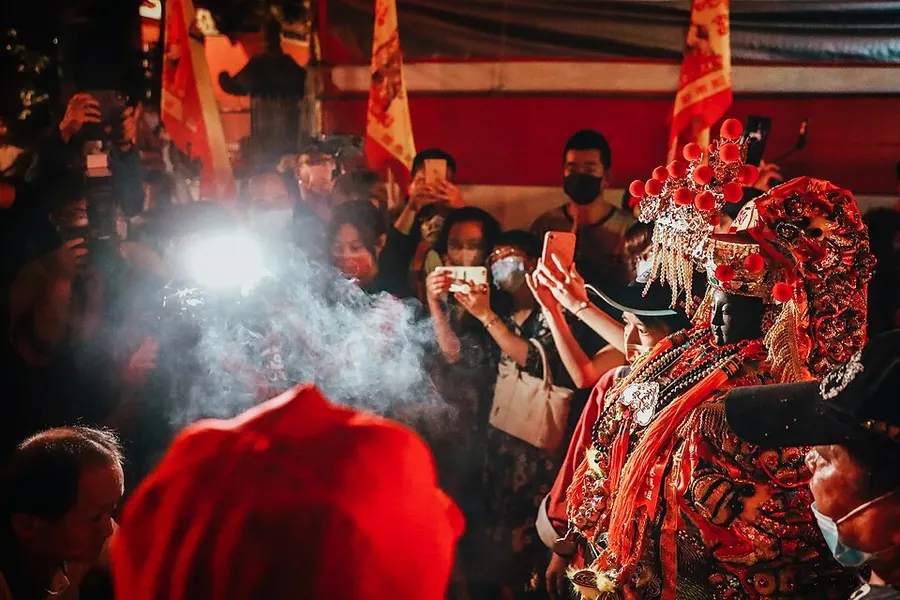
Mazu is the Chinese sea goddess, originally a 10th-century woman from Fujian's Meizhou Island who was deified for saving sailors. Mazu belief encompasses temple rituals, pilgrimages, festivals, and folk practices across coastal China and Chinese communities worldwide. The Meizhou Mazu Temple is the spiritual center, with millions making pilgrimages annually. The belief system blends Buddhism, Taoism, and Confucian values of compassion and protection.
Centuries
Years of Unbroken Lineage
0
Related Cultural Vectors
History & Development
Mazu belief grew around Lin Mo, a tenth-century woman of Meizhou Island in Fujian remembered as a healer who calmed storms and rescued sailors, deified within decades of her death. Imperial titles rose from Song-era Lady to Qing Empress of Heaven in 1684, and Fujian merchants built temples at every port their junks reached.
Today roughly ten thousand Mazu temples serve followers in more than forty countries, and UNESCO inscribed Mazu belief and customs on the Representative List in 2009, the first Chinese faith tradition so honoured. Meizhou's ancestral temple draws millions of pilgrims yearly, and Taiwan's procession calendar keeps hundreds of branch temples sailing or marching home.
How It Is Made
- 01
Honouring the ancestral temple
Branch temples send statues home to Meizhou for renewal rituals, reaffirming lineage ties that order the whole diaspora network.
- 02
Holding the birthday procession
On the third lunar month's twenty-third day, palanquins tour village boundaries while firecrackers clear the road and communities feast under the goddess's gaze.
- 03
Consulting divination blocks
Worshippers throw crescent wooden blocks to read answers to voyage and business questions, a practice sailors trusted before any forecast existed.
- 04
Sailing with the goddess
Ships once carried incense ashes from the ancestral altar, and emigrant communities planted new temples from those flames, spreading the custom across every Chinatown harbour.
Common Questions
Who was Mazu historically?
Records place Lin Mo on Meizhou Island in the tenth century as a healer and swimmer whose storm rescues became legend, her full arc told in the legend of Mazu story.
Why a sea goddess for inland temples?
Fujian traders carried her inland along river routes and overseas, so mountain villages and landlocked cities now keep altars because commerce, not coastline, spread the faith, celebrated annually in the Mazu festival.
Is Mazu worship only Chinese?
Southeast Asian ports adapted her cult centuries ago, and temples in Malaysia, Vietnam, and beyond join the same procession calendar recognised by UNESCO in 2009.
Watch & Learn
Stories & Legends
The Legend of Mazu
legendLin Moniang was born in 960 CE on Meizhou Island, Fujian. From childhood she showed extraordinary powers — she could predict weather, heal the sick, and walk on water. She died young while trying to rescue her father and brother at sea. After her death, she appeared to countless sailors in storms, guiding them to safety. She was deified as Mazu, the Goddess of the Sea, and is worshipped across coastal East Asia.
Related Places
Related Festivals
Relationship Constellation
Tracing the invisible threads that connect Mazu Belief and Customs to the broader civilization ecosystem.
Continue the Journey
Mazu Belief and Customs
Folk Customs
Chinese Tea Ceremony
Folk Customs
arrow_forwardQixi Festival
Folk Customs
arrow_forwardBaduanjin Qigong
Traditional Sports
arrow_forward