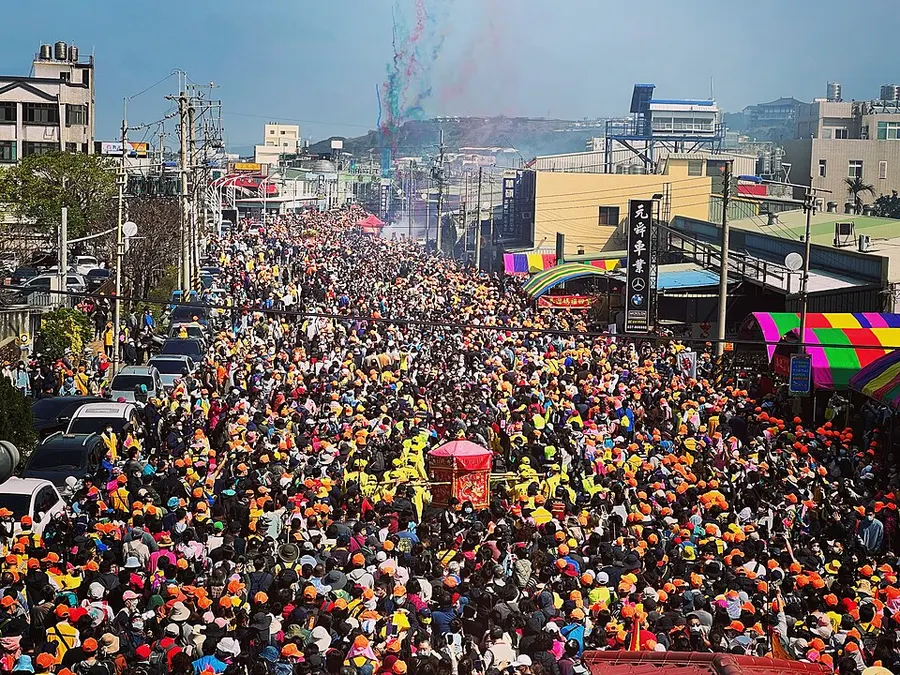
Mazu Birthday Festival — traditional festival scene in China
spring 23rd day of 3rd lunar month (April–May)

妈祖诞辰

Mazu Birthday Festival

Heritage Traditions

1 Items

Related Stories

0 Narratives

Season

spring

Lunar Calendar

23rd day of 3rd lunar month

Cultural Significance

The birthday celebration of Mazu, the Chinese sea goddess. Pilgrims from across the Chinese diaspora converge on Meizhou Island for temple ceremonies, processions, and ritual performances.

Across China, this festival embodies the deep connection between celestial cycles and human culture. Its rituals — passed down through countless generations — serve as a living archive of agricultural knowledge, spiritual belief, and community bonds that define Chinese identity.

Festival Profile

  • Season spring
  • Lunar Calendar 23rd day of 3rd lunar month
  • Gregorian April–May
  • Duration 7 Days
  • Next Occurrence Apr 29, 2027
  • Themes
    Renewal Tradition Community
Celestial Cycles
dark_mode
Phase 01

New Moon

Preparations begin

growing
Phase 02

Waxing

Ritual cleansing

brightness_7
Phase 03

Full Moon

Main celebration

bedtime
Phase 04

Waning

Closing ceremonies

Rituals of Memory

The sacred practices that define Mazu Birthday Festival

temple_buddhist

Purification Rites

Cleansing of homes and bodies to welcome blessings

temple_buddhist

Ceremonial Feast

Traditional foods prepared with symbolic meaning

temple_buddhist

Public Processions

Community parades with music, dance, and lanterns

Geography of Tradition

One Festival, Many Hearts

Mazu Birthday Festival is celebrated across China, with each region adding its unique interpretation while honoring the core traditions. From bustling cities to remote villages, the festival unites communities in shared remembrance and joy.

Imperial North

Bold, public, and stately. Known for grand processions and massive temple fairs.

Ancestral South

Intimate and scholarly. Emphasizing flower markets and complex clan rituals.

Heritage Items
Regional Footprint 1 regions · 1 traditions
Southeast China 1 tradition · 2 communities

Quanzhou · Fujian Province

Heritage Constellation
妈祖诞辰
Mazu Birthday Festival Constellation
Music Ceremonial rhythms
Performance Dramatic storytelling
Cuisine Festive delicacies
Rituals Sacred ceremonies
The Voice of Tradition

“The festival is the heartbeat of our village — when the drums begin, the ancestors are with us.”

Elder Zhao Festival Custodian

“These celebrations encode thousands of years of agricultural wisdom and cosmic understanding.”

Lin Wei Cultural Scholar
Arc of Evolution
Shang–Zhou Dynasties

Ancient Origins

Earliest recorded observances rooted in agricultural cycles and ancestor veneration.

Tang–Song Dynasties

Imperial Codification

Rituals standardized at court; festivals became secular social events.

Ming–Qing Dynasties

Regional Flourishing

Local variations emerge with specialized folk arts and regional opera.

20th–21st Century

Modern Revival

UNESCO recognition and global celebration as a symbol of cultural identity.

A Living Legacy

Mazu Birthday Festival is not a museum piece; it is the air we breathe, the food we share, and the stories we tell.

Explore the Archive

History & Development

Mazu Birthday Festival honors Lin Mo, a tenth-century Fujian sea-rescuer deified after her death, on the twenty-third day of the third lunar month at Meizhou Island. Successive courts promoted her from Lady to Princess to Heavenly Consort to Empress of Heaven across six centuries, tracking the fortunes of Chinese shipping itself.

The greatest pilgrimage is Taiwan's Jiufen-plus Dajia Mazu procession, nine days and nights walking roughly 340 kilometers with millions of participants, broadcast live like a sporting event. UNESCO inscribed Mazu belief and customs on the Representative List in 2009, recognizing a goddess followed by ten thousand temples in forty-plus countries.

Cultural Traditions

  1. Pilgrimage Processions

    Palanquins carrying the goddess statue tour branch temples amid firecracker corridors, lion dancers, and umbrella squads; the legend of Mazu explains her escort rituals.

  2. Birthday Opera to the Goddess

    Teahouse stages run marionette and opera performances facing the temple altar, because the shows are staged for Mazu first and humans second.

  3. Offering Sea Harvests

    Fishers present first-catch fish, noodle towers, and birthday peach buns, then share them as community feasts on temple courtyards.

Common Questions

Where is Mazu worship centered?

On Meizhou Island, Putian, Fujian, site of the ancestral temple, with the largest diaspora following across Taiwan, Southeast Asia, and Chinatowns worldwide.

How big is the Dajia pilgrimage?

Taiwan's nine-day Dajia procession covers about 340 kilometers on foot and draws millions of participants and live-television audiences each spring.

What did UNESCO recognize?

Mazu belief and customs entered the Representative List in 2009 as a living maritime tradition, the faith's practices catalogued alongside the broader Mazu belief system.

Watch & Learn

Oral Tradition

Stories & Legends

Narratives from the atlas graph that share origins, practitioners, or settings with this topic.

Lin Moniang was born in 960 CE on Meizhou Island, Fujian. From childhood she showed extraordinary powers — she could predict weather, heal the sick, and walk on water. She died young while trying to rescue her father and brother at sea. After her death, she appeared to countless sailors in storms, guiding them to safety. She was deified as Mazu, the Goddess of the Sea, and is worshipped across coastal East Asia.
Visual Record

From the Archive

Photographs documenting the materials, makers, and settings behind these traditions.

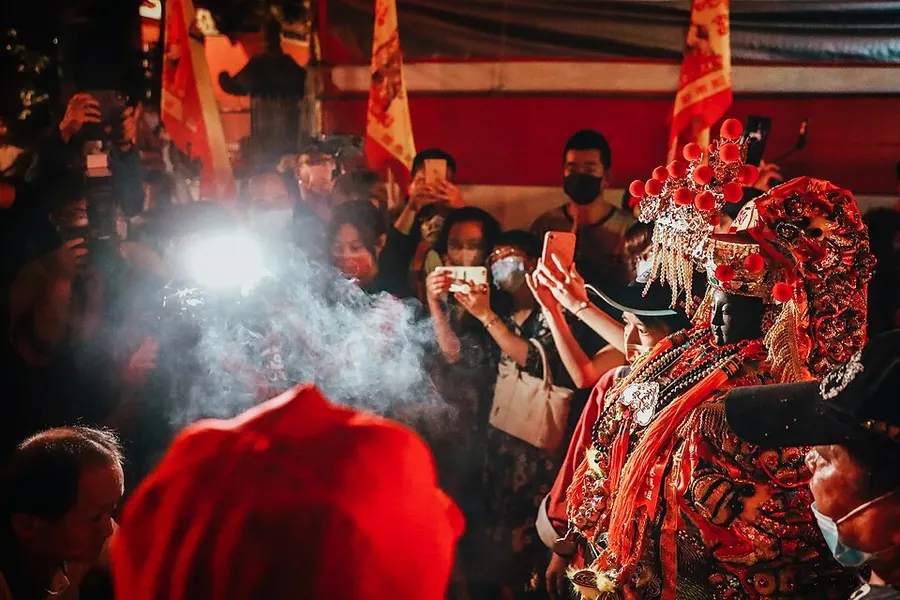
Mazu temple ceremony with pilgrims and incense smoke