menu_book The Full Narrative
01
The Chen Family Secret
Tai chi originated in Chenjiagou, Henan province, during the 17th century. The Chen family developed a martial art that combined existing boxing techniques with the principles of qi circulation, yin-yang balance, and Taoist philosophy. Unlike the fast, forceful movements of other martial arts, tai chi emphasized yielding to overcome — using an opponent's energy against them.
02
From Combat to Wellness
In the 19th century, master Yang Luchan brought tai chi to Beijing and simplified the forms for wider practice. The martial applications were downplayed, and health benefits emphasized. This transformation made tai chi accessible to everyone — old and young, strong and frail. The slow, meditative practice became a form of moving qigong.
03
Tai Chi and Modern Science
Today, tai chi is one of the most studied mind-body practices in Western medicine. Research has shown it improves balance, reduces falls in the elderly, lowers blood pressure, alleviates depression, and boosts immune function. The slow movements that once trained warriors now heal patients.
04
A Global Practice
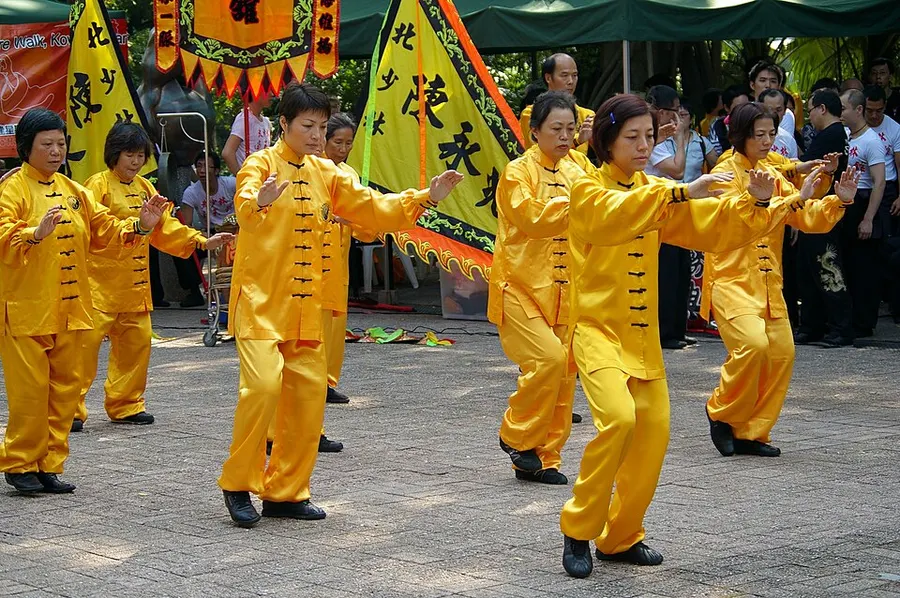
UNESCO inscribed tai chi on the Representative List in 2020. Over 200 million people practice tai chi worldwide. In parks from Shanghai to San Francisco, the same slow movements connect modern practitioners to a tradition centuries old. What began as a Chen family secret has become a universal language of movement and mindfulness.
05
One Family, Five Major Styles
Every major tai chi style traces back to the Chen village. Yang Luchan's grandson Yang Chengfu removed jumps and bursts in the 1920s to fix the 85-posture large-frame form most practitioners know. Wu Jianquan, Wu Yuxiang, and Sun Lutang each founded lineages that differ in posture height and tempo but share the same weight-shifting engine. Chen Bing and the 20th generation still teach Chen-style silk-reeling power at the source village.
06
Push Hands Keeps the Martial Core Alive
Tui shou, the two-person sensitivity drill, preserves tai chi's fighting logic beneath its meditative surface. Competitors score points by unbalancing opponents while keeping single or double stance, and national championships in Jiaozuo draw thousands of athletes each year. The drill trains listening energy that no solo form can fully develop, and it anchors the art to Chenjiagou annual push-hands gatherings where lineage heads still referee.
07
Prescription Tai Chi Enters the Clinic
Clinical research moved tai chi from park ritual to prescribed therapy. A landmark New England Journal of Medicine trial in 2010 found tai chi twice weekly reduced fibromyalgia impact scores significantly versus wellness education, and meta-analyses since count dozens of randomized studies showing fall-risk reduction up to forty-three percent in older adults. Hospital systems responded: rehabilitation departments in the United States, Sweden, and Australia now refer balance-impaired patients to certified instructors, and Medicare pilot programs reimburse class series in several states. Chenjiagou supplied the pedagogy; grandmasters such as Chen-style lineage holder Li Jincheng wrote instructor manuals that translate silk-reeling cues into biomechanical language physical therapists accept. Global participation estimates run to hundreds of millions when counting home-practice populations, making tai chi among the most practiced movement therapies on earth. The art's UNESCO listing in 2020 cited exactly this health dimension alongside its martial lineage, framing the village boxing pit and the clinic prescription as one continuous transmission.