Traditional Sports
Shaolin Temple, Central China
Shang Dynasty (1600–1046 BCE), codified at Shaolin Monastery c. 495 CE
National Heritage
Master-Apprentice
Oral Tradition
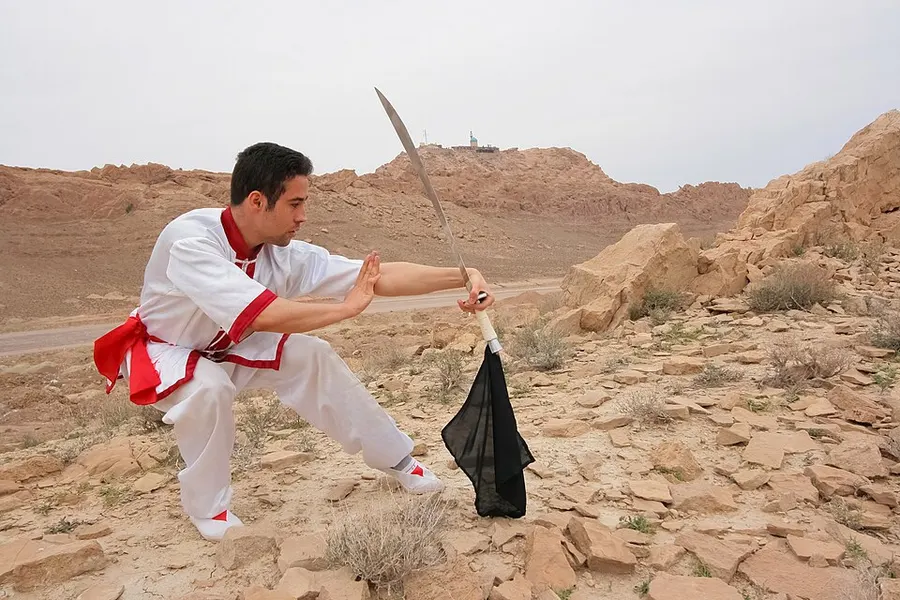
Chinese Kung Fu (Wushu)
"China's vast martial arts heritage — hundreds of styles from Shaolin to Wudang, combining combat, philosophy, and health cultivation."
CIVILIZATION CONTEXT
This artifact is part of the Intangible Heritage Cluster. It connects to 11 entities across the atlas, spanning 2 regions, 1 master, 0 festivals, and 0 skills.
Chinese Kung Fu (Wushu): A Living Heritage
Chinese kung fu, also known as wushu, encompasses hundreds of distinct martial arts styles developed over millennia. From the external styles of Shaolin (hard, explosive) to the internal styles of Wudang (soft, flowing), kung fu integrates combat techniques with philosophy, health cultivation, and artistic expression. Major styles include Shaolin, Wudang, Emei, Wing Chun, Baji, and Praying Mantis. It is practiced by millions worldwide as martial art, sport, and self-cultivation.
3072+
Years of Unbroken Lineage
0
Related Cultural Vectors
History & Development
Wushu covers China's martial arts family, from northern long-fist acrobatics to southern short-bridge power, weapon routines, and internal systems built around taijiquan lineage. Twentieth-century academies catalogued hundreds of schools, and state committees later standardised competition routines judged for difficulty, artistry, and execution like gymnastics.
The International Wushu Federation formed in 1990 and now spans six continents, with world championships alternating taolu routines and sanda fighting. Television epics carried staff and sword choreography global, and youth enrolment abroad grows each year as universities add credit courses.
How It Is Made
- 01
Building stances first
Horse, bow, and empty stances hold minutes daily, giving every punch and block a stable chassis before speed enters.
- 02
Linking basic combinations
Punch-block-kick sequences drill to counts, embedding the rhythm judges expect in compulsory routines.
- 03
Adding weapons
Staff extends reach first, then straight sword and sabre teach precision and slashing timing respectively, each with its own footwork grammar.
- 04
Choosing a specialisation
Athletes pick taolu performance or full-contact sanda, pathways detailed under the sanda fighting system, while traditionalists continue lineage styles beside taijiquan training.
Common Questions
Is wushu performance or combat?
Both tracks exist: taolu rewards athletic artistry, sanda tests application in the ring, and many schools train elements of each.
How young can children begin?
Stance games and stretch routines suit ages five upward, with competition teams selecting around ten after fundamentals settle.
Which style suits beginners?
Long fist builds flexibility and stamina fastest, while adult starters often prefer internal arts for gentler loading within the wider wushu syllabus.
Watch & Learn
Stories & Legends
Tai Chi: From Martial Art to Global Meditation
historicalA fighting technique from a remote village became a global phenomenon.
Related Places
Generations Preserved
Shi Yongxin
Shi Yongxin is the abbot of Shaolin Temple and a master of Shaolin Kung Fu and Chan Buddhism. He has led the revival and international promotion of Shaolin martial arts, establishing cultural centers ...
Relationship Constellation
Tracing the invisible threads that connect Chinese Kung Fu (Wushu) to the broader civilization ecosystem.
Continue the Journey
Chinese Kung Fu (Wushu)
Traditional Sports
Cuju (Ancient Chinese Football)
Traditional Sports
arrow_forwardChinese New Year Woodblock Prints
Traditional Crafts
arrow_forwardDragon Lantern Dance
Traditional Dance
arrow_forward