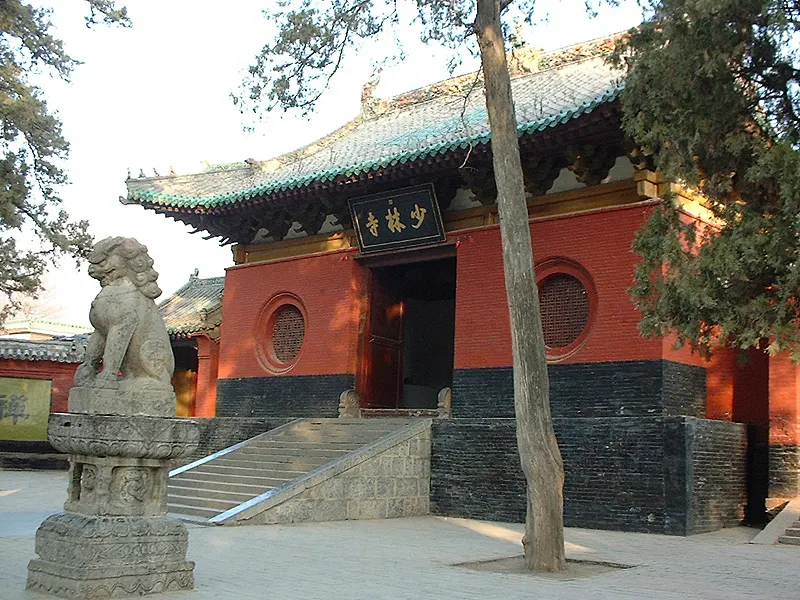
少林寺
Shaolin Temple
The legendary Chan Buddhist monastery in Henan Province, considered the birthplace of Shaolin Kung Fu and a UNESCO World Heritage Site.
As a vital node in China's cultural geography, this location has nurtured artistic traditions that have endured through dynastic changes, social transformations, and the challenges of modernity. The continuity of these practices speaks to the deep relationship between place and cultural identity.
Today, Shaolin Temple continues to be a living center of heritage — where master artisans train the next generation, festivals mark the seasons, and ancient crafts adapt to contemporary life.
Civilization Snapshot
Where heritage lives — the geography of cultural practice
Interact with the nodes of cultural heritage across the region's ancient grid.
Heritage District
The cultural heart of Shaolin Temple
Craft Village
Traditional workshops and living heritage
The heritage collection of Shaolin Temple
A Lineage of Eras
Keepers of the Flame
Shi Yongxin
“The craft is not just technique — it is the memory of our ancestors speaking through our hands.”
READ THEIR STORYThe Cultural Constellation of Shaolin Temple
The heritage of Shaolin Temple does not exist in isolation. It is the core of a sophisticated network of exchange, where techniques, motifs, and melodies traveled to shape the identity of an entire civilization.
- Beijing Connected Heritage
- Nanjing Connected Heritage
- Suzhou Connected Heritage
The Rhythms of Time
Spring Festival
2 seasonal observances
Summer Festival
2 seasonal observances
Autumn Festival
2 seasonal observances
Winter Festival
2 seasonal observances
Nearby heritage destinations
Beijing
北京 · The capital of China, Beijing has been the political and cul...
Nanjing
南京 · An ancient capital of six dynasties, Nanjing is the birthpla...
Suzhou
苏州 · Famous for its classical gardens and silk industry, Suzhou i...
Chenjiagou
陈家沟 · A small village in Henan Province, Chenjiagou is the birthpl...
History & Development
Emperor Xiaowen of Northern Wei founded Shaolin Temple in 495 CE for the Indian monk Batuo, and Bodhidharma's legendary nine years facing a cave wall above it seeded Chan Buddhism. In 621 thirteen staff-wielding monks helped Prince Li Shimin win the battle of Hulao, earning imperial land grants and the temple's enduring licence for martial practice.
The Pagoda Forest below the gates holds two hundred and forty-eight brick stupas stacked from Tang times onward, each marking an eminent monk. After film crews globalised the kung fu myth in the 1980s, performance troupes toured the world, and UNESCO listed Shaolin within the 2010 "Historic Monuments of Dengfeng in the Centre of Heaven and Earth" serial property.
Cultural Traditions
- 01
Chan and Combat
Monks pair meditation with martial conditioning, holding that stillness powers strike.
- 02
Pagoda Forest Rites
Each abbot's cremation adds a new stupa carved with his lineage name.
- 03
Warrior Pilgrimages
Tens of thousands of students enrol in surrounding academies each autumn intake.
Common Questions
When was Shaolin founded?
In 495 CE under Northern Wei patronage, making it fifteen centuries old.
Did monks really fight for a future emperor?
Chronicles record thirteen monks aiding Li Shimin in 621; a stele bearing his thank-you edict still hangs in the temple.
What is the Pagoda Forest?
China's largest stupa cemetery, two hundred and forty-eight tombs spanning the Tang dynasty to today.