Traditional Sports
Beijing, North China
Warring States period (5th–3rd century BCE)
National Heritage
Master-Apprentice
Oral Tradition
Cuju (Ancient Chinese Football)
"The earliest form of football, recognized by FIFA — a Chinese military sport turned court entertainment over 2,000 years ago."
CIVILIZATION CONTEXT
This artifact is part of the Intangible Heritage Cluster. It connects to 5 entities across the atlas, spanning 1 region, 0 masters, 0 festivals, and 0 skills.
Cuju (Ancient Chinese Football): A Living Heritage
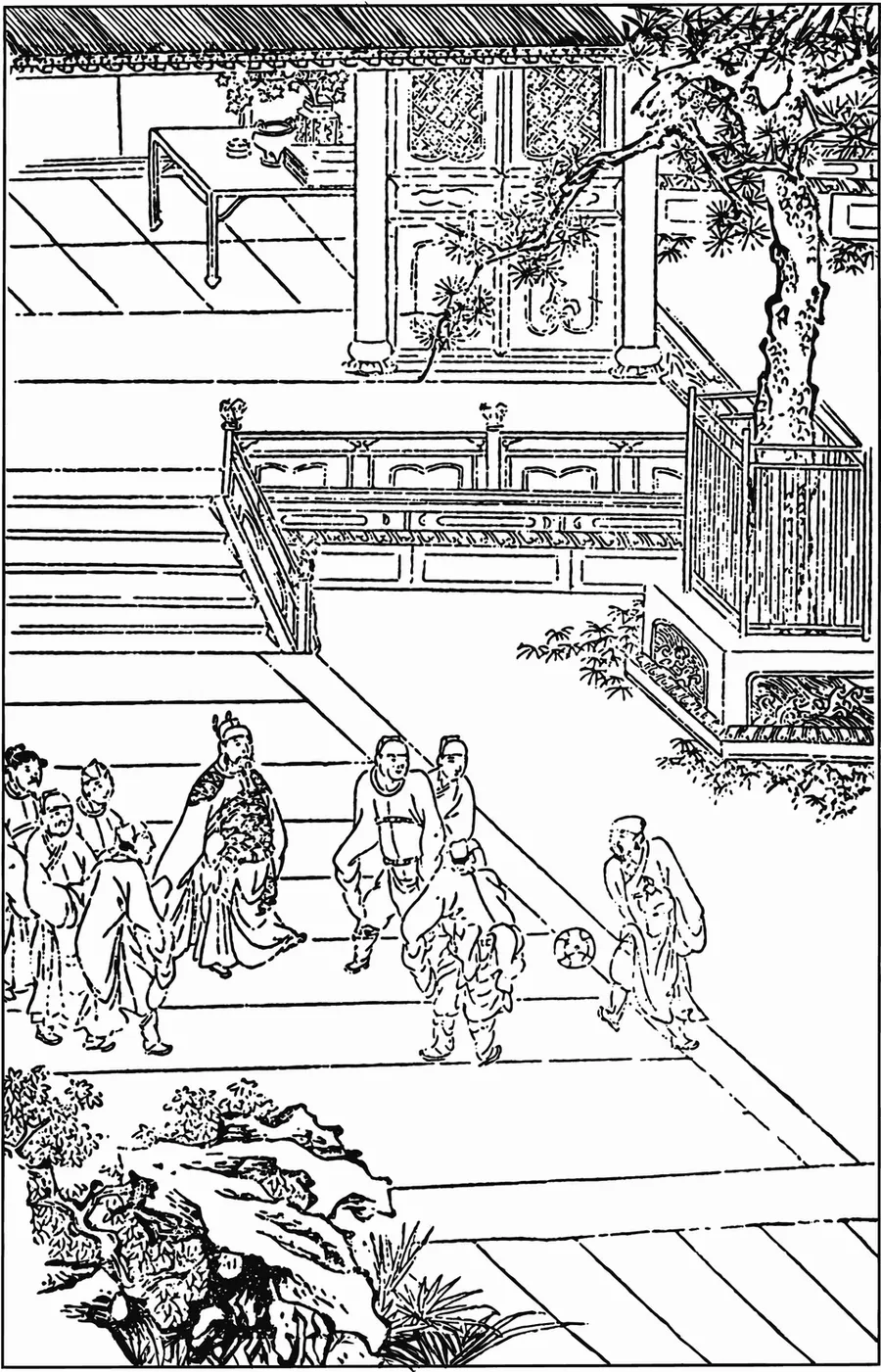
Cuju is an ancient Chinese ball game that is recognized by FIFA as the earliest form of football. Players kicked a leather ball stuffed with feathers through a goal opening. It originated as a military training exercise and became a popular court entertainment during the Han and Tang dynasties. Matches involved complex rules, team formations, and even professional cuju players. The game declined after the Song Dynasty but has been revived as cultural heritage.
Centuries
Years of Unbroken Lineage
0
Related Cultural Vectors
History & Development
Cuju kicked leather balls through netted goals in military fitness drills by the Han dynasty, and FIFA formally recognised it as football's earliest ancestor after reviewing Linzi evidence in 2004. Song cities professionalised the game with club guilds staging exhibition matches for emperors, and court ladies played painted versions on porcelain.
The ball evolved from stuffed hide to bladder-and-leather panels, while rules split between goal-scoring zhuqiu and artistic baijiau keepy-uppy judged like dance. Modern Linzi parks stage revival matches, and museum displays trace every stitch from Warring States tombs to today's World Cup lineage.
How It Is Made
- 01
Sewing the ball
Craftsmen cut twelve curved hides around an inflated bladder, balancing weight so the sphere flies true without modern bladders.
- 02
Training single-foot control
Players juggled with instep, knee, shoulder, and head to fixed counts, building the touch that artistic judging rewarded.
- 03
Attacking the goal
Goal matches hung nets above a central hole, demanding lofted passes and acrobatic strikes past defending teams.
- 04
Joining the guilds
Song clubs tested applicants on tricks and etiquette before admitting them to paid touring squads.
Common Questions
Why call cuju football's origin?
FIFA's 2004 study credited Linzi's documented kick-ball games, over two millennia old, as the earliest organised form of the sport described in the Shandong region guide.
Did women play?
Yes; Tang and Song art shows women juggling at court festivals, and some professional entertainers specialised in exhibition routines.
How does it differ from modern football?
Hands were free for juggling variants, goals meant threading a high hole rather than a wide net, and scoring artistry carried equal prestige, rules far removed from the game codified alongside Song urban entertainment.
Watch & Learn
Stories & Legends
The Dragon Boat Festival: Memory, River, Nation
historicalA poet's sacrifice became a nation's memory, celebrated every summer.
Related Places
Relationship Constellation
Tracing the invisible threads that connect Cuju (Ancient Chinese Football) to the broader civilization ecosystem.
Continue the Journey
Cuju (Ancient Chinese Football)
Traditional Sports
Chinese New Year Woodblock Prints
Traditional Crafts
arrow_forwardDagu (Drum Storytelling)
Quyi
arrow_forwardChinese Kung Fu (Wushu)
Traditional Sports
arrow_forward