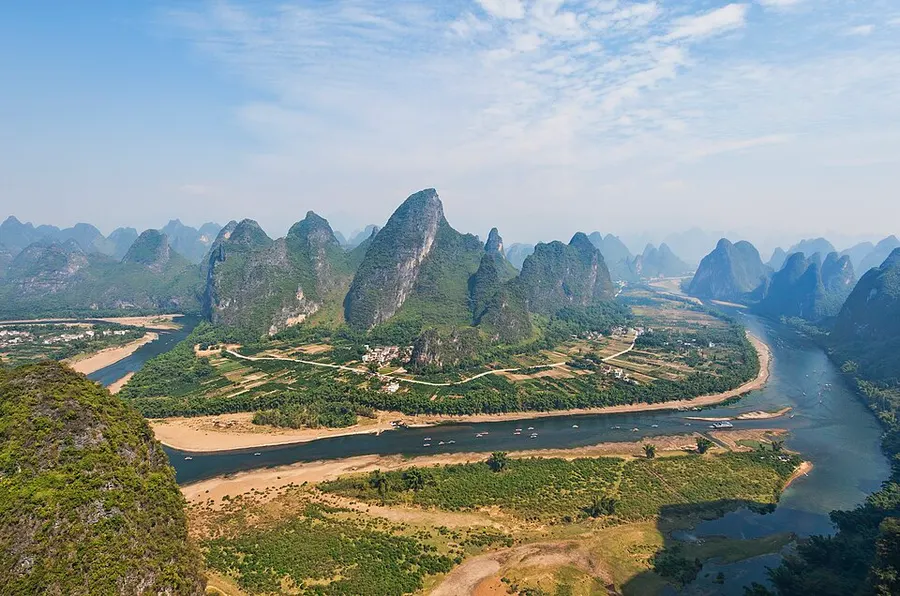
Zhuang (壮族)
China's largest minority group, concentrated in Guangxi, known for bronze drum traditions and folk song festivals.
The Soul of the Zhuang
China's largest minority group, concentrated in Guangxi, known for bronze drum traditions and folk song festivals.
The Zhuang have cultivated a distinct cultural identity expressed through language, music, dance, craft, and ritual — a living heritage that has been passed down through countless generations. Their traditions reflect a profound relationship with their environment and a resilient spirit of cultural continuity.
Central to their identity is the Preserved orally — a vessel for cultural memory and spiritual knowledge. The Zhuang worldview is fundamentally interconnected, viewing their surroundings not merely as terrain, but as a living environment where spirit and nature are inseparable.
Cultural DNA
- Identity
- Zhuang
- 壮族
- Population
- ~1600万
- 1.14% of China
- Language Family
- Preserved orally
- Primary Regions
- Ancestral lands across China
- Representative Heritage
- MusicDanceCraftsRitualsOral
- Status
- Active · Living Tradition
The Heritage Constellation
Cartography of the Homeland
An exploration of sacred geography, settlements, and historical migration pathways of the Zhuang.
Living Traditions
Intangible knowledge passed through generations.
Neighboring Peoples
The Zhuang share cultural landscapes and historical exchange with neighboring ethnic communities across the region.
The Ritual Cycle
Festivals mark the rhythms of life for the Zhuang — celebrating harvests, honoring ancestors, and strengthening community bonds through music, dance, and feasting.
No festival relations recorded. Explore festival calendar
A Journey Through Time
Cross-Cultural Threads
History & Development
The Zhuang are China's largest minority, about 19.57 million people concentrated in Guangxi and neighboring Yunnan and Guangdong, where Tai-speaking farmers have lived since before Han records began. Their ancestors appear in Zhou-era bronzes as the Baiyue "hundred Yue" peoples, and bronze drums cast from the Warring States period onward remain the group's defining artifact: more than 1,500 ancient drums survive, some over 2,000 years old, still beaten at festivals today.
Guangxi became the Zhuang Autonomous Region in 1958, and a standardized Zhuang script using Latin letters was introduced in 1957 alongside older sawndip characters modeled on Chinese. Modern recognition formalized what song had long sustained — the legendary singer Liu Sanjie, whose antiphonal duels anchor the third-month song fairs, was made a provincial-level heritage icon in 2006, and the San Yue San festival became an official public holiday in Guangxi in 2014, drawing millions to mountain-side singing each lunar March third.
Cultural Pillars
- 01
Bronze Drum Rituals
Drums summoned rain, honored ancestors, and marked harvests; casting reached peak refinement under the Tang, and modern performances reproduce the same rhythmic cycles during festival processions.
- 02
Antiphonal Song Fairs
Young men and women trade improvised verses across hillsides at San Yue San gatherings; fluency in verse remains a traditional marker of intelligence and marriageability.
- 03
Zhuang Brocade
Weavers inscribe geometric motifs — diamonds, frogs, suns — onto cotton and silk on waist looms; the craft entered China's first national heritage list in 2006.
- 04
Buluotuo Epic Chanting
Priests recite the creation epic of ancestor Buluotuo in stylized verse, a corpus transcribed in sawndip script and now safeguarded through staged competitions and temple rituals.
Common Questions
What is San Yue San?
The third day of the third lunar month, Guangxi's biggest festival: song fairs, bronze drum dances, and five-color sticky rice. It became a legal holiday for all Guangxi residents in 2014 and functions as the Zhuang de facto new year of song.
Are Zhuang and Thai languages related?
Yes. Zhuang belongs to the Tai-Kadai family and is closely related to Standard Thai and the languages of northern Laos; cognates for water, rice, and village show regular sound correspondences despite different scripts.
Where can I hear authentic Zhuang singing today?
The hillside fairs around Baise and Hechi draw hundreds of singers each spring, and the Liu Sanjie repertoire has been formalized by trained troupes; related mountain-song styles appear in Huaer folk songs from China's northwest.