Dong (Kam) (侗族)
People of Guizhou and Hunan, famous for Grand Song (Kam Big Song) polyphonic choir, wind-rain bridges, and drum towers.
The Soul of the Dong (Kam)
People of Guizhou and Hunan, famous for Grand Song (Kam Big Song) polyphonic choir, wind-rain bridges, and drum towers.
The Dong (Kam) have cultivated a distinct cultural identity expressed through language, music, dance, craft, and ritual — a living heritage that has been passed down through countless generations. Their traditions reflect a profound relationship with their environment and a resilient spirit of cultural continuity.
Central to their identity is the Preserved orally — a vessel for cultural memory and spiritual knowledge. The Dong (Kam) worldview is fundamentally interconnected, viewing their surroundings not merely as terrain, but as a living environment where spirit and nature are inseparable.
Cultural DNA
- Identity
- Dong (Kam)
- 侗族
- Population
- ~300万
- 0.21% of China
- Language Family
- Preserved orally
- Primary Regions
- Ancestral lands across China
- Representative Heritage
- MusicDanceCraftsRitualsOral
- Status
- Active · Living Tradition
The Heritage Constellation
Cartography of the Homeland
An exploration of sacred geography, settlements, and historical migration pathways of the Dong (Kam).
Living Traditions
Intangible knowledge passed through generations.
Neighboring Peoples
The Dong (Kam) share cultural landscapes and historical exchange with neighboring ethnic communities across the region.
The Ritual Cycle
Festivals mark the rhythms of life for the Dong (Kam) — celebrating harvests, honoring ancestors, and strengthening community bonds through music, dance, and feasting.
No festival relations recorded. Explore festival calendar
A Journey Through Time
Cross-Cultural Threads
History & Development
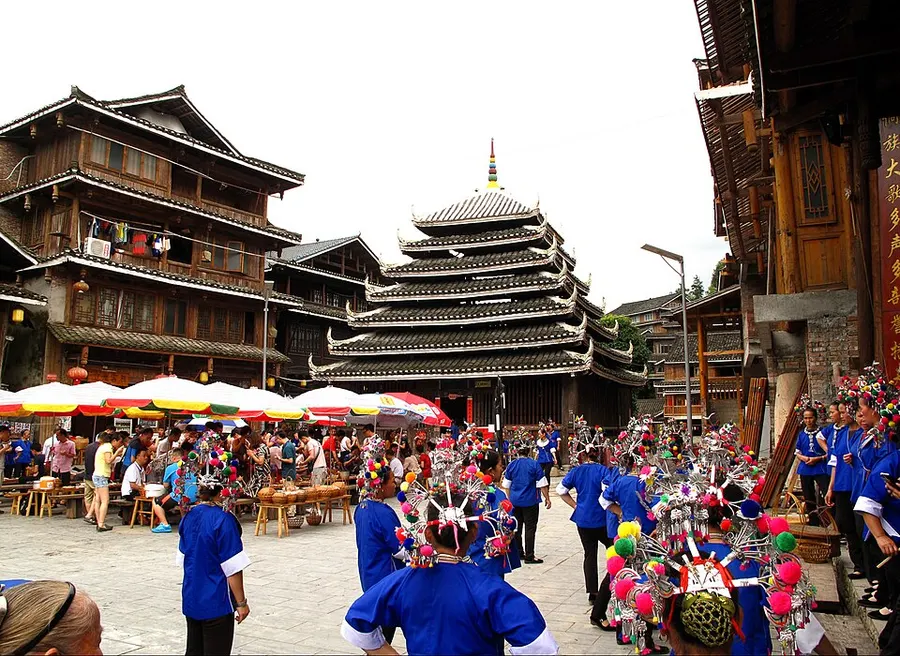
The Dong, roughly 3.5 million people, farm the terraced valleys of southeastern Guizhou, northern Guangxi, and southwestern Hunan, where Kam-Sui speakers built villages around two structures: drum towers and wind-and-rain bridges. Both are mortise-and-tenon timber works raised without nails by carpenter lineages whose drafting sticks — coded bamboo rulers passed master to apprentice — replace drawn blueprints entirely.
Their choral art is unique among world musics: Kam Grand Song (Dong Zu Da Ge) trains villages in polyphonic, unaccompanied singing led by a soloist over moving lower parts — a tradition UNESCO inscribed in 2009 after decades of scholarship arguing that non-courtly Europe held no monopoly on multipart harmony. Grand Song repertoiles imitate cicadas, flowing water, and goose cries, and annual song festivals in Liping and Congjiang now field choirs from hundreds of villages.
Cultural Pillars
- 01
Drum Tower Assemblies
Each clan raises a tiered tower as meeting hall and beacon; fire alarms, disputes, and festivals are all called from its central hearth, making it the village's parliament.
- 02
Wind-and-Rain Bridges
Covered corridors span rivers on stone piers with pavilion tiers, sheltering travelers and hosting market stalls; Chengyang's bridge required no nails and stands a century on.
- 03
Kam Grand Song
Multi-part singing without conductor or accompaniment, taught by immersion in mixed-age choirs; themes cover love, law, and nature mimicry in staggered breathing textures.
- 04
Indigo Dyeing and Bian Dan Cloth
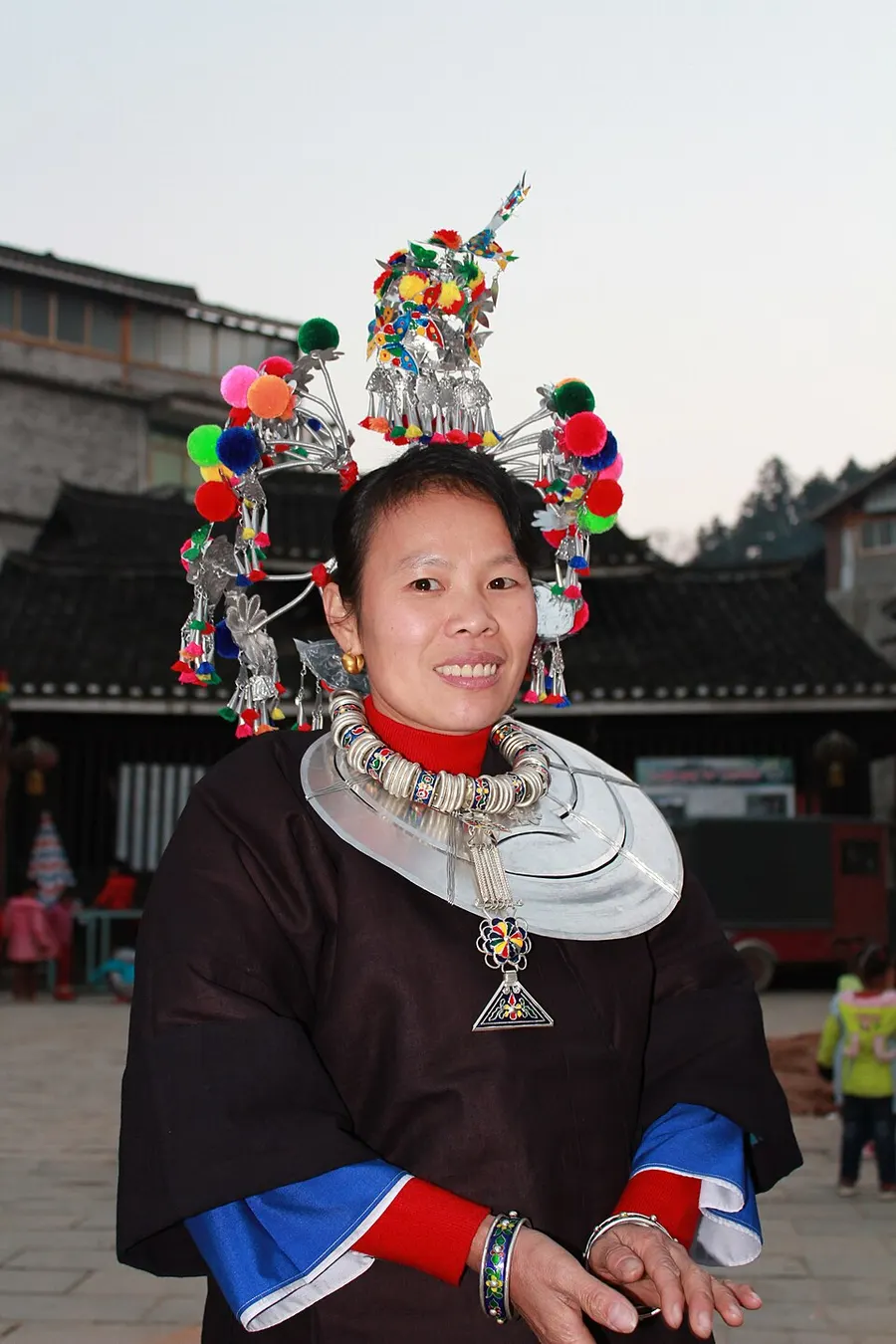
Egg-white beating and persimmon-juice oxidation give Dong cloth its metallic sheen; women dye in vats aged decades, coating festival jackets until they glint like armor.
Common Questions
What makes Kam Grand Song unusual?
It is folk polyphony — independent voice parts moving together without any written score, instruments, or conductor. UNESCO added it to the representative list in 2009; listen to Dong Grand Song.
How do Dong carpenters build without blueprints?
Master carpenters memorize standardized ratios encoded on bamboo tally sticks, calling out lengths to crews; the system raised drum towers up to thirteen stories and survives in restoration workshops today.
Where can visitors hear Grand Song live?
Villages around Liping, Congjiang, and Rongjiang in Guizhou stage weekend performances and February-to-April song festivals; choirs have also toured internationally, from Paris halls to Guizhou expo stages.
Watch & Learn
From the Archive
Photographs documenting the materials, makers, and settings behind these traditions.