A young cowherd named Niulang discovers the heavenly weaver girl Zhinu bathing in a river. They fall in love and marry, but Zhinu's mother, the Queen Mother of Heaven, separates them with the Milky Way. Once a year, on the seventh night of the seventh month, magpies form a bridge across the stars so they can reunite — this is the origin of Qixi Festival.
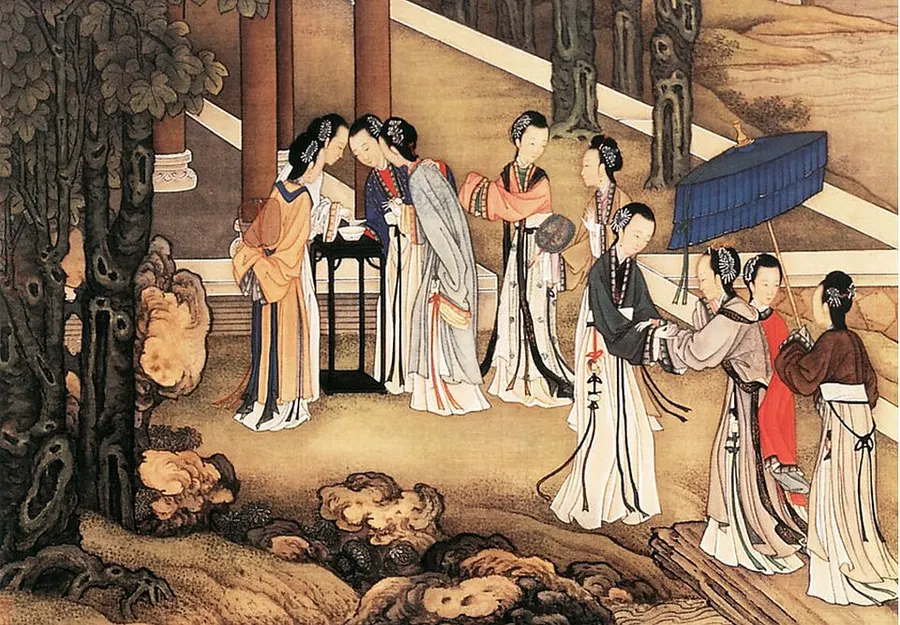
summer 7th day of 7th lunar month (August)
七夕节
Qixi Festival
Heritage Traditions
1 Items
Related Stories
0 Narratives
Season
summer
Lunar Calendar
7th day of 7th lunar month
Recognize its cultural meaning & heritage status?
Read the Intangible Heritage dossier Cultural Significance
Chinese Valentine's Day, commemorating the reunion of the Cowherd and Weaver Girl. Young women pray for sewing skills and watch for magpies that form a bridge across the Milky Way.
Across China, this festival embodies the deep connection between celestial cycles and human culture. Its rituals — passed down through countless generations — serve as a living archive of agricultural knowledge, spiritual belief, and community bonds that define Chinese identity.
Festival Profile
- Season summer
- Lunar Calendar 7th day of 7th lunar month
- Gregorian August
- Duration 1 Day
- Next Occurrence Aug 8, 2027
- Themes Renewal Tradition Community
Celestial Cycles
dark_mode
Phase 01 New Moon
Preparations begin
growing
Phase 02 Waxing
Ritual cleansing
brightness_7
Phase 03 Full Moon
Main celebration
bedtime
Phase 04 Waning
Closing ceremonies
Rituals of Memory
The sacred practices that define Qixi Festival
temple_buddhist
Purification Rites
Cleansing of homes and bodies to welcome blessings
temple_buddhist
Ceremonial Feast
Traditional foods prepared with symbolic meaning
temple_buddhist
Public Processions
Community parades with music, dance, and lanterns
Geography of Tradition
One Festival, Many Hearts
Qixi Festival is celebrated across China, with each region adding its unique interpretation while honoring the core traditions. From bustling cities to remote villages, the festival unites communities in shared remembrance and joy.
Imperial North
Bold, public, and stately. Known for grand processions and massive temple fairs.
Ancestral South
Intimate and scholarly. Emphasizing flower markets and complex clan rituals.
Heritage Items
Regional Footprint 0 regions · 1 traditions
Regional distribution data is being curated for this festival.
Heritage Constellation
七夕节
Music Ceremonial rhythms
Performance Dramatic storytelling
Cuisine Festive delicacies
Rituals Sacred ceremonies
The Voice of Tradition
“The festival is the heartbeat of our village — when the drums begin, the ancestors are with us.”
Elder Zhao Festival Custodian“These celebrations encode thousands of years of agricultural wisdom and cosmic understanding.”
Lin Wei Cultural Scholar Arc of Evolution
Shang–Zhou Dynasties
Ancient Origins
Earliest recorded observances rooted in agricultural cycles and ancestor veneration.
Tang–Song Dynasties
Imperial Codification
Rituals standardized at court; festivals became secular social events.
Ming–Qing Dynasties
Regional Flourishing
Local variations emerge with specialized folk arts and regional opera.
20th–21st Century
Modern Revival
UNESCO recognition and global celebration as a symbol of cultural identity.
A Living Legacy
Qixi Festival is not a museum piece; it is the air we breathe, the food we share, and the stories we tell.
Explore the ArchiveHistory & Development
Qixi, the seventh night of the seventh lunar month, celebrates the once-a-year bridge meeting of the Weaver Girl star Vega and the Cowherd star Altair across the Milky Way. Both stars carry those names in the Book of Songs, making the romance at least 2,500 years old, and Han-dynasty palace texts describe ladies threading seven-hole needles toward them.
The festival matured into qiqiao, "begging for skill," a women's competition in needlework, fruit carving, and flower arrangements judged at courtyard altars. Listed among the first batch of national intangible heritage in 2006, it has also been rebranded domestically as Chinese Valentine's Day, doubling restaurant and jewelry sales every August.
Cultural Traditions
-
Needle Threading Contests
Under moonlight, contestants race to thread a seven-eyed needle; the fastest wins the year's skill blessing, a game documented in Han palaces two millennia ago.
-
Displaying Handicrafts
Embroidery, paper flowers, and tiny shoes made during the year are laid on tables called qiaogong, turning courtyards into temporary galleries of women's work.
-
Star Storytelling
Elders retell the magpie-bridge tale of separation and reunion, the myth preserved in the cowherd and weaver girl story.
Common Questions
Is Qixi the same as Chinese Valentine's Day?
Commercially yes since the 1990s, though its historical core was a women's craftsmanship festival rather than couples' romance.
Why seven needles and seventh-day rituals?
Seven symbolized multiplicity and femininity in Zhou cosmology, hence seven-hole needles, seventh-month altars, and seven friends invited to sew together.
Which stars form the couple?
Vega in Lyra is the Weaver Girl, Altair flanked by two small stars in Aquila is the Cowherd with his two children, and the Milky Way is the separating river.
Watch & Learn
Oral Tradition
Stories & Legends
Narratives from the atlas graph that share origins, practitioners, or settings with this topic.