Mongol (蒙古族)
Steppe herders from Inner Mongolia, known for Khoomei overtone singing, long-song melodies, and nomadic wrestling traditions.
The Soul of the Mongol
Steppe herders from Inner Mongolia, known for Khoomei overtone singing, long-song melodies, and nomadic wrestling traditions.
The Mongol have cultivated a distinct cultural identity expressed through language, music, dance, craft, and ritual — a living heritage that has been passed down through countless generations. Their traditions reflect a profound relationship with their environment and a resilient spirit of cultural continuity.
Central to their identity is the Preserved orally — a vessel for cultural memory and spiritual knowledge. The Mongol worldview is fundamentally interconnected, viewing their surroundings not merely as terrain, but as a living environment where spirit and nature are inseparable.
Cultural DNA
- Identity
- Mongol
- 蒙古族
- Population
- ~600万
- 0.43% of China
- Language Family
- Preserved orally
- Primary Regions
- Ancestral lands across China
- Representative Heritage
- MusicDanceCraftsRitualsOral
- Status
- Active · Living Tradition
The Heritage Constellation
Cartography of the Homeland
An exploration of sacred geography, settlements, and historical migration pathways of the Mongol.
Living Traditions
Intangible knowledge passed through generations.
Neighboring Peoples
The Mongol share cultural landscapes and historical exchange with neighboring ethnic communities across the region.
The Ritual Cycle
Festivals mark the rhythms of life for the Mongol — celebrating harvests, honoring ancestors, and strengthening community bonds through music, dance, and feasting.
No festival relations recorded. Explore festival calendar
A Journey Through Time
Cross-Cultural Threads
History & Development
Mongols in China number about 6.29 million, centered on Inner Mongolia but present from Xinjiang's Torghut pastures to the Northeast plains, inheritors of the steppe empire founded under Genghis Khan in 1206. Nomadic pastoralism organized every institution ― felt tents, composite bows, horse herds counted in the thousands — and the Yuan Dynasty (1271–1368) briefly made Mongol administration the framework for all of China.
Inner Mongolia became an autonomous region in 1947, the first in the PRC. Steppe arts survived sedentarization with global fame intact: long-song (urtiin duu) and overtone khoomei entered UNESCO lists in 2008 and 2009, the morin khuur fiddle followed in 2008, and Naadam — wrestling, horse racing, archery — was nationally listed in 2006. Herding households still move with the seasons between winter and summer pastures, keeping the calendar that generated these traditions alive.
Cultural Pillars
- 01
Naadam Games
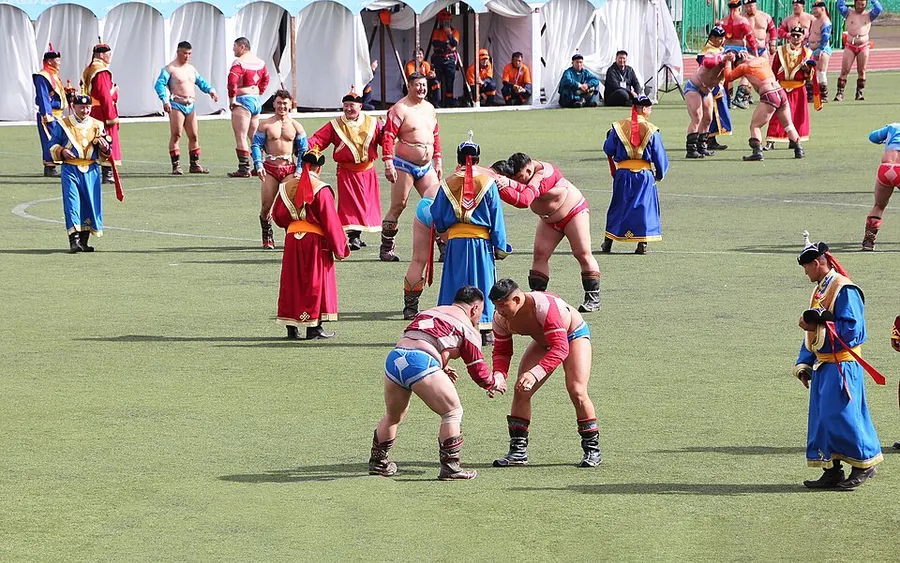
The "three manly skills" — wrestling open to hundreds of competitors, endurance horse races ridden by child jockeys, and thumb-ring archery — assemble the steppe's military training into festival form each summer.
- 02
Long-Song and Khoomei
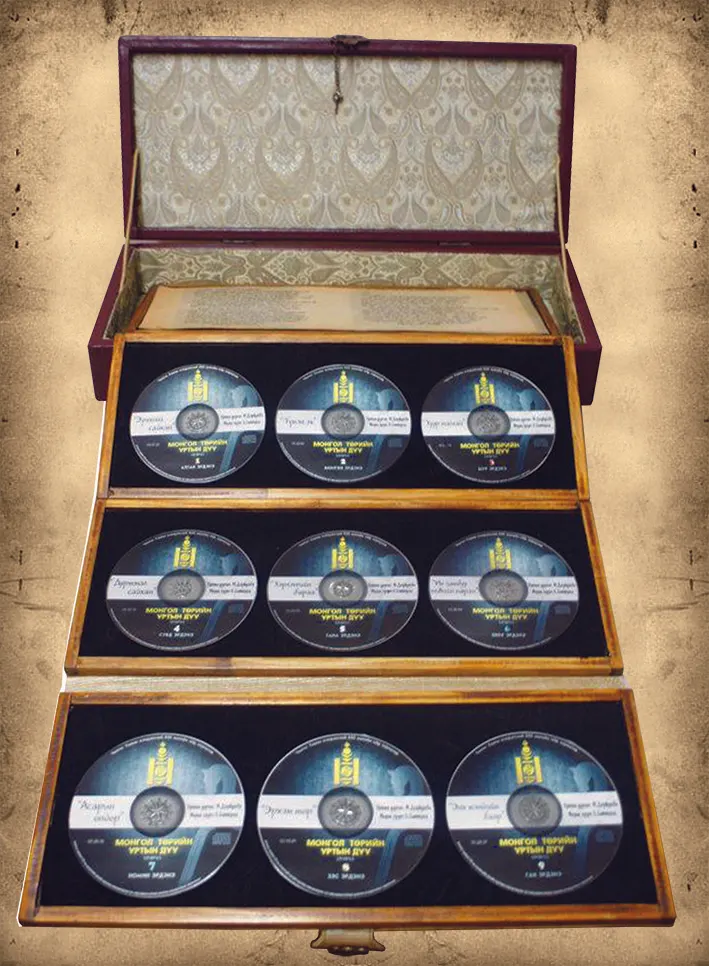
One voice sustains a melody across a single breath for over a minute; another splits into whistle-like harmonics above a drone. Both encode pastoral acoustics and are taught in conservatories today.
- 03
Morin Khuur Fiddle
The horsehead-carved two-string instrument accompanies epics and lullabies alike; its trapezoid body and horsehair strings define steppe timbre from campfire to concert hall.
- 04
Felt-Making and the Ger
Wool is rolled, soaked, and hauled behind horses to felt it; lattice-walled gers reassemble in under an hour, an architecture of mobility refined across a millennium.
Common Questions
What is Naadam?
The steppe's principal festival combining wrestling, horse racing, and archery, held each July. Listed nationally in 2006, it preserves skills that once selected warriors; ritual openings honor mountains, springs, and ancestors.
How does throat singing produce two notes at once?
A low fundamental drones while the singer tunes mouth resonances to amplify selected overtones, creating audible whistling pitches. Styles range from deep kharkhiraa to nasal khamryn; begin with Mongolian khoomei.
Do Mongolian herders still live in gers?
Yes, seasonally. Many families winter in insulated gers and summer in pasture camps near towns; solar panels and motorbikes coexist with felt construction unchanged in principle for centuries.
Watch & Learn
From the Archive
Photographs documenting the materials, makers, and settings behind these traditions.