Uyghur (维吾尔族)
Turkic Muslim people of Xinjiang, known for the Twelve Muqam, Sanam dance, and intricate Islamic arts.
The Soul of the Uyghur
Turkic Muslim people of Xinjiang, known for the Twelve Muqam, Sanam dance, and intricate Islamic arts.
The Uyghur have cultivated a distinct cultural identity expressed through language, music, dance, craft, and ritual — a living heritage that has been passed down through countless generations. Their traditions reflect a profound relationship with their environment and a resilient spirit of cultural continuity.
Central to their identity is the Preserved orally — a vessel for cultural memory and spiritual knowledge. The Uyghur worldview is fundamentally interconnected, viewing their surroundings not merely as terrain, but as a living environment where spirit and nature are inseparable.
Cultural DNA
- Identity
- Uyghur
- 维吾尔族
- Population
- ~1100万
- 0.79% of China
- Language Family
- Preserved orally
- Primary Regions
- Ancestral lands across China
- Representative Heritage
- MusicDanceCraftsRitualsOral
- Status
- Active · Living Tradition
The Heritage Constellation
Cartography of the Homeland
An exploration of sacred geography, settlements, and historical migration pathways of the Uyghur.
Living Traditions
Intangible knowledge passed through generations.
Neighboring Peoples
The Uyghur share cultural landscapes and historical exchange with neighboring ethnic communities across the region.
The Ritual Cycle
Festivals mark the rhythms of life for the Uyghur — celebrating harvests, honoring ancestors, and strengthening community bonds through music, dance, and feasting.
No festival relations recorded. Explore festival calendar
A Journey Through Time
Cross-Cultural Threads
History & Development
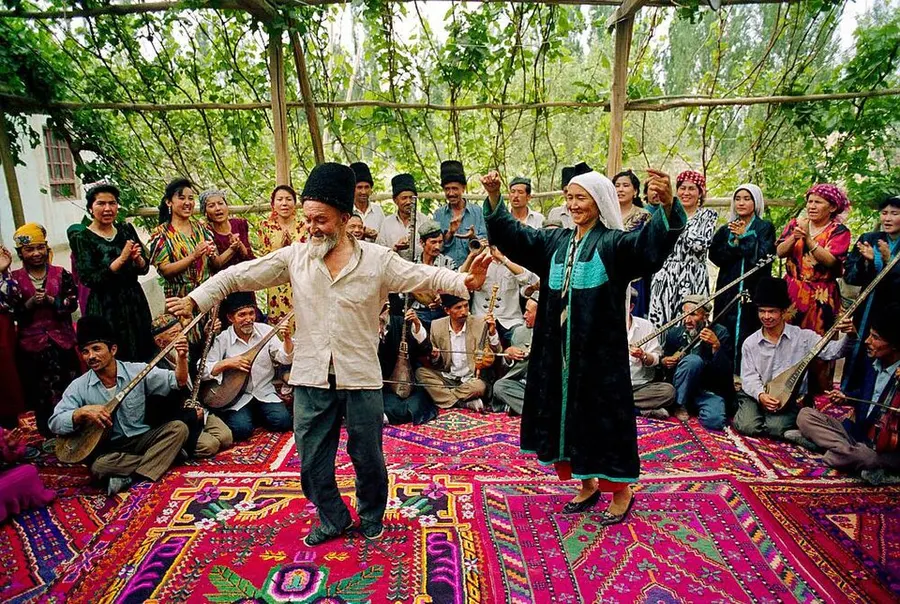
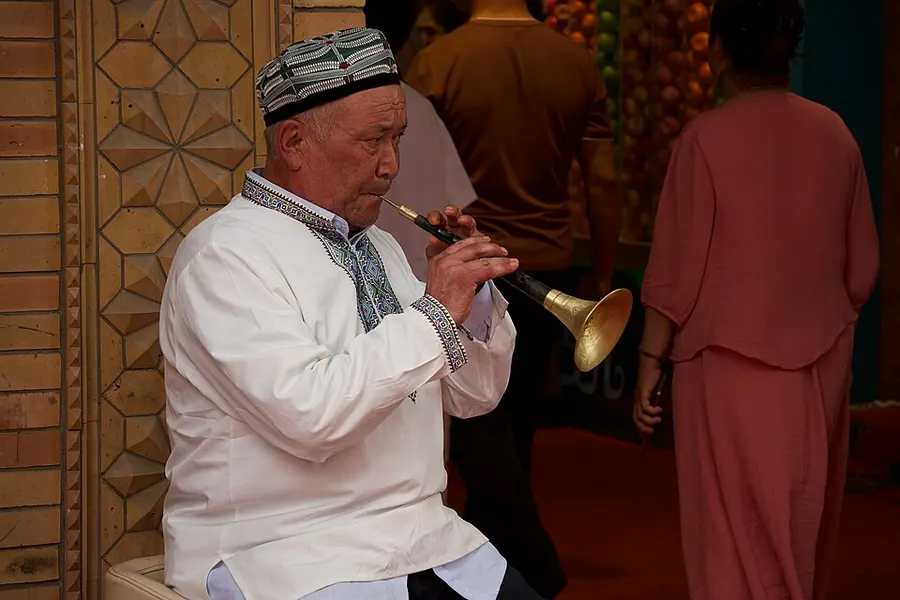
Uyghurs, about 11.77 million people, are the largest community of Xinjiang's oasis towns — Kashgar, Hotan, Turpan, Yarkand — where Silk Road caravans made them heirs to both Buddhist and Islamic urban civilizations. Their language is Turkic, their classical literature begins with 11th-century Mahmud al-Kashgari's dictionary of Turkic tongues, and their music crystallized in the muqam suites: twelve large-scale cycles, each running twenty hours uncut, formally anthologized in the 1950s after centuries of oral transmission.
The Twelve Muqam entered UNESCO's Masterpieces list in 2005 and the meshrep gathering — the neighborhood institution hosting music, joke-telling, and moral arbitration — followed in 2010 on the List of Intangible Heritage in Need of Urgent Safeguarding. Craft traditions track the oases' ecology: mulberry-bark paper from Hotan, Etles silk dyed in warp-patterned waves, and Karez underground canals engineered two millennia ago to feed vineyards in the Turpan Depression.
Cultural Pillars
- 01
Muqam Suites
Each cycle strings together sung classical poetry, dance meters, and instrumental interludes led by rawap and dutar; complete performance of all twelve spans more than twenty hours.
- 02
Meshrep Gatherings
Community evenings pairing music with riddle contests, mock trials, and etiquette lessons — a social school where elders correct conduct through humor rather than sanction.
- 03
Etles Atlas Silk
Hotan weavers tie and dye warps before weaving, producing feathered wave patterns once traded along caravan routes; looms still run in Jiya township workshops.
- 04
Dawan Karez Wells
Underground channels tap mountain groundwater across the Turpan basin, minimizing evaporation in summer heat that exceeds 45°C — irrigation engineering still watering vineyards today.
Common Questions
What is a muqam?
A large-scale musical suite combining instrumental movements and sung poetry, comparable in scope to a symphony cycle. The Uyghur Twelve Muqam tradition holds UNESCO status since 2005; explore the Twelve Muqam.
What happens at a meshrep?
Music, dance, riddles, improvised comedy, and gentle public correction of misbehavior, all chaired by respected hosts. UNESCO placed it on the urgent safeguarding list in 2010 precisely because these gatherings had become rare; see meshrep.
Why is Turpan so hot yet so fertile?
The oasis sits below sea level in a desert depression, but Karez shaft-and-tunnel canals deliver snowmelt without surface evaporation — grapes, melons, and the raisin industry depend on this 2,000-year-old system.
Watch & Learn
From the Archive
Photographs documenting the materials, makers, and settings behind these traditions.