Traditional Dance
Shandong Province, East China
Song Dynasty (960–1279 CE)
National Heritage
Master-Apprentice
Oral Tradition
Yangge Dance
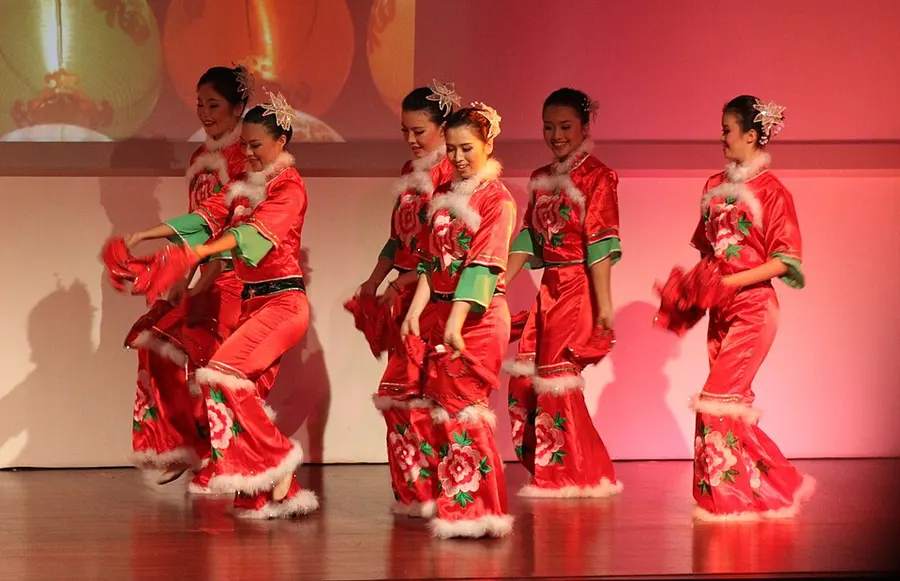
"A lively northern Chinese folk dance with colorful costumes, fans, and waist drums — originally a rice-planting song turned celebration."
CIVILIZATION CONTEXT
This artifact is part of the Intangible Heritage Cluster. It connects to 9 entities across the atlas, spanning 2 regions, 0 masters, 1 festival, and 0 skills.
Yangge Dance: A Living Heritage
Yangge is a popular folk dance from northern China, particularly associated with the rural areas of Shaanxi, Hebei, and Shandong. Performers dance in colorful costumes with fans, ribbons, and waist drums, moving with lively, energetic steps. Originally a rice planting song (the name means "rice sprout song"), it evolved into a celebratory street dance performed during Spring Festival and harvest celebrations.
747+
Years of Unbroken Lineage
0
Related Cultural Vectors
History & Development
Yangge is the farm-field dance that grew into North China's festival backbone. Song-dynasty notes describe spring-ploughing songs with swaying steps, and the name itself ties to farm work songs sung to keep transplanting crews in rhythm. Villages in Shaanxi and across the Loess Plateau turned it into a mass street dance: troupes of tens to hundreds move in winding lines behind a lead umbrella-bearer, drum carts rolling at the centre. Its steps are deliberately simple, which is exactly why whole villages, not specialists, could carry it for centuries.
Twentieth-century politics and media reshaped it twice. The 1942 Yan'an movement retooled yangge as new-style people's theatre, sending troupes through liberated zones and fixing the image of ribbon-waving collective joy; the 1950s stage then split it into named regional schools. Shaanxi's Ansai belt is the loudest, pairing dance with hundreds of waist drums, and Northeast yangge added comedic high kicks and handkerchief spins. All major variants entered the national inventory between 2006 and 2008, and plaza-dancing grandmothers today are unknowingly performing its choreography.
How It Is Made
- 01
Leading with the umbrella
A head dancer with a tiger-head umbrella improvises signals that fold and unfurl the whole column like a ribbon in wind.
- 02
Keeping the cross-step
The base step crosses one foot over the other with a knee-bob, easy enough for a village of amateurs yet demanding perfect unison.
- 03
Spinning the props
Silk fans and handkerchiefs are thrown and caught on the beat; Northeast performers spin squares on fingertips without looking.
- 04
Syncing the drum carts
Big drums mounted on carts set the tempo; snare and gong lines answer in call-and-response patterns that shift with the leader's whistle.
Common Questions
What does "yangge" mean?
It derives from farm songs sung while planting, and the Spring Festival story shows how the dance anchored New Year village visits.
Which regional style should I see?
Ansai in northern Shaanxi for drum-driven power, Northeast yangge for comic kicks, and Hebei's Jizhou lamp yangge for lantern-lit night formations.
Can outsiders join in?
Yes; the form is built for mass participation, and city squares across the North welcome anyone who can hold the cross-step through a Lantern Festival night.
Watch & Learn
Stories & Legends
The Dancing Lion: From Exorcism to Celebration
historicalWhen two people become one beast, evil spirits flee and prosperity arrives.
Related Places
Related Festivals
Relationship Constellation
Tracing the invisible threads that connect Yangge Dance to the broader civilization ecosystem.
Continue the Journey
Yangge Dance
Traditional Dance
Chinese Paper-Cut
Traditional Crafts
arrow_forwardShu Embroidery
Traditional Crafts
arrow_forwardLion Dance
Traditional Dance
arrow_forward