Korean (Chaoxian) (朝鲜族)
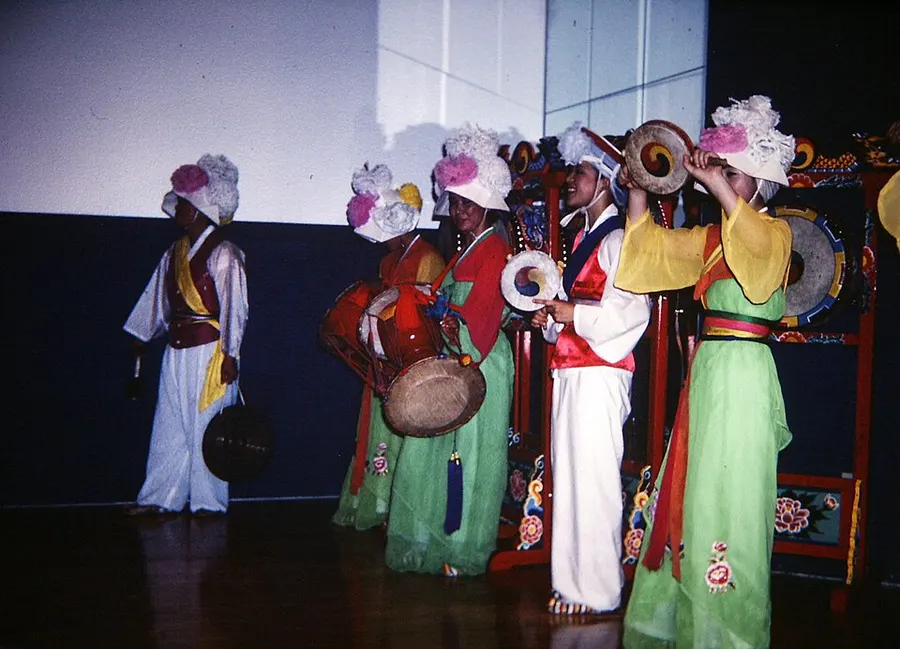
Korean ethnic group in Jilin and northeast China, known for farmers' dance, arirang singing, and cold noodle cuisine.
The Soul of the Korean (Chaoxian)
Korean ethnic group in Jilin and northeast China, known for farmers' dance, arirang singing, and cold noodle cuisine.
The Korean (Chaoxian) have cultivated a distinct cultural identity expressed through language, music, dance, craft, and ritual — a living heritage that has been passed down through countless generations. Their traditions reflect a profound relationship with their environment and a resilient spirit of cultural continuity.
Central to their identity is the Preserved orally — a vessel for cultural memory and spiritual knowledge. The Korean (Chaoxian) worldview is fundamentally interconnected, viewing their surroundings not merely as terrain, but as a living environment where spirit and nature are inseparable.
Cultural DNA
- Identity
- Korean (Chaoxian)
- 朝鲜族
- Population
- ~180万
- 0.13% of China
- Language Family
- Preserved orally
- Primary Regions
- Ancestral lands across China
- Representative Heritage
- MusicDanceCraftsRitualsOral
- Status
- Active · Living Tradition
The Heritage Constellation
Cartography of the Homeland
An exploration of sacred geography, settlements, and historical migration pathways of the Korean (Chaoxian).
Living Traditions
Intangible knowledge passed through generations.
Neighboring Peoples
The Korean (Chaoxian) share cultural landscapes and historical exchange with neighboring ethnic communities across the region.
The Ritual Cycle
Festivals mark the rhythms of life for the Korean (Chaoxian) — celebrating harvests, honoring ancestors, and strengthening community bonds through music, dance, and feasting.
No festival relations recorded. Explore festival calendar
A Journey Through Time
Cross-Cultural Threads
History & Development
China's Korean community, about 1.7 million people, concentrates in the Yanbian Korean Autonomous Prefecture founded in 1952 along the Tumen River border. Most descend from farmers who crossed the river during famine years of the late Qing and Japanese occupation, transplanting wet-rice techniques that made the cold northeast basin China's northern rice bowl. Bilingual schooling in Korean and Chinese remains standard through secondary level, sustaining one of the country's most literate minorities.
Performance heritage carries the group's identity: farmers' dance (nongak) with its spinning ribbon hats entered UNESCO's representative list as "Chinese farmers' dance of the Korean ethnic group" in 2009. Village life still turns on ganggangsullae circle dances under harvest moons, seesaw and swing competitions for girls at Dragon Boat season, and a cuisine — kimchi jars, cold buckwheat noodles, rice cakes pounded in wooden troughs — that reshaped tables across northeast China.
Cultural Pillars
- 01
Farmers' Dance
Drummers and gong players lead processions while dancers spin paper streamers from conical hats; the same troupe vocabulary once coordinated planting and threshing work.
- 02
Seesaw and Swing Festivals
Duanwu-season contests launch women high above courtyard walls — historically one of few public arenas for unmarried women's skill display.
- 03
Kayagum Zither Music
Twelve-string plucked zithers accompany lyric song (minyo); sanjo suites stretch improvisation across hour-long movements.
- 04
Fermented Kitchen
Buried onggi jars hold kimchi and soybean pastes through winter; communal kimjang making days were inscribed by UNESCO in 2013 under Korea's nomination, with parallel practice across Yanbian households.
Common Questions
What is nongak?
The farmers' music-and-dance complex combining percussion bands, acrobatic hat-ribbon spins, and comic masking, performed at planting, harvest, and festival; see Korean farmers' dance.
Do Chinese Koreans still speak Korean?
Yes — Yanbian schools teach in both languages, and broadcasting, signage, and publishing operate bilingually, though younger speakers increasingly code-switch toward Mandarin in cities.
What foods define Yanbian cuisine?
Cold noodles in chilled broth, rice cakes pounded fresh at markets, and jarred kimchi variants milder than peninsular styles; Yanji's restaurant row draws food tourists from across the northeast.