安徽省
Anhui Province
Home to the historic production of xuan paper in Jing County, as well as Huizhou architecture and ink stone craftsmanship.
As a vital node in China's cultural geography, this location has nurtured artistic traditions that have endured through dynastic changes, social transformations, and the challenges of modernity. The continuity of these practices speaks to the deep relationship between place and cultural identity.
Today, Anhui Province continues to be a living center of heritage — where master artisans train the next generation, festivals mark the seasons, and ancient crafts adapt to contemporary life.
Civilization Snapshot
Where heritage lives — the geography of cultural practice
Interact with the nodes of cultural heritage across the region's ancient grid.
Heritage District
The cultural heart of Anhui Province
Craft Village
Traditional workshops and living heritage
The heritage collection of Anhui Province
A Lineage of Eras
Keepers of the Flame
Ma Lan
“The craft is not just technique — it is the memory of our ancestors speaking through our hands.”
READ THEIR STORYThe Cultural Constellation of Anhui Province
The heritage of Anhui Province does not exist in isolation. It is the core of a sophisticated network of exchange, where techniques, motifs, and melodies traveled to shape the identity of an entire civilization.
- Beijing Connected Heritage
- Nanjing Connected Heritage
- Suzhou Connected Heritage
The Rhythms of Time
Spring Festival
2 seasonal observances
Summer Festival
2 seasonal observances
Autumn Festival
2 seasonal observances
Winter Festival
2 seasonal observances
Nearby heritage destinations
Beijing
北京 · The capital of China, Beijing has been the political and cul...
Nanjing
南京 · An ancient capital of six dynasties, Nanjing is the birthpla...
Suzhou
苏州 · Famous for its classical gardens and silk industry, Suzhou i...
Chenjiagou
陈家沟 · A small village in Henan Province, Chenjiagou is the birthpl...
History & Development
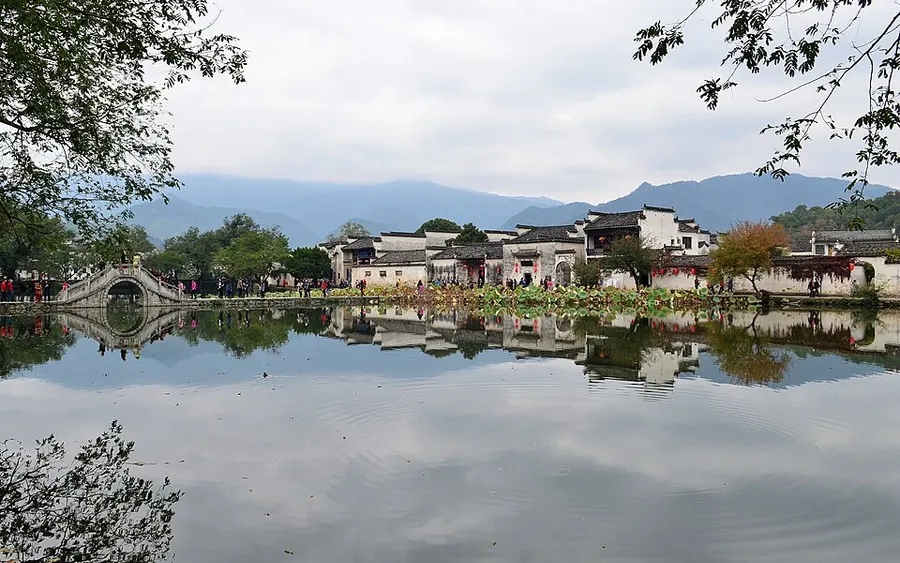
Anhui gave China two of its defining landscapes and one of its great merchant diasporas. Huangshan's granite pines and seas of cloud entered the World Heritage List in 1990, while Huizhou merchants dominated salt, pawn, tea, and timber finance for four centuries and built walled villages like Xidi and Hongcun, listed together in 2000.
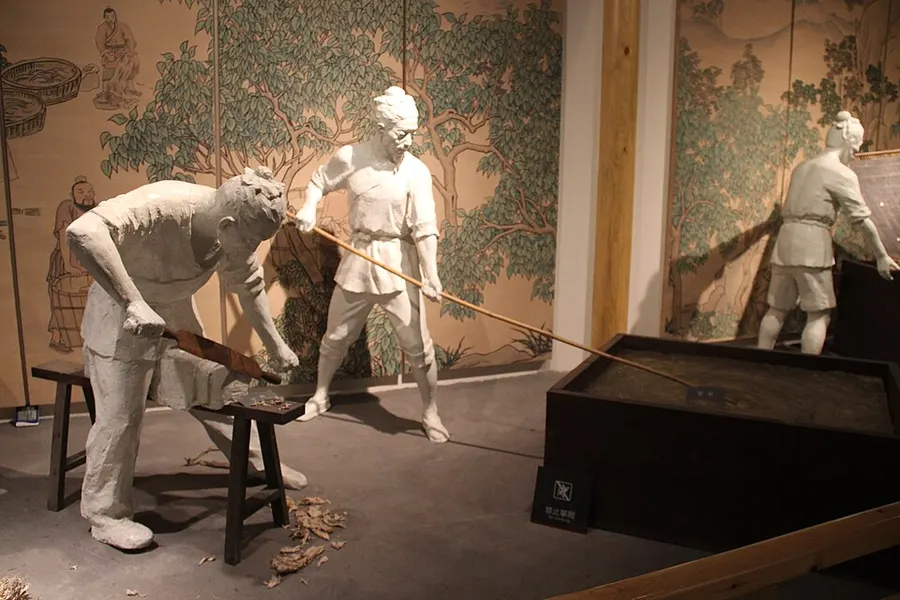
Hongcun's ox-shaped water system still channels spring water past every doorway through Moon Pond and South Lake. The province also perfected the scholar's toolkit: Jing County xuan paper takes one hundred and eight steps and three winters to make, and Huizhou inksticks carry gilded dragon reliefs. Anqing troupes fed the Hui-lantern repertoire that became Beijing opera after 1790.
Cultural Traditions
- 01
Hui Architecture
White walls, horse-head gables, and carved lattice windows define timber building craft here.
- 02
Four Treasures
Xuan paper, Hui ink, She inkstones, and Xuan brushes are still made by family workshops.
- 03
Huangmei Melodies
Tea-picking ditties grew into Huangmei opera, beloved across central China.
Common Questions
Why is Huangshan famous?
UNESCO listed it in 1990 for granite peaks, ancient pines, hot springs, and its inspiration for a thousand years of landscape painting.
What is xuan paper?
Handmade paper from Jing County that survives a millennium; UNESCO recognised the craft in 2009.
Did Anhui influence Beijing opera?
Yes. Anqing's Hui troupes brought their melodies to Beijing in 1790, seeding Peking opera.
Watch & Learn
From the Archive
Photographs documenting the materials, makers, and settings behind these traditions.