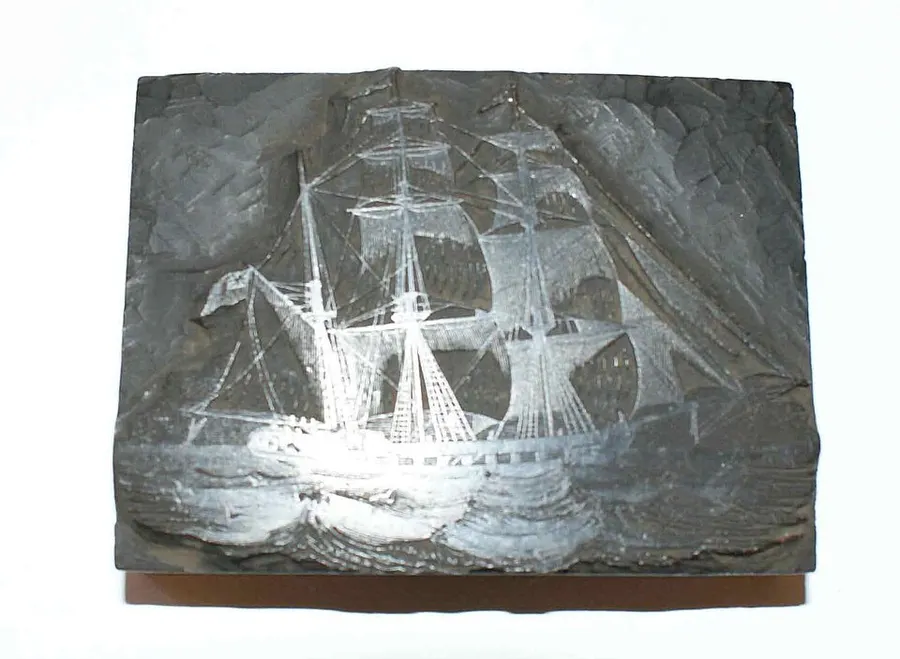
Traditional Crafts
Anhui Province, East China
Tang Dynasty (618–907 CE)
Representative List
Master-Apprentice (Hands-on)
Engraved Block Printing
Engraved Block Printing
"The world's oldest printing technology — carved wooden blocks producing the earliest printed books, including the 868 CE Diamond Sutra."
CIVILIZATION CONTEXT
This artifact is part of the Intangible Heritage Cluster. It connects to 7 entities across the atlas, spanning 1 region, 0 masters, 0 festivals, and 1 skill.
Engraved Block Printing: A Living Heritage
Chinese engraved block printing is the world's oldest known printing technology, developed during the Tang Dynasty. Characters and images are carved in relief on wooden blocks, inked, and pressed onto paper. The Diamond Sutra (868 CE), the world's oldest dated printed book, was created using this technique. The craft requires mastery of knife carving, ink preparation, and precise printing pressure.
1119+
Years of Unbroken Lineage
1
Related Cultural Vectors
History & Development
Woodblock printing is China's original mass medium, carving whole pages mirror-wise into fruitwood and pressing them onto paper. Its dated masterpiece, the Diamond Sutra scroll of 868 preserved at Dunhuang, is the world's oldest securely printed book, and by Song times commercial presses in Hangzhou, Jianyang, and Sichuan turned out sutras, exam texts, novels, and medical manuals by the shelf-load. Because each block carries one calligrapher's hand, the medium preserved brushwork with a fidelity type could never match.
The trade shrank but never died. Yangzhou's Guangling scriptorium still stores tens of thousands of ancestral blocks and cuts new ones for Buddhist canons, and Nanjing's Jinling sutra press kept carving through the twentieth century. UNESCO inscribed the craft on the Representative List in 2009, naming those workshops as living proof; our woodblock printing story follows the arc from Dunhuang to colour prints, and the paper those blocks meet is often xuan paper, matched for permanence.
How It Is Made
- 01
Writing the sample
A calligrapher brushes the text reversed onto thin paper that is pasted face-down onto the planed block.
- 02
Carving the page
Knife work removes everything except stroke lines, holding hairline serifs across hundreds of characters per block.
- 03
Printing by rubbing
Ink is dabbed on the raised surface, paper laid, and a dry pad rubbed so pressure stays even without a press.
- 04
Collating and binding
Printed leaves are folded, gathered, and sewn at the spine in the classic wrapped-paper style.
Common Questions
What is the oldest dated print?
The Diamond Sutra of 868, carved in Tang times and found intact at Dunhuang, opens with Buddha teaching and a woodcut scene of unmatched clarity.
How does it differ from movable type?
Blocks carry a fixed page and preserve calligraphy and images together; the economics are compared in our movable type entry.
Is anyone still carving blocks?
Yes; Yangzhou's Guangling workshop and Nanjing's Jinling press cut new sutra blocks yearly, keeping apprentice lines alive.
Watch & Learn
Stories & Legends
Woodblock Printing: The First Information Revolution
historicalHow carved pear wood changed the world, 600 years before Gutenberg.
Skills & Techniques
Engraved Block Printing expand_more
The technique of carving text and images in relief on wooden blocks, then inking and pressing paper onto the carved surface to create prints.
Steps
- Select pear or date wood and cut into blocks of standard size
- Sand the block surface smooth and apply a rice-paste coating
- Write the text or draw the image on thin paper in reverse
- Press the paper onto the block — ink transfers the design
- Carve away the background, leaving raised characters and lines
- Ink the raised surface and press paper onto it with a brush
Tools
carving knife set, mallet, ink pad, printing brush, sanding stone
Materials
pear wood block, date wood block, ink, xuan paper, rice paste
Related Places
Relationship Constellation
Tracing the invisible threads that connect Engraved Block Printing to the broader civilization ecosystem.
Continue the Journey
Engraved Block Printing
Traditional Crafts
Meshrep
Folk Customs
arrow_forwardWatertight-bulkhead Technology of Fujian Ships
Traditional Crafts
arrow_forwardYueju Opera (Cantonese Opera)
Traditional Drama
arrow_forward