menu_book The Full Narrative
01
The Diamond Sutra
The oldest surviving printed book is a Diamond Sutra scroll from 868 CE, discovered in the Mogao Caves of Dunhuang. The scroll demonstrates an astonishing level of craft: elegant calligraphy, a detailed frontispiece showing the Buddha preaching, and seven precisely carved pages. It was made 600 years before Gutenberg's Bible.
02
Pear Wood and the Craft of Carving
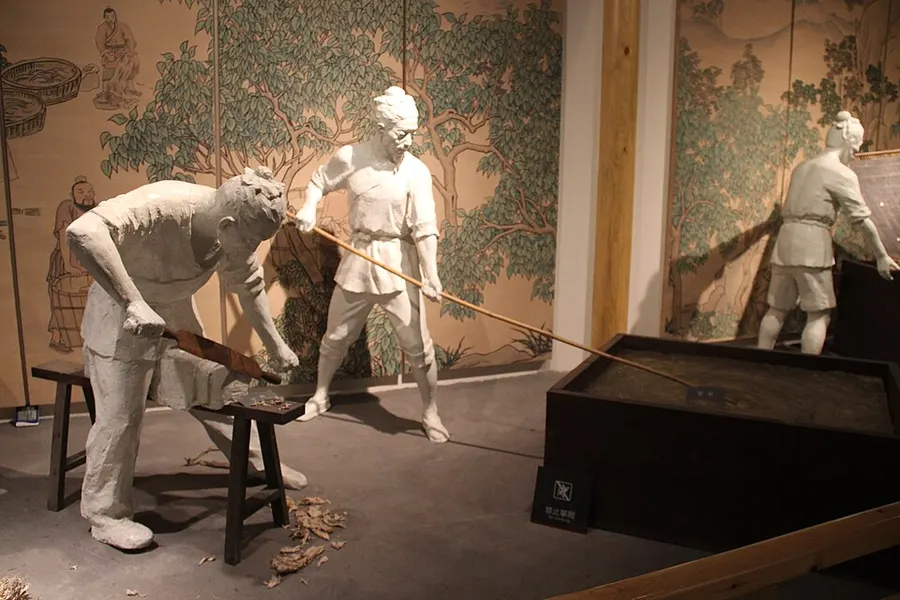
Woodblock printing is an exacting craft. The carver must work in reverse — mirroring the text — and carve every stroke of every character in relief. A single page of Chinese text might contain 500 characters, each requiring precise cutting. Mistakes are unforgiving: a single slip ruins the entire block.
03
From Blocks to Moveable Type
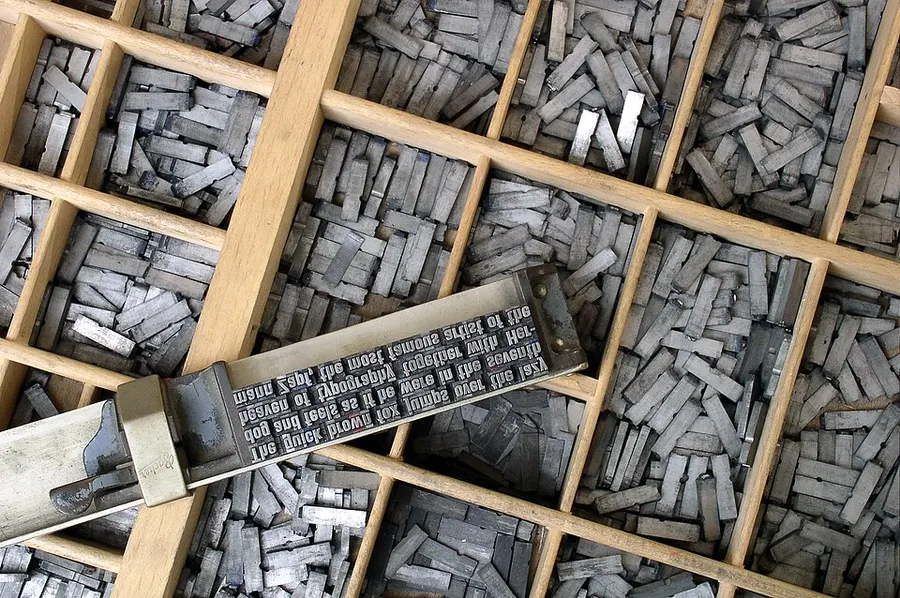
In the 11th century, Bi Sheng invented movable type using baked clay. By the Ming Dynasty, wooden type had become widespread. While the thousands of Chinese characters made moveable type less practical than in alphabetic systems, the technology was undeniably Chinese in origin. The information revolution began here.
04
The Commercial Publishing Boom
Commercial publishers turned woodblock printing from a religious instrument into a mass industry between the tenth and sixteenth centuries. Print centers clustered in Jianyang in Fujian, in Sichuan, and around the West Lake quarter of Hangzhou, where Hangzhou print shops under the Song dynasty issued Confucian classics, medical formularies, and fiction at prices ordinary scholars could afford. Ming catalogues record tens of thousands of separate editions. Examination guides, household encyclopedias, and illustrated novels rolled off the same presses that produced sutras, and reading spread deep into the merchant class.
05
Color Prints and a Living Craft
Multi-block color printing pushed the craft to its technical peak. Nianhua workshops applied one carved block per pigment and registered each impression by eye, producing festive images whose outlines never drifted. Centers at Yangliuqing near Tianjin, Taohuawu in Suzhou, and Zhuxianzhen in Henan supplied rural households with millions of prints each lunar new year, a trade documented across the New Year nianhua print tradition. The older skill survived alongside them. In 2009 UNESCO inscribed Chinese woodblock engraving on the Representative List, and workshop studios in Yangzhou still pull proofs from Qing-era pear-wood blocks today.
06
Watermark Printing Keeps the Hand Alive
Rongbaozhai in Beijing turned printing into preservation. Its watermarked facsimile workshop, founded on woodblock methods in 1895, reproduced classical paintings block by block, and the studio's 1979 completion of a full-size copy of Han Xizai's Night Banquet required sixteen hundred carved blocks and eight years of registration work. Each color layer prints on wet xuan paper stretched over a heated table, so the fibers drink pigment exactly as the original brush did, fooling experts at arm's length. The workshop trained apprentices through the decades when commercial letterpress died, keeping carving knives, camellia-oil ink grinding, and horsehair brushes in daily use. Ten studios in Yangzhou and Hangzhou maintain parallel lines for folk prints built on paper-cut imagery rather than paintings. Museums now commission facsimiles for study collections, pricing them between poster reproductions and originals, a market niche that funds perhaps two hundred craftspeople nationwide. The technique survives precisely because it never competed on speed, only on fidelity.