Traditional Crafts
Zhejiang Province, East China
Song Dynasty, c. 1040 CE, invented by Bi Sheng
Representative List
Master-Apprentice (Hands-on)
Wooden Movable-Type Printing
Wooden Movable-type Printing
"The 11th-century invention that revolutionized printing — reusable character blocks that accelerated knowledge sharing across East Asia."
CIVILIZATION CONTEXT
This artifact is part of the Intangible Heritage Cluster. It connects to 9 entities across the atlas, spanning 1 region, 0 masters, 0 festivals, and 1 skill.
Wooden Movable-type Printing: A Living Heritage
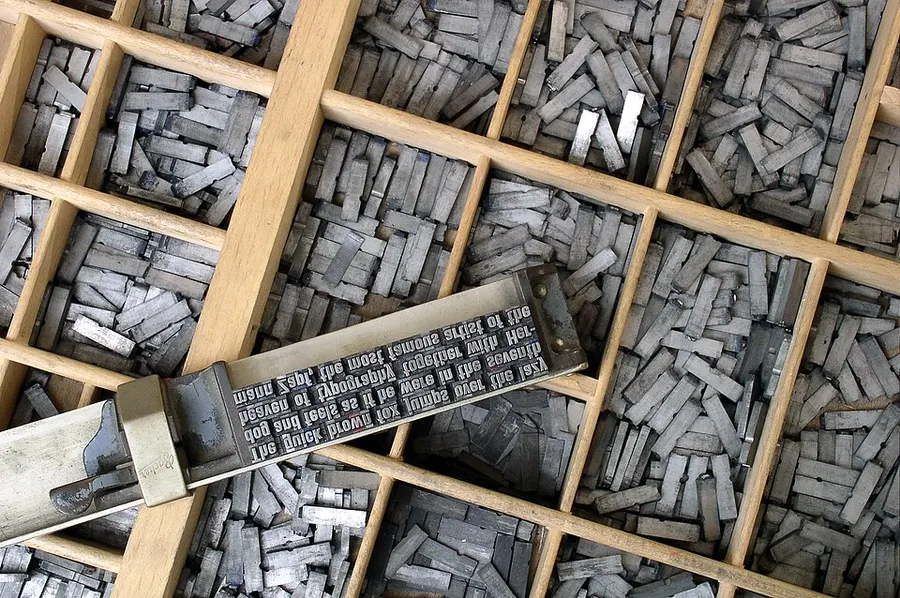
Wooden movable-type printing, invented by Bi Sheng in the 11th century, was a revolutionary advancement over block printing. Individual characters carved on wooden or clay pieces could be rearranged and reused. Preserved primarily in the Rui'an region of Zhejiang Province, the technique involves carving Chinese characters on small blocks of date wood, composing them into pages, and printing with hand pressure. It dramatically accelerated book production.
986+
Years of Unbroken Lineage
1
Related Cultural Vectors
History & Development
Movable type separated printing into reusable single characters, and the commoner Bi Sheng worked it out from fired clay around the 1040s. Shen Kuo's "Dream Pool Essays" records the system precisely: characters baked in earthenware, set on an iron plate fixed with resin and wax, warmed loose again after each print run. Later editions refined the materials, with Wang Zhen cutting tens of thousands of wooden types and inventing the rotating case that kept compositors within arm's reach, and bronze type following in wealthy southern households.
China nonetheless kept blocks dominant, for reasons of scale and style: a novel or sutra might need a hundred thousand impressions, which favours durable blocks, and patrons wanted the calligrapher's own hand rather than uniform type. The lineage that survived longest prints clan genealogies in Rui'an, Zhejiang, where Dongyuan village workshops still compose family histories from wooden type cases; UNESCO inscribed that wooden movable-type tradition in 2010, and its relationship to the older art is laid out in our block printing entry.
How It Is Made
- 01
Cutting the types
Characters are carved individually in hardwood or fired clay, each checked against model books for stroke accuracy.
- 02
Composing the forme
Types are set line by line in a frame, wedged tight, then fixed with warmed resin that releases after printing.
- 03
Proofing the page
First pulls reveal crooked or worn types; compositors correct before the run proceeds.
- 04
Sorting after printing
Types return to rhyme-ordered trays, a discipline genealogy shops in Rui'an still maintain across cases of thousands of characters.
Common Questions
Who invented movable type?
The commoner Bi Sheng in the 1040s, whose clay-type method Shen Kuo recorded; the century is covered in our Song dynasty profile.
Why did blocks stay popular in China?
Huge print runs favoured durable blocks, and buyers prized individual calligraphy over uniform letters, as explained in our block printing entry.
Does any lineage survive?
Yes; Dongyuan village in Rui'an composes genealogies from wooden type, the practice UNESCO listed in 2010 and traced further in our printing story.
Watch & Learn
Stories & Legends
Woodblock Printing: The First Information Revolution
historicalHow carved pear wood changed the world, 600 years before Gutenberg.
Skills & Techniques
Wooden Movable-Type Printing expand_more
The craft of carving individual Chinese characters on small wooden blocks, composing them into pages, and printing multiple copies.
Steps
- Select dense date wood and cut into small uniform blocks
- Write each character in reverse on a block surface
- Carve the character in relief
- Arrange characters in a composing frame to form a page
- Lock the type block in place with wedges
- Ink the surface and press paper to print
- Disassemble and sort characters back into type cases
Tools
carving knife, composing frame, type case, ink pad, printing brush, wedges
Materials
date wood, ink, xuan paper, bamboo paper
Related Places
Relationship Constellation
Tracing the invisible threads that connect Wooden Movable-type Printing to the broader civilization ecosystem.
Continue the Journey
Wooden Movable-type Printing
Traditional Crafts
Hezhen Yimakan Storytelling
Quyi
arrow_forwardChinese Zhusuan (Abacus)
Folk Customs
arrow_forwardWatertight-bulkhead Technology of Fujian Ships
Traditional Crafts
arrow_forward