上海
Shanghai
China's largest city and a global cultural hub, Shanghai has a vibrant tradition of Chinese opera, seal engraving, and contemporary heritage preservation.
As a vital node in China's cultural geography, this location has nurtured artistic traditions that have endured through dynastic changes, social transformations, and the challenges of modernity. The continuity of these practices speaks to the deep relationship between place and cultural identity.
Today, Shanghai continues to be a living center of heritage — where master artisans train the next generation, festivals mark the seasons, and ancient crafts adapt to contemporary life.
Civilization Snapshot
Where heritage lives — the geography of cultural practice
Interact with the nodes of cultural heritage across the region's ancient grid.
Heritage District
The cultural heart of Shanghai
Craft Village
Traditional workshops and living heritage
The heritage collection of Shanghai
A Lineage of Eras
Keepers of the Flame
Zhu Chenhao
“The craft is not just technique — it is the memory of our ancestors speaking through our hands.”
READ THEIR STORYZhang Jun
“The craft is not just technique — it is the memory of our ancestors speaking through our hands.”
READ THEIR STORYThe Cultural Constellation of Shanghai
The heritage of Shanghai does not exist in isolation. It is the core of a sophisticated network of exchange, where techniques, motifs, and melodies traveled to shape the identity of an entire civilization.
- Beijing Connected Heritage
- Nanjing Connected Heritage
- Suzhou Connected Heritage
The Rhythms of Time
Spring Festival
2 seasonal observances
Summer Festival
2 seasonal observances
Autumn Festival
2 seasonal observances
Winter Festival
2 seasonal observances
Nearby heritage destinations
Beijing
北京 · The capital of China, Beijing has been the political and cul...
Nanjing
南京 · An ancient capital of six dynasties, Nanjing is the birthpla...
Suzhou
苏州 · Famous for its classical gardens and silk industry, Suzhou i...
Chenjiagou
陈家沟 · A small village in Henan Province, Chenjiagou is the birthpl...
History & Development
Shanghai was a fishing county when it opened as a treaty port in 1843, and the collision that followed built a city of twenty-four million. Shikoku-style shiku men lane houses rose in the 1870s to pack Western facades behind Chinese courtyards, and jazz-age Bund banks financed a film and publishing industry that made the city Asia's cultural engine by the 1930s.
Local performance adapted fast. Huju opera grew out of rural flower-drum songs into an urban genre with amplified strings, while Shaoxing's yue opera found its all-female format here in the 1930s before conquering national audiences.
Cultural Traditions
- 01
Lane-House Life
Shikumen blocks like Tianzifang preserve alley-scale commerce.
- 02
Huju Stage
Urban folk opera sings dockside stories in Shanghai dialect.
- 03
Concession Architecture
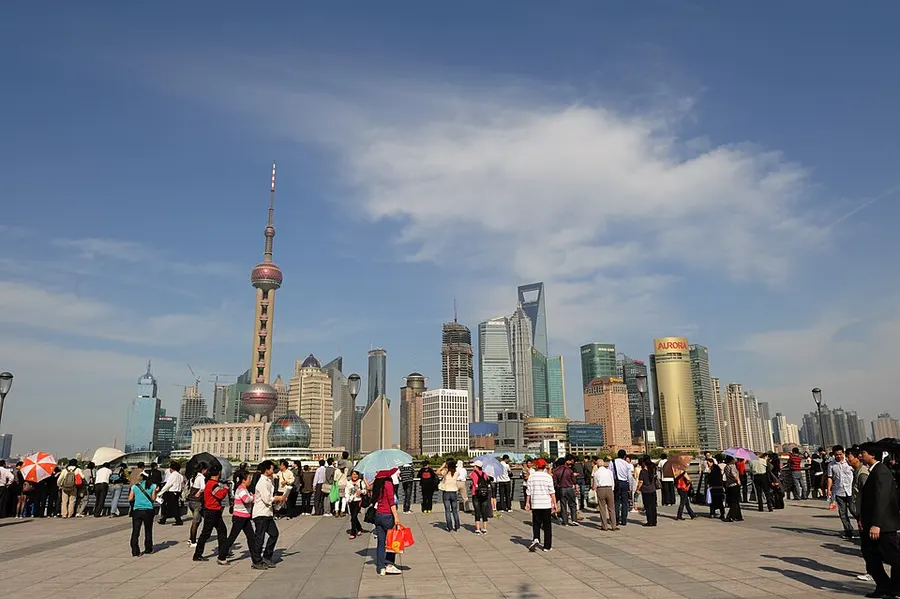
Bund neoclassical banks face Pudong's towers across the Huangpu.
- 04
Print Capital
Commercial publishers and cartoonists clustered here from 1900 onward.
Common Questions
What is a shikumen house?
A stone-framed lane house blending Western terraces with Chinese courtyards, typical from the 1870s.
Which operas belong to Shanghai?
Native huju plus yue opera, whose all-female troupes formed here in the 1930s.
When did the city open to trade?
The Treaty of the Bogue era opened it in 1843.
Watch & Learn
From the Archive
Photographs documenting the materials, makers, and settings behind these traditions.