无锡
Wuxi
A city in Jiangsu Province famous for Huishan clay sculpture, especially the iconic "Da Afu" (Big Lucky Boy) figurines made from local Huishan clay.
As a vital node in China's cultural geography, this location has nurtured artistic traditions that have endured through dynastic changes, social transformations, and the challenges of modernity. The continuity of these practices speaks to the deep relationship between place and cultural identity.
Today, Wuxi continues to be a living center of heritage — where master artisans train the next generation, festivals mark the seasons, and ancient crafts adapt to contemporary life.
Civilization Snapshot
Where heritage lives — the geography of cultural practice
Interact with the nodes of cultural heritage across the region's ancient grid.
Heritage District
The cultural heart of Wuxi
Craft Village
Traditional workshops and living heritage
A Lineage of Eras
Keepers of the Flame
Master Artisan
“The craft is not just technique — it is the memory of our ancestors speaking through our hands.”
EXPLORE MASTERSMaster Artisan
“The craft is not just technique — it is the memory of our ancestors speaking through our hands.”
EXPLORE MASTERSThe Cultural Constellation of Wuxi
The heritage of Wuxi does not exist in isolation. It is the core of a sophisticated network of exchange, where techniques, motifs, and melodies traveled to shape the identity of an entire civilization.
- Beijing Connected Heritage
- Nanjing Connected Heritage
- Suzhou Connected Heritage
The Rhythms of Time
Spring Festival
2 seasonal observances
Summer Festival
2 seasonal observances
Autumn Festival
2 seasonal observances
Winter Festival
2 seasonal observances
Nearby heritage destinations
Beijing
北京 · The capital of China, Beijing has been the political and cul...
Nanjing
南京 · An ancient capital of six dynasties, Nanjing is the birthpla...
Suzhou
苏州 · Famous for its classical gardens and silk industry, Suzhou i...
Chenjiagou
陈家沟 · A small village in Henan Province, Chenjiagou is the birthpl...
History & Development
Wuxi sits where Lake Tai presses closest to the Grand Canal, feeding a silk and rice wealth that funded the region's crafts. Foremost is Huishan clay figurine work — four centuries of rotund "Da Afu" good-luck boys moulded from the black clay beneath Huishan hill, inscribed in China's first national heritage list in 2006.
Music history bends here too. Blind street musician Abing (1893–1950) busked the canal bridges; professor Yang Yinlii recorded his erhu lament Erquan Yingyue in 1950, months before Abing died, preserving a piece now played by virtually every erhu student in China.
Cultural Traditions
- 01
Clay Figurines
Huishan clay masters press opera characters from single moulds.
- 02
Erquan Legacy
The "Moon Reflected on Second Spring" melody names a lake-side well.
- 03
Lake Gardens
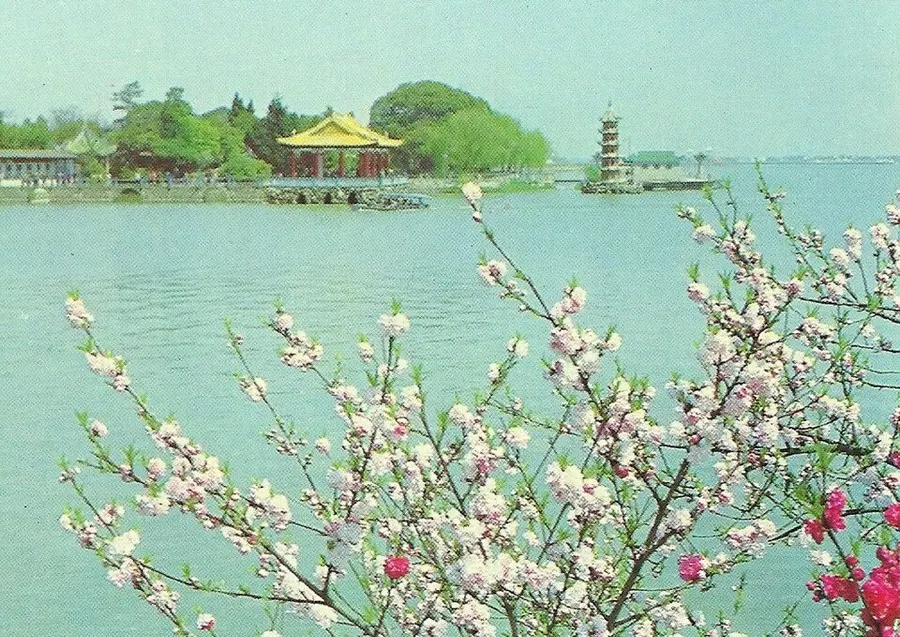
Yuantouzhu peninsula frames cherry blossoms over Lake Tai.
- 04
Canal Quarters
Qingming Bridge district keeps Ming warehouses beside working water.
Common Questions
Who was Abing?
A blind Wuxi busker whose recorded erhu pieces became canon; hear his instrument's story via the erhu tradition.
How old is Huishan clay work?
About four hundred years, nationally listed in 2006.
What is Wuxi's opera?
Wuxi opera, sprung from local tanhuang duet songs in the early twentieth century.