
Xu Chaoyun
徐朝云
Xu Chaoyun is a master celadon artisan from Longquan, Zhejiang Province. He spent decades researching and reviving the ancient "plum green" and "powder green" glazes that made Longquan celadon famous…
Xu Chaoyun is a master celadon artisan from Longquan, Zhejiang Province. He spent decades researching and reviving the ancient "plum green" and "powder green" glazes that made Longquan celadon famous worldwide. His works are held in museums across China, including the National Museum of China. Xu has trained over 200 apprentices, ensuring the continuation of this ceramic tradition.
Heritage DNA
Classification
National Inheritor
Status
active
Year of Birth
1948
Age
78 years
Location
Hangzhou
Region
East China
Next Master
Cao Zhen
曹震
See the Craft
in Motion
The Cultural Network
Heritage is not a static artifact; it is a living web. Our mapping engine traces the cross-pollination of techniques across three millennia, revealing how Xu's thread vibrates through the broader tapestry.
Territories of
Heritage
Geography shapes identity. Journey through the historical corridors that defined a civilization, from the arid Silk Road to the lush Tea Horse Road.
Hangzhou
East China
The Living Masters
The true archive of heritage is found in the hands and minds of those who refuse to let the fire die out.
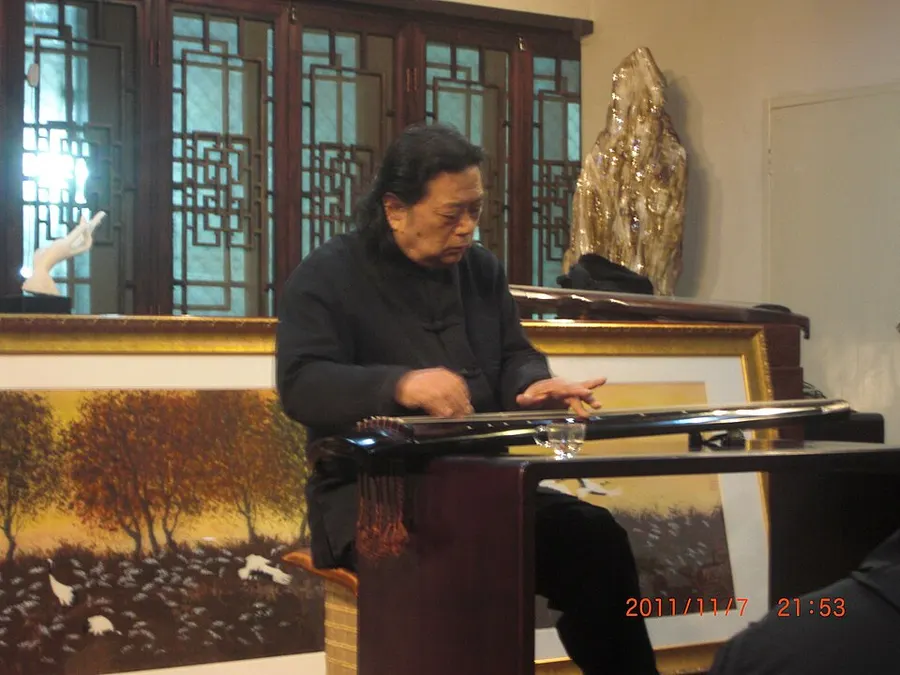
How Xu Chaoyun connects to the broader network of heritage.
The Atlas is Living
Every master is a living archive. Join a collective of explorers, artisans, and scholars dedicated to tracing the vibrant pulse of our shared world.
History & Development
Xu Chaoyun carries the Longquan celadon tradition from Zhejiang's kiln district, where green-glazed stoneware has fired continuously since the Song dynasty. The glaze's jade-like depth results from multiple applications and precise reduction firing, techniques nearly lost when kilns dwindled in the early twentieth century.
State re-establishment of the Longquan kilns in the 1950s relied on surviving masters who reverse-engineered historical glaze formulas through hundreds of test firings. Xu Chaoyun continues that experimental discipline, combining archaeometric study of shard chemistry with hands-on kiln management that UNESCO recognized in 2009 under celadon craftsmanship.
Cultural Traditions
-
Layered Glazing
Applying three to four glaze coats builds optical depth as light refracts through suspended iron particles, producing the plum-green and seaweed-green tones prized since the Southern Song.
-
Crackle Control
Deliberate crackle networks emerge from thermal contraction differences between body and glaze; masters tune cooling curves to guide the pattern rather than leaving it random.
-
Dragon Kiln Firing
Wood-fired climbing kilns demand continuous stoking judgment across dozens of hours, reading flame color through spy holes to steer reduction atmosphere.
Common Questions
What makes Longquan celadon valuable compared to other ceramics?
Longquan celadon achieves jade imitation through chemistry alone, and historical export shards found from Japan to East Africa testify to a millennium of demand.
How are new glazes developed today?
Masters run comparative firings varying iron content and kiln atmosphere, documenting each result against Song-era reference shards in a continuing research practice.