Traditional Crafts
Nanjing, East China
Yuan Dynasty (1271–1368 CE)
Representative List
Master-Apprentice (Hands-on)
Yunjin Brocade Weaving
Nanjing Yunjin Brocade
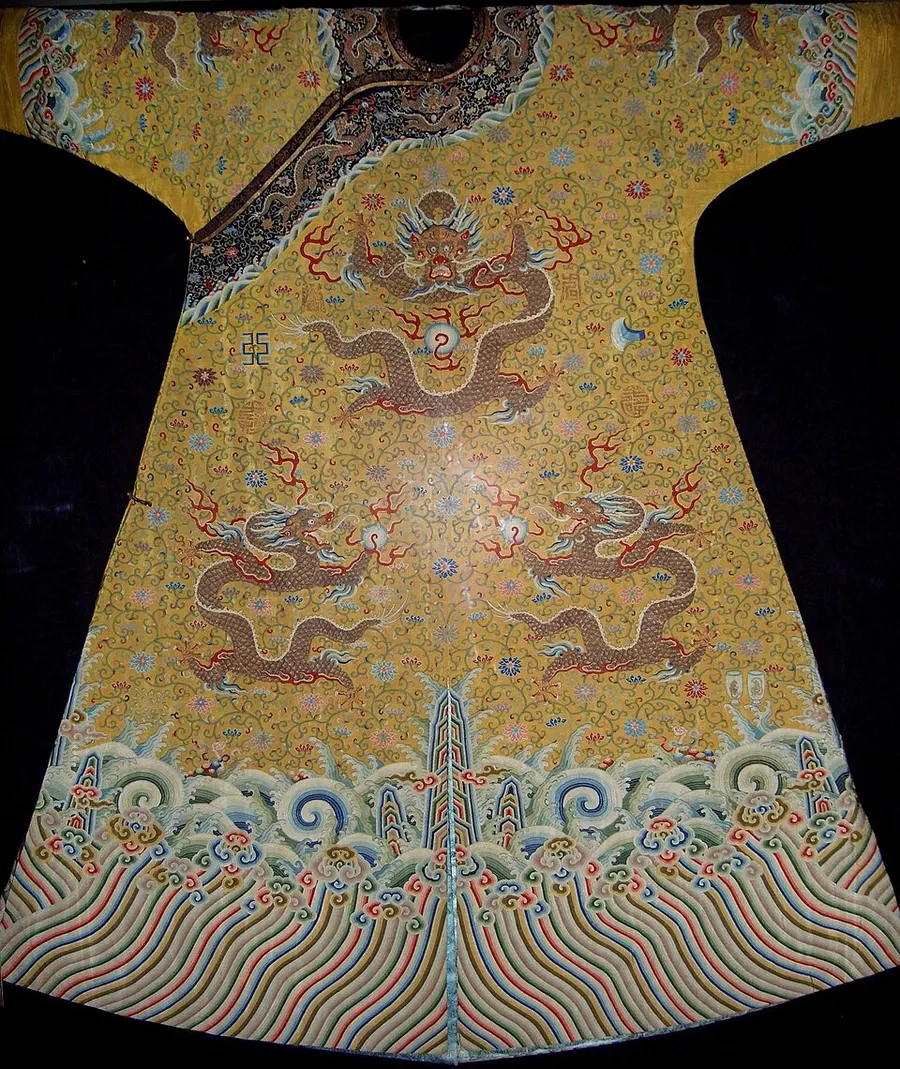
"A luxurious silk brocade woven with gold threads on traditional looms, once reserved for Chinese emperors and court nobles."
CIVILIZATION CONTEXT
This artifact is part of the Intangible Heritage Cluster. It connects to 11 entities across the atlas, spanning 1 region, 1 master, 0 festivals, and 1 skill.
Nanjing Yunjin Brocade: A Living Heritage
Nanjing Yunjin, meaning "Cloud Brocade," is a luxurious silk textile woven on traditional wooden looms using gold and silver threads. Originating in the Yuan Dynasty and flourishing through Ming and Qing, it was reserved for imperial robes and court decorations. The craft requires extraordinary skill — a master weaver and assistant work together on a massive loom, producing only a few centimeters per day.
658+
Years of Unbroken Lineage
1
Related Cultural Vectors
History & Development
Yunjin, the "cloud brocade" of Nanjing, is the costliest silk ever woven on Chinese looms, built for dragon robes and imperial gift. Ming-era Nanjing ran tens of thousands of looms under court brokerage, and the giant drawloom behind the craft stands roughly five metres long with two operators: one raises pattern cords above, one feeds gold-wrapped thread below, and their output is measured in centimetres per day. The brocade layers silk with flattened gold and peacock-feather foil, which is why a single metre could once cost as much as a labourer earned in years.
The trade survived the empire's fall by shrinking to master workshops, and its documentation matured in parallel. The Yunjin Research Institute, founded in 1954, rebuilt lost pattern books from surviving fragments, and the 2009 UNESCO inscription on the Representative List anchored transmission through named masters. Weavers today reproduce Ming dragon-robe panels for museums using the same cord-and-pedal memory system, and the Nanjing institute's archive of over a thousand pattern drawings now serves designers as well as historians.
How It Is Made
- 01
Preparing gilded wefts
Gold leaf is hammered onto paper-backed strips and cut hair-thin, then wound with silk core into the weft that makes cloud brocade gleam.
- 02
Coding the pattern
The design is transcribed onto thousands of pattern cords; each cord lift equals one weft pass, a binary memory older than punch cards.
- 03
Working the drawloom
Two weavers alternate chant and lift, the upper draw-boy raising cords while the lower passes gilded wefts at roughly five centimetres a day.
- 04
Finishing the face
Woven panels are inspected against lamp light for float errors; a single slipped cord can unravel a day's work.
Common Questions
Why is it called cloud brocade?
Its patterns swirl like clouds and its gold-threaded surface shimmers like sky; the weaving economy behind it appears in our silk thread story.
How fast can it be woven?
About five centimetres a day on the great loom, which is why a single robe consumed years of two-person labour.
Where can I see it today?
The Nanjing Yunjin Museum demonstrates the full-size drawloom daily, and the Ming dynasty gallery reproductions show original dragon-robe patterns.
Watch & Learn
Stories & Legends
Silk: The Thread That Connected Civilizations
historicalThe humble silkworm created the world's first global trade network.
Suzhou Embroidery: A Needlepoint Universe
historicalWhere a single silk thread splits into 32 strands to create fabric art.
Skills & Techniques
Yunjin Brocade Weaving expand_more
The traditional technique of weaving Nanjing Yunjin brocade on a "Da Hualou" wooden loom, requiring two master weavers working in synchronization.
Steps
- Design the pattern on graph paper (huapu)
- Prepare silk threads and dye them with natural pigments
- Wind gold and silver threads onto bobbins
- Set up the Da Hualou wooden loom with warp threads
- The master weaver pulls the pattern cords while the assistant throws the shuttle
- Beat the weft threads tightly to create a dense fabric
- Inspect and trim excess threads from the finished piece
Tools
Da Hualou wooden loom, bobbins, shuttle, pattern cords, scissors, comb beater
Materials
silk threads, gold threads, silver threads, natural dyes, peacock feather threads
Related Places
Generations Preserved
Zhou Jinsong
Zhou Jinsong is a master weaver of Nanjing Yunjin brocade, working at the Nanjing Yunjin Research Institute. He began his apprenticeship at age 18 and has spent over 40 years mastering the complex tec...
Relationship Constellation
Tracing the invisible threads that connect Nanjing Yunjin Brocade to the broader civilization ecosystem.
Continue the Journey
Nanjing Yunjin Brocade
Traditional Crafts
Wooden Arch Bridge Construction
Traditional Crafts
arrow_forwardAcupuncture and Moxibustion
Traditional Medicine
arrow_forwardKunqu Opera
Traditional Drama
arrow_forward