兰州
Lanzhou
The capital of Gansu Province and a key city on the Silk Road, Lanzhou is a center of Hua'er folk songs and cross-cultural musical traditions.
As a vital node in China's cultural geography, this location has nurtured artistic traditions that have endured through dynastic changes, social transformations, and the challenges of modernity. The continuity of these practices speaks to the deep relationship between place and cultural identity.
Today, Lanzhou continues to be a living center of heritage — where master artisans train the next generation, festivals mark the seasons, and ancient crafts adapt to contemporary life.
Civilization Snapshot
Where heritage lives — the geography of cultural practice
Interact with the nodes of cultural heritage across the region's ancient grid.
Heritage District
The cultural heart of Lanzhou
Craft Village
Traditional workshops and living heritage
A Lineage of Eras
Keepers of the Flame
Master Artisan
“The craft is not just technique — it is the memory of our ancestors speaking through our hands.”
EXPLORE MASTERSMaster Artisan
“The craft is not just technique — it is the memory of our ancestors speaking through our hands.”
EXPLORE MASTERSThe Cultural Constellation of Lanzhou
The heritage of Lanzhou does not exist in isolation. It is the core of a sophisticated network of exchange, where techniques, motifs, and melodies traveled to shape the identity of an entire civilization.
- Beijing Connected Heritage
- Nanjing Connected Heritage
- Suzhou Connected Heritage
The Rhythms of Time
Spring Festival
2 seasonal observances
Summer Festival
2 seasonal observances
Autumn Festival
2 seasonal observances
Winter Festival
2 seasonal observances
Nearby heritage destinations
Beijing
北京 · The capital of China, Beijing has been the political and cul...
Nanjing
南京 · An ancient capital of six dynasties, Nanjing is the birthpla...
Suzhou
苏州 · Famous for its classical gardens and silk industry, Suzhou i...
Chenjiagou
陈家沟 · A small village in Henan Province, Chenjiagou is the birthpl...
History & Development
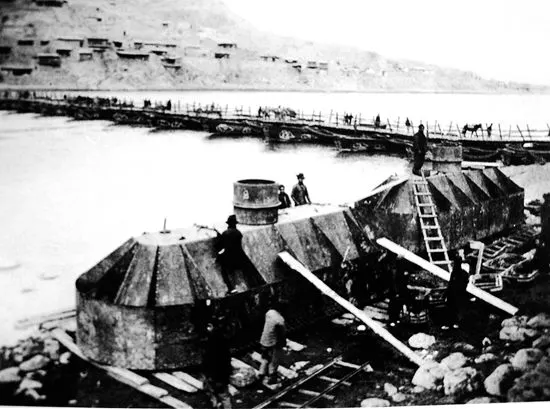
Lanzhou is the only provincial capital the Yellow River runs straight through, and for two thousand years its ford controlled traffic between China proper and the northwest. The Zhongshan Bridge of 1909 — assembled from German steel — became the first permanent crossing over the river, earning the nickname "First Bridge over the Yellow River."
The city's food icon dates to 1915, when Hui cook Ma Baozi began selling beef noodles judged by five tests: clear broth, white radish, red chilli oil, green cilantro, and yellow noodles. Raftsmen once shot the rapids downstream on inflated sheepskins, and mountain villages on both banks sing huaer folk songs in summer gatherings.
Cultural Traditions
- 01
Beef Noodle Ritual
Morning counters empty by noon; five visual tests grade each bowl.
- 02
Sheepskin Rafts
Bound inflated skins ferried cargo downriver well into the twentieth century.
- 03
River Sculpture
The Mother Yellow River statue anchors the waterfront promenade.
- 04
Mountain Songs
Northside villages join huaer folk song meets each June.
Common Questions
Why is Lanzhou significant to the northwest?
It gates northwest China's corridors toward Xinjiang and Tibet from its river-crossing position.
When did beef noodles begin?
Ma Baozi standardized the bowl in 1915, and the five-point checklist still grades it.
What is the First Bridge?
The 1909 Zhongshan Bridge, riveted from imported German iron, the river's first permanent span.