menu_book The Full Narrative
01
The Myth of Nian
The most famous origin story tells of Nian, a monster that emerged each New Year's Eve to devour villagers. The people discovered Nian feared the color red, bright light, and loud noises — hence the red decorations, lanterns, and firecrackers that define the festival today. Whether myth or memory, the Nian story encodes the festival's ancient function: protection through ritual.
02
From Shang Rituals to Modern Celebration
Spring Festival began as a Shang Dynasty ritual honoring gods and ancestors at the turn of the agricultural year. Over the centuries, it absorbed Buddhist, Taoist, and Confucian elements. The festival is not one day but fifteen, each with its own tradition: sweeping away bad luck on New Year's Eve, visiting in-laws on the second day, and the Lantern Festival on the fifteenth.
03
The World's Largest Migration
Today, Spring Festival triggers chunyun, the largest annual human migration on Earth. Over 3 billion journeys are made as Chinese workers return to their hometowns. This modern phenomenon connects directly to one of the festival's core values: family reunion. No matter how far one travels, the New Year brings them home.
04
A Calendar Fixed by Astronomers
The festival's date moves because it follows a lunisolar rule set by court astronomers more than two millennia ago. The new year begins on the second new moon after the winter solstice, which places it between 21 January and 20 February on the solar calendar. The 24 solar terms agricultural calendar keeps planting seasons aligned with that shifting start, so the same festival can fall at different points of the harvest cycle from year to year.
05
Fifteen Days, One Closing Night
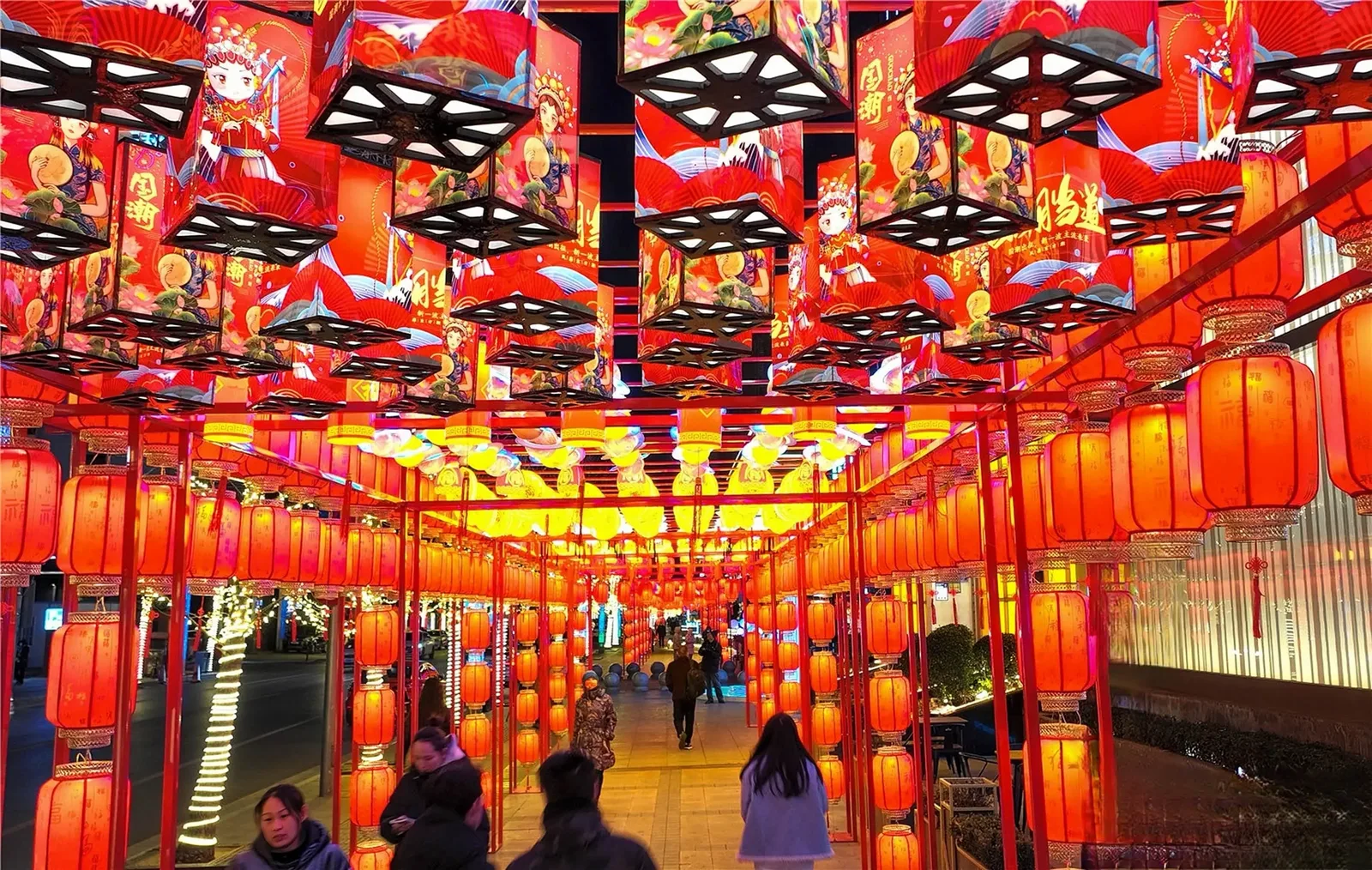
The celebration closes on the fifteenth night with the first full moon of the year, when families walk streets hung with glowing riddles and swallow-tail lanterns. That finale grew into its own Lantern Festival traditions during the Han dynasty and now draws crowds measured in the hundreds of millions. Sweet rice balls called yuanxiao end the meal, their round shape sealing the reunion theme of the whole fortnight.
06
Chunyun, the Migration the Calendar Built
Spring Festival now powers the largest annual human migration on record. Chunyun trips exceeded nine billion journeys in recent years when private-car travel entered the count, a figure built on the 1980s migrant-labor wave that sent rural workers home once a year. Railways moved the first great waves on green-skinned trains standing room only; the high-speed network, past forty-five thousand kilometers by 2023, compressed a two-day stand into a four-hour seat and redefined how far workers will commute from family. Airlines add red-eye rotations, and expressways waive tolls for the holiday window, engineering the flow rather than fighting it. The calendar fixed its date back when the Han dynasty set the first day in 104 BCE, yet the scale is industrial-age: demographers note that no religious, sporting, or political event moves a comparable fraction of a continent. The festival's gravitational pull on labor markets is now studied as macroeconomic data, with factories planning shutdowns around the lunar date two quarters ahead.