Folk Customs
—
Shang Dynasty (1600–1046 BCE)
Representative List
Master-Apprentice
Oral Tradition
Spring Festival
"China's most important traditional festival, marking the lunar new year with family reunions, feasts, and vibrant cultural celebrations."
CIVILIZATION CONTEXT
CROSS-SITE REFERENCES
DaoOfSeasons
Start of Spring: The Seasonal Gateway
Spring Festival aligns with Start of Spring — the dawn of the agricultural year
TheWayOfNatureAtlas
Seasonal Living and the Spring Festival
Spring Festival as the highest expression of seasonal living in Chinese culture
taleswithlee
Stories of Nian and Spring Festival Legends
The myth of the Nian monster and other folk tales that animate Spring Festival customs
This artifact is part of the Intangible Heritage Cluster. It connects to 34 entities across the atlas, spanning 0 regions, 0 masters, 1 festival, and 0 skills.
Spring Festival: A Living Heritage
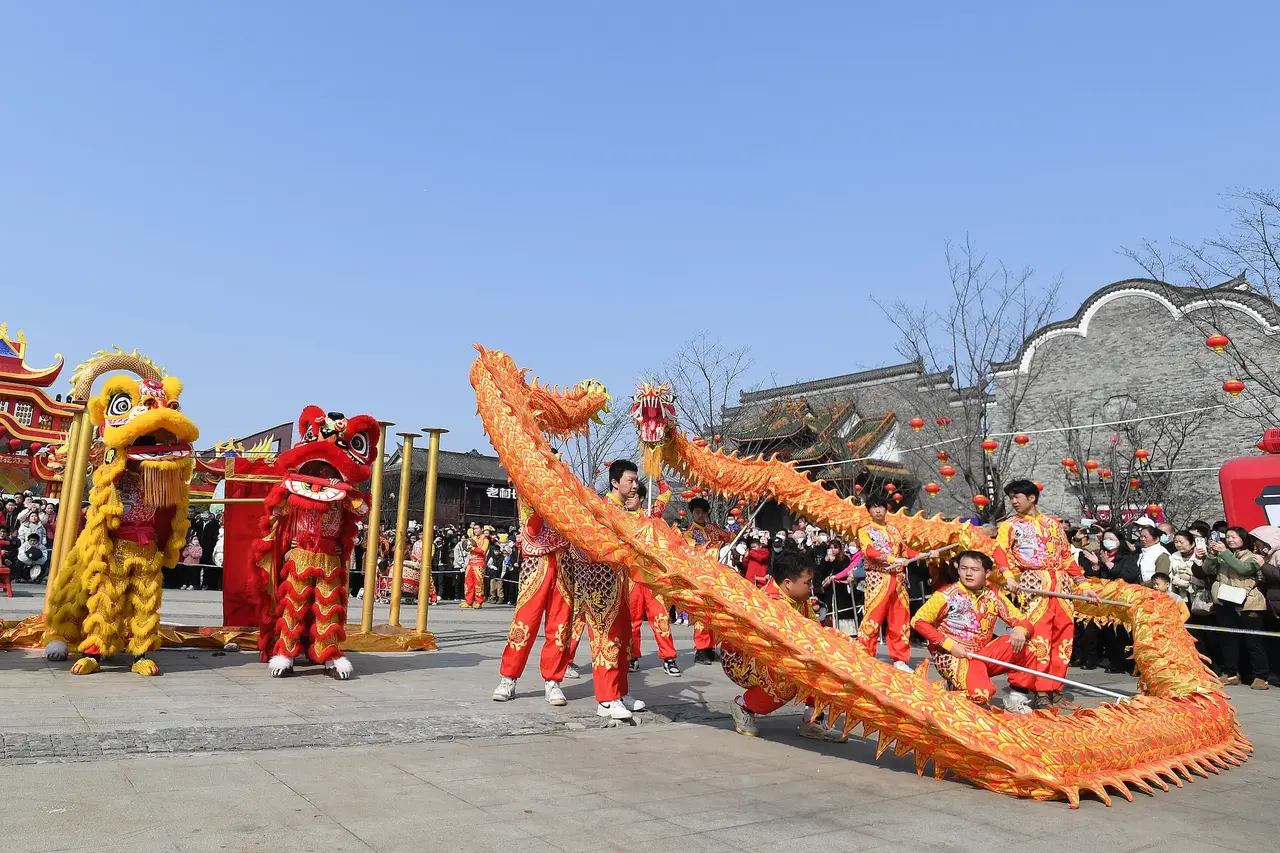
The Spring Festival, also known as Chinese New Year, is the most important traditional festival in Chinese culture. Marking the beginning of the lunar new year, it is a time of family reunion, ancestor veneration, and elaborate celebrations including temple fairs, dragon and lion dances, and fireworks. In December 2024, it was inscribed on the UNESCO Representative List of the Intangible Cultural Heritage of Humanity.
3072+
Years of Unbroken Lineage
0
Related Cultural Vectors
Gallery
History & Development
New Year observances in China predate the modern calendar, with oracle-bone records of year-opening sacrifices from the Shang dynasty. The Han court fixed the first day of the first lunar month as the year head when the Taichu calendar took effect in 104 BCE. After the Republic adopted the Gregorian calendar in 1912, the lunar celebration was renamed Spring Festival in 1914 to separate it from 1 January.
The festival is now a global observance. Nearly two dozen countries recognise it as a public holiday, the United Nations made Lunar New Year a floating holiday for its staff in 2023, and UNESCO inscribed the Spring Festival on the Representative List of Intangible Cultural Heritage in December 2024, citing its social practices of family reunion and seasonal renewal.
How It Is Celebrated
- 01
Sweeping the dust
Families clean house thoroughly before New Year Eve so bad luck leaves with the old year; sweeping is then paused for the holiday so good fortune stays.
- 02
Posting couplets
Red paper banners with paired verses frame the door, written by hand or bought printed alongside inverted fu characters that mean fortune has arrived.
- 03
Reunion dinner
The New Year Eve feast gathers generations around whole fish, dumplings, and rice cakes whose names pun on surplus, wealth, and rising fortune.
- 04
Keeping vigil and red envelopes
Children stay up past midnight to guard the year while elders hand red envelopes of cash called hongbao, a gesture of protection recorded since the Song dynasty.
Common Questions
Why does the date change every year?
The festival follows a lunisolar calendar, falling on the second new moon after the winter solstice. Dates drift between about 21 January and 20 February on the Gregorian calendar.
What is chunyun?
Chunyun is the annual travel rush around the festival, the largest recurring human migration on earth. Chinese transport authorities counted roughly nine billion passenger trips across all modes in recent years as workers return home.
Why are fireworks and the colour red everywhere?
Folk tradition credits loud noise and red colour with driving off Nian, a mythical beast said to attack villages at year end. The story survives in firecracker customs and in the legend of the Nian monster told at family gatherings.
Watch & Learn
Stories & Legends
The Legend of the Nian Monster
legendLong ago, a monster called Nian (meaning "year") would descend from the mountains every New Year's Eve to devour villagers and livestock. The people discovered Nian feared the color red, bright light, and loud noises. They began decorating their homes in red, lighting lanterns and firecrackers to drive Nian away. This tradition evolved into the Spring Festival customs observed today.
Spring Festival: A Civilization 4000 Years in the Making
historicalEvery year, a quarter of humanity pauses to celebrate the oldest continuous festival in human history.
The Dancing Lion: From Exorcism to Celebration
historicalWhen two people become one beast, evil spirits flee and prosperity arrives.
The Dragon Boat Festival: Memory, River, Nation
historicalA poet's sacrifice became a nation's memory, celebrated every summer.
Want to know when & how it's celebrated?
View the festival guide & datesRelated Festivals
Relationship Constellation
Tracing the invisible threads that connect Spring Festival to the broader civilization ecosystem.
Continue the Journey
Spring Festival
Folk Customs
Twenty-Four Solar Terms
Folk Customs
arrow_forwardGuqin and Its Music
Traditional Music
arrow_forward