menu_book The Full Narrative
01
From War to Music
The earliest guzheng had only five strings and was used as a battlefield instrument to signal troops and boost morale. Over centuries, it evolved into a refined musical instrument with 13, then 16, and finally 21 strings. Each addition expanded its range, allowing players to express an ever-wider emotional palette.
02
Regional Schools
The guzheng developed distinct regional schools, each with its own technique and repertoire. The Shandong school is bold and vigorous, the Henan school lyrical and narrative, the Chaozhou school delicate and ornate. These schools reflect the dialects, landscapes, and temperaments of their regions.
03
The Guzheng Renaissance
The 20th century saw a guzheng renaissance. New techniques were developed, the repertoire expanded to include contemporary compositions, and the instrument was modified for greater expressiveness. Today, the guzheng is one of the most popular Chinese instruments, studied by millions and featured in film scores and world music.
04
Bent Bridges and Bent Pitches
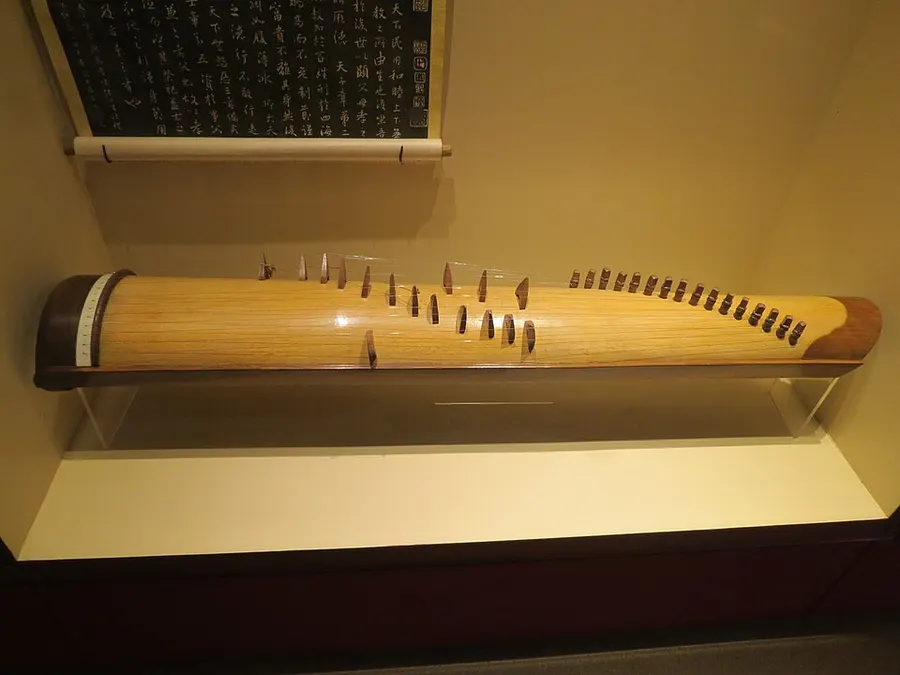
The guzheng bends pitch after the pluck. Each string rests on a movable bridge called yueshan, so a performer retunes the instrument in minutes, and the left hand presses the sounding length behind the bridge to raise a note by up to a minor third, producing the sliding vibrato that defines zheng music. This right-hand pluck, left-hand bend division dates to Tang dynasty treatises and survives intact in the conservative repertoires of Chaozhou and Hakka communities. The same technique family underpins the silk-string aesthetics of Quanzhou maritime port culture, where nanyin ensembles preserved Tang-era tuning systems that mainstream stages abandoned.
05
Grading Exams and a Million Players
Mass education built the modern guzheng audience. Conservatory pedagogues codified graded repertoire in the 1980s, and the ten-level amateur examination system turned the instrument into a fixture of urban childhood, with industry estimates placing active learners above six million. Landmark solo works anchor that curriculum. Lou Shuhao composed Fishing Boat Singing at Dusk in the 1930s, Wang Xunzhi transmitted Henan school pieces through the Central Conservatory, and performers such as Wang Zhongshan commission concertos for symphony orchestra. The instrument carries state recognition through related inscriptions rather than a standalone listing, because the Nanyin instrumental suite tradition already preserves its oldest documented repertoire on UNESCO's Representative List.
06
Twenty-One Strings Enter Pop Production
The guqin's louder cousin conquered popular media. The zheng anchors film scores from Hero to House of Flying Daggers, where composer Tan Dun layered bent-pitch ornaments over orchestras, and it appears routinely on pop recordings from Jay Chou's China-wind hits to video game soundtracks like Genshin Impact. Session players pair it with the pipa in studio rigs, and its appeal is practical: its pentatonic tuning guarantees consonant glissandi under tight deadlines, and amplification solved its historical volume ceiling. Manufacturers modernized in parallel, offering carbon-fiber frames and electronic pickups alongside rosewood classics, with annual domestic production estimated in the hundreds of thousands of units. Teaching followed demand; conservatory-affiliated exam boards registered over a million candidates annually at the peak, most of them children. The instrument that court chroniclers once ranked below the qin now outsells it a thousandfold, a reversal driven by recording technology and the pentatonic scale's instant recognizability in mass media. Even purists concede the exposure feeds concert attendance for traditional repertoire.