元朝
Yuan Dynasty
Dynastic Timeline
The Mongol-led dynasty established by Kublai Khan, which united China under a vast Eurasian empire, facilitating unprecedented cross-cultural exchange and trade.
The cultural innovations and artistic achievements of this era continue to influence Chinese heritage traditions practiced today — from music and opera to crafts and martial arts. Understanding the Yuan Dynasty is essential to understanding the deep roots of China's intangible cultural heritage.
Civilization Profile
An Era of Creation
Arts & Aesthetics
Distinctive artistic styles that defined the era
Literature & Philosophy
Foundational texts and schools of thought
Science & Innovation
Technological and scientific advances
Anchors of Empire
Chang'an
The world's first true metropolis and the pulse of the dynasty.
Dunhuang
The spiritual gateway where East met West in stone and light.
The Knowledge Network
“The arts flourished under imperial patronage, with master craftsmen refining their techniques to unprecedented levels of sophistication.”
Court Historian Imperial Records“The innovations of this era laid the foundation for cultural practices that continue to define Chinese identity today.”
Contemporary Scholar Cultural HeritageFoundation
Consolidation of cultural institutions and imperial patronage
Golden Age
Peak of artistic, intellectual, and commercial achievement
Enduring Legacy
Enduring influence on Chinese heritage traditions today
元朝 Pulse in the Modern Day
The Yuan Dynasty left an indelible mark on Chinese civilization. Its contributions to art, philosophy, technology, and governance continue to resonate in the heritage practices preserved by communities across China today — a testament to the enduring power of cultural memory.
Explore the AtlasHistory & Development
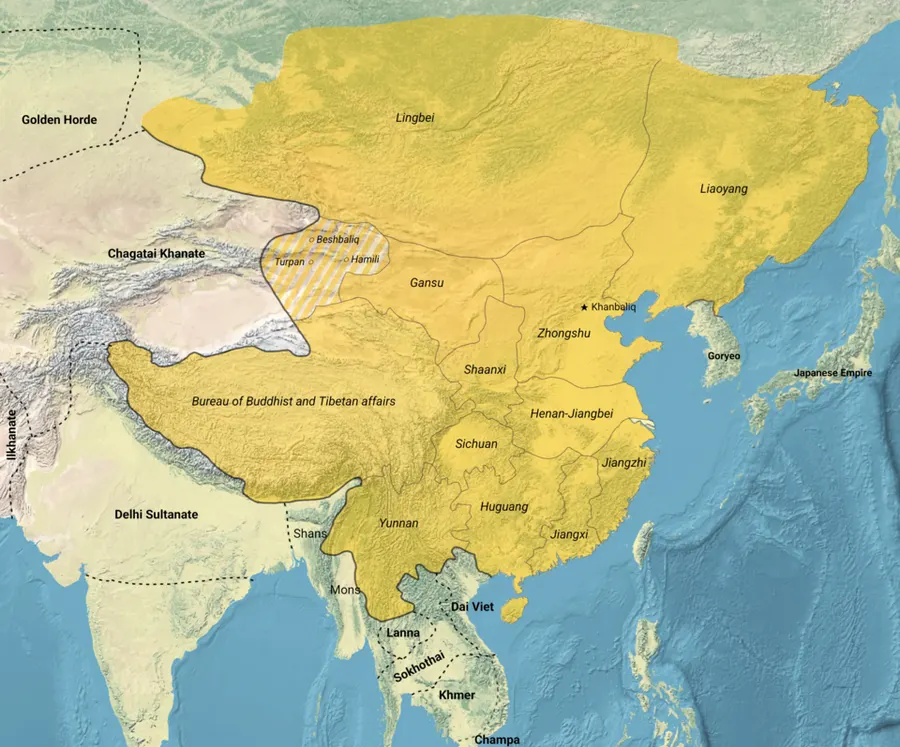
Kublai Khan's Yuan united steppe and sown worlds under one throne from 1271. The dynasty governed through a provincial system whose names and borders still outline China's provinces, and its courier roads carried Marco Polo, who described Hangzhou's magnificence around 1291.
Culture answered conquest with theatre. Zaju variety drama flowered in the northern capital's entertainment quarters, with Guan Hanqing's Snow in Midsummer among dozens of full-length plays whose singing conventions seeded later opera forms.
Cultural Traditions
-
Provincial Administration
Branch secretariats managed tax, army, and justice regionally — the ancestor of every modern Chinese province.
-
Eurasian Courier Network
Post stations spaced a day's ride apart moved edicts and merchants from Dadu to Tabriz.
-
Zaju Stage Drama
Four-act sung plays with comic interludes gave commoners their first mass theatrical repertory.
Common Questions
Did Marco Polo really come?
Scholars debate details, but Yuan census and edicts match his account, and his praise of Beijing's planning and Hangzhou's canals fits Yuan sources closely.
What happened to Yuan drama?
Its sung structure merged with southern styles, feeding the Ming Kunqu tradition recognised by UNESCO in 2001.