隋朝
Sui Dynasty
Dynastic Timeline

A short-lived but pivotal dynasty that reunified China after centuries of division, constructed the Grand Canal, and strengthened the centralized imperial system.
The cultural innovations and artistic achievements of this era continue to influence Chinese heritage traditions practiced today — from music and opera to crafts and martial arts. Understanding the Sui Dynasty is essential to understanding the deep roots of China's intangible cultural heritage.
Civilization Profile
An Era of Creation
Arts & Aesthetics
Distinctive artistic styles that defined the era
Literature & Philosophy
Foundational texts and schools of thought
Science & Innovation
Technological and scientific advances
Anchors of Empire
Chang'an
The world's first true metropolis and the pulse of the dynasty.
Dunhuang
The spiritual gateway where East met West in stone and light.
The Knowledge Network
“The arts flourished under imperial patronage, with master craftsmen refining their techniques to unprecedented levels of sophistication.”
Court Historian Imperial Records“The innovations of this era laid the foundation for cultural practices that continue to define Chinese identity today.”
Contemporary Scholar Cultural HeritageFoundation
Consolidation of cultural institutions and imperial patronage
Golden Age
Peak of artistic, intellectual, and commercial achievement
Enduring Legacy
Enduring influence on Chinese heritage traditions today
隋朝 Pulse in the Modern Day
The Sui Dynasty left an indelible mark on Chinese civilization. Its contributions to art, philosophy, technology, and governance continue to resonate in the heritage practices preserved by communities across China today — a testament to the enduring power of cultural memory.
Explore the AtlasHistory & Development
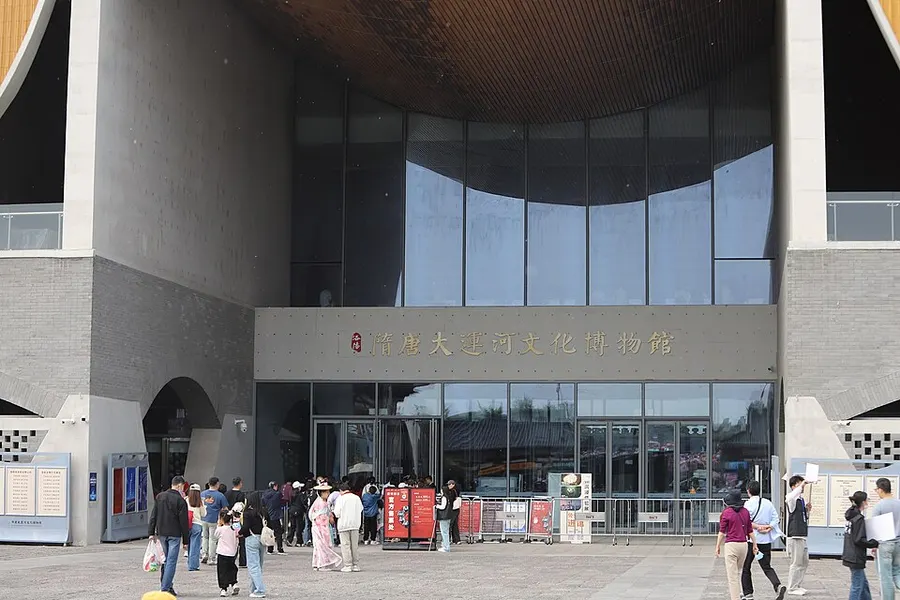
The Sui reunited China in 589 after almost four centuries of division, then rebuilt geography itself. Its Grand Canal ran roughly 2,700 kilometres from Hangzhou through Luoyang to the Beijing region, moving grain taxes that fed the capital for the next five hundred years.
Institutionally the dynasty founded the imperial examination system around 605, recruiting officials by tested classical learning instead of recommendation alone. Like the Qin before it, the Sui spent itself rapidly — canal labour and Korean wars collapsed the second reign after thirty-seven years.
Cultural Traditions
-
Grand Canal Logistics
Locks, dredging crews, and grain barges created a north-south artery no inland empire had attempted at scale.
-
Examination Origins
Written tests for magistrates planted the keju ladder that survived until 1905.
-
Capital Planning
Daxing, laid out on a strict grid, became the template Tang renamed Chang'an.
Common Questions
Is the Sui canal still navigable?
Sections remain working waterway, and UNESCO listed the full route in 2014; its southern terminus anchors Hangzhou's canal districts.
Was the exam system fair from the start?
Early tests favoured the literate elite, but the principle of open competition hardened into the world's longest-running meritocracy experiment.